Which scratches can be polished out of car glass?
Light surface scratches, wiper marks, limescale and water spots, deposits and weathered areas can be corrected. Deep scratches or scratches you can feel with a fingernail cannot be removed reliably. Stone chips and cracks must be assessed by an automotive glass specialist.
Do I need a rotary polisher for glass polishing?
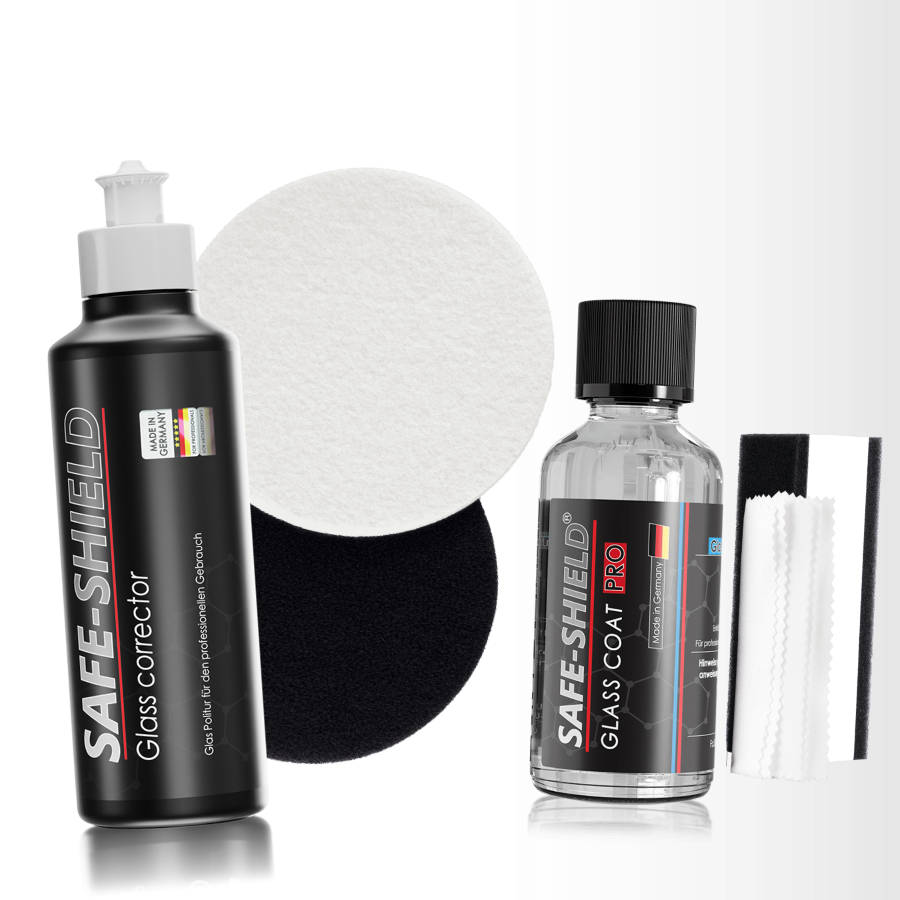
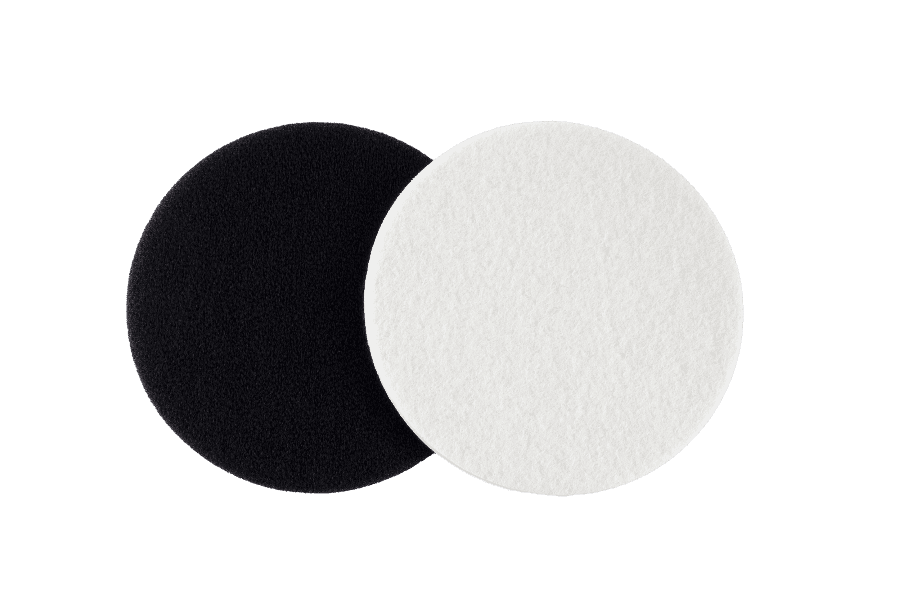
For actual scratch correction, a rotary polisher with our Glass Pad is required. A dual-action polisher is suitable only for intensive glass cleaning, such as removing limescale and water spots – not for reliable scratch correction.
Which glass polishing pad size do I need?
Choose the pad size to match your machine's backing plate diameter. Smaller pads offer more control over individual defects and edges. Larger pads suit continuous areas such as a windscreen.
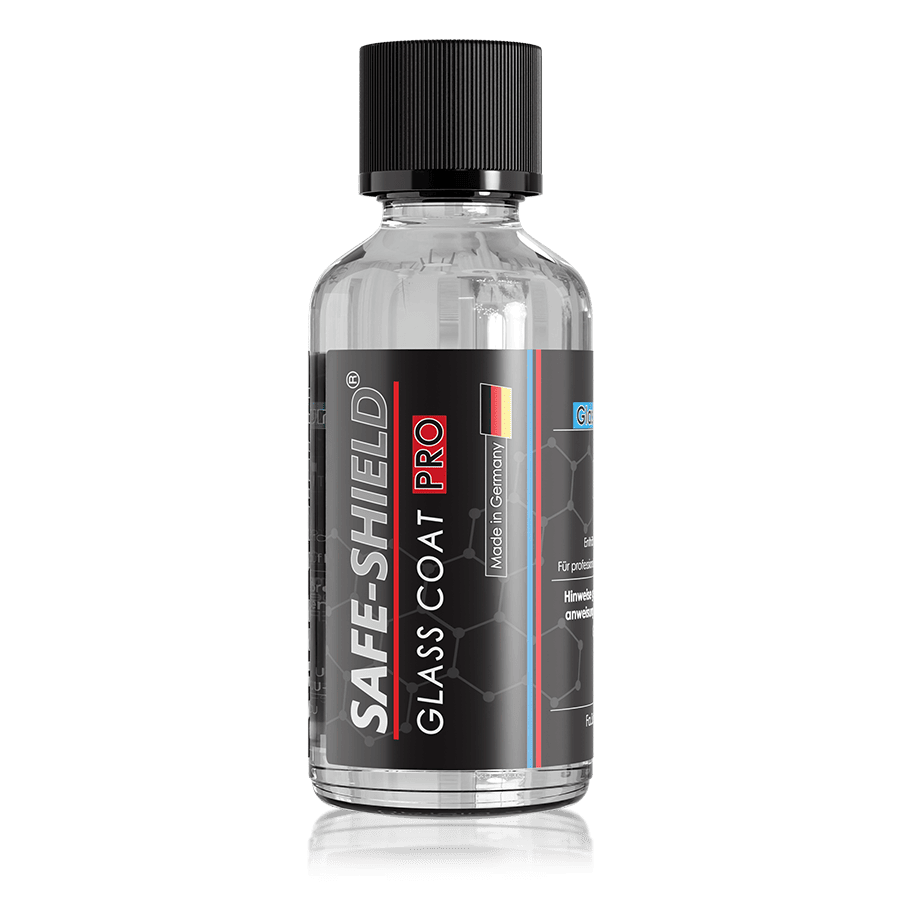
Do I need to polish before applying Glass Coat PRO?
Not necessarily. If the glass is smooth and free from limescale, deposits and weathering, thorough preparation that leaves no residue is sufficient. If defects are present, polish the glass before coating.
How long does Glass Coat PRO last, and how much do I need?
Glass Coat PRO is immediately rain-resistant and provides approximately 5 to 10 months of protection, depending on use, maintenance and weather. A windscreen requires approximately 10–15 ml; all vehicle glass surfaces require around 30 ml.
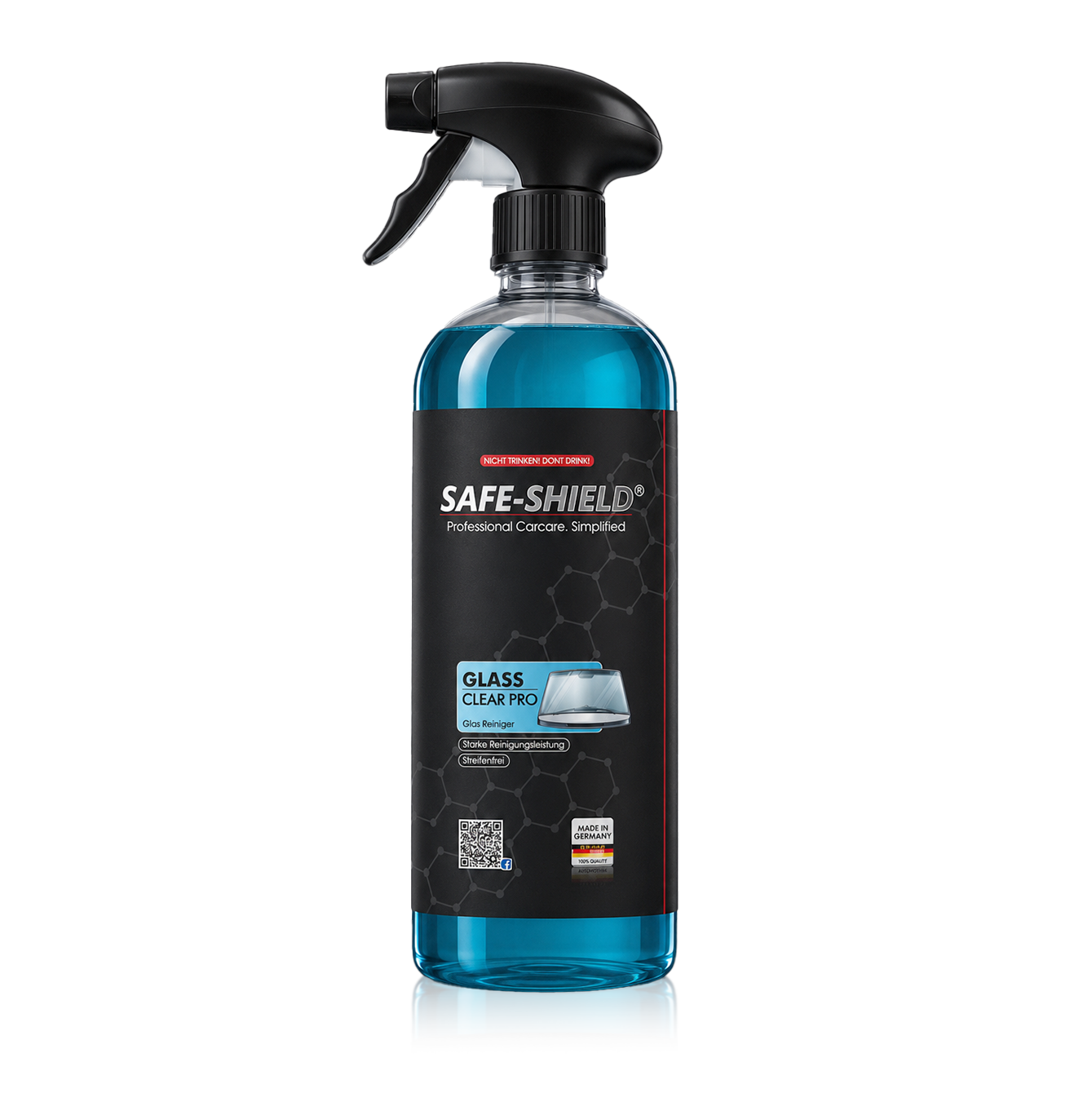
What is the difference between a glass cleaner, polish and coating?
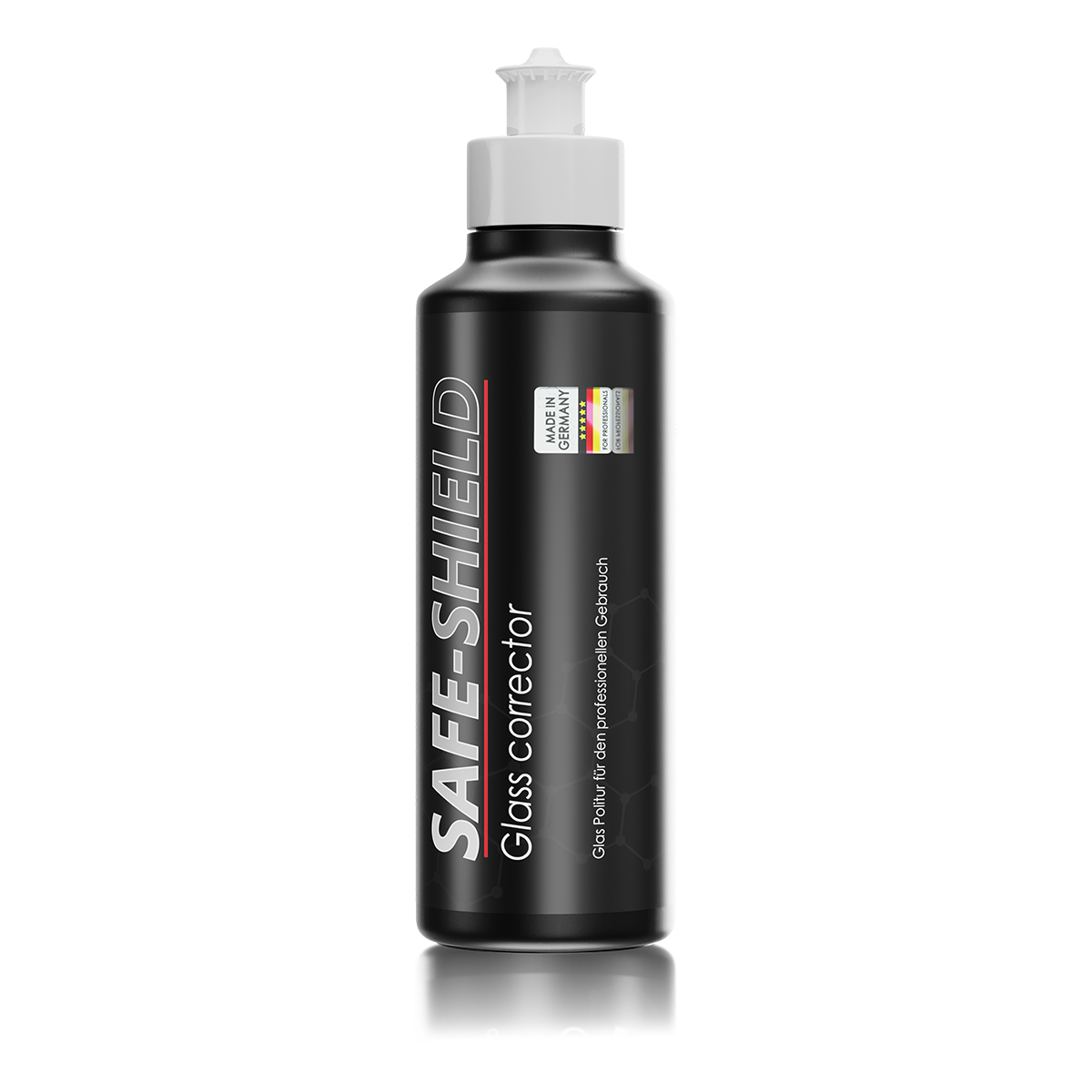
A glass cleaner removes everyday dirt and leaves glass streak-free. Glass Corrector removes stubborn deposits, limescale, wiper marks and light scratches. Glass Coat PRO then protects the prepared glass with a water-repellent beading effect.