For regular care of intact, painted alloy wheels, a high-quality pH-neutral wheel cleaner is usually our first choice. Modern formulations loosen brake dust and road grime on their own. They offer an excellent compromise between strong cleaning and gentle care – without having to reach straight for an acidic cleaner for normal wheel dirt.
“Gentle” does not mean “weak”: depending on the level of soiling, thorough rinsing may be enough, or you may support cleaning with suitable, clean brushes and detailing brushes. What remains crucial is that the cleaner is approved for the surface. Here you’ll learn when pH-neutral makes sense, why “acid-free” is not the same thing, and what to watch out for on sensitive or damaged wheels.
What do the terms on wheel cleaners mean?
pH-neutral: close to the neutral range
For water-based cleaners, a pH value around 7 describes a neutral range. Such products can still contain effective cleaning components. pH-neutral therefore means neither “just water” nor automatically weak cleaning performance.
Even a pH-neutral cleaner must be suitable for the wheel surface. Concentration, formulation, dwell time, and the condition of the paint or coating are further crucial factors. Also note whether a stated pH value refers to the concentrate or the ready-to-use solution.
Acid-free: not the same as pH-neutral
“Acid-free” is used as a product description and is not a precise pH specification. You cannot infer pH 7 or unrestricted material compatibility from it. An acid-free cleaner can, for example, be alkaline; there are also product descriptions with a slightly acidic pH value.
So don’t just read the term on the front label. What matters are the specific material approvals and application instructions. “pH skin-neutral” is also not the same as chemically neutral at pH 7 and says nothing about whether protective gloves can be dispensed with.
Acidic: targeted use instead of a general standard
Acidic wheel cleaners can be designed for certain stubborn deposits and professional cleaning tasks. That does not mean they are generally suitable for all alloy wheels, paints or adjacent components.
Only use such a product with explicit approval for the specific surface and in compliance with all application and safety instructions. If a neutral cleaner does not deliver the desired result, “just use an acidic one” is not a reliable rule of thumb.
Alkaline: another cleaner category
Alkaline formulations can be used to remove greasy or oily contamination. Here too, the overall recipe determines what the product is suitable for. A random alkaline all-purpose cleaner is not automatically a suitable wheel cleaner.
How to choose your wheel cleaner
1. Inspect the surface – and choose the cleaner accordingly
“Alloy wheel” describes the base material. For cleaning, the surface on top of it is what really matters. This leads to the following recommendations:
- Intact, glossy painted alloy wheels: For regular cleaning, choose a pH-neutral wheel cleaner that is approved for this purpose. For light, fresh dirt, a suitable shampoo may already be enough.
- Coated wheels: A suitable pH-neutral cleaner is also a good starting point here. Additionally, follow the care instructions of the coating.
- Matte, brushed, polished or anodized surfaces: Only use products explicitly approved for these. Bare, polished aluminum in particular needs a different assessment than an intact paint layer. The note “pH-neutral” alone does not replace this approval.
- Cracks, stone chips or flaking clear coat: Avoid experimenting with acidic cleaners and have the proper treatment clarified. A pH-neutral cleaner also cannot repair a damaged protective layer.
If you’re unsure about the surface, clarify it using the wheel manufacturer’s information. A test on an inconspicuous area complements the approval; it does not replace it.
2. Identify the type of contamination
- Light dust and fresh road film: A gentle contact wash with a suitable shampoo may already be sufficient.
- Brake dust and iron particles: A wheel cleaner specifically developed for this, with an appropriate active ingredient combination, is the right choice.
- Stubborn spots or marks: First check whether you are dealing with brake dust, other deposits or a changed coating.
- Unchanged residues after correct cleaning: Do not switch to a higher concentration, longer dwell time or different chemistry without diagnosis.
For the last situation you’ll find a specific inspection procedure in the article Removing baked-on brake dust: when wheel cleaner is not enough.
3. Consider everyday use
A cleaner also has to fit your workflow. Before buying, read whether it is ready to use or needs diluting, which surfaces it is intended for, and what dwell time is specified. Do not transfer dilutions and times from another product.
If you care for different vehicles, choosing the right tools can be especially helpful: a flat brush reaches different areas than a wash mitt. More cleaner does not automatically compensate for poor access to an area.

Is a purple reaction indicator proof of quality?
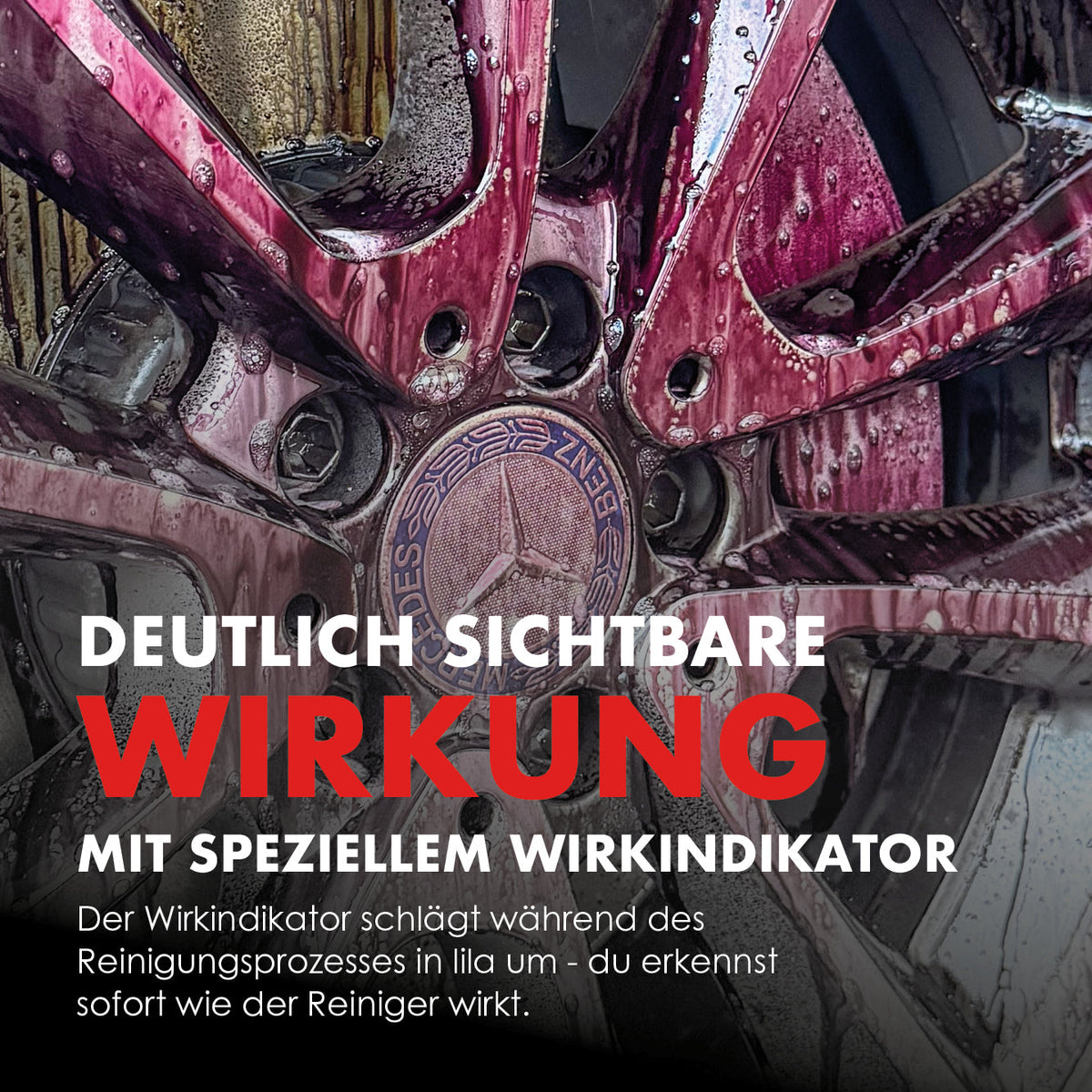
A colour change shows a specific reaction, not the entire cleaning performance. With Safe-Shield Wheel Cleaner, the reaction with iron-containing contamination becomes visible through the purple discolouration.
The intensity is not a cross-manufacturer performance test. A heavily discolored area may still contain other residues. Conversely, low discoloration does not prove that a product is fundamentally ineffective. Judge the result after correct application and thorough rinsing.
Never wait beyond the specified dwell time in the hope of a stronger color change. Allowing the product to dry does not increase cleaning performance in a controlled way.
Where does Ultra Wheel Cleaner fit in?
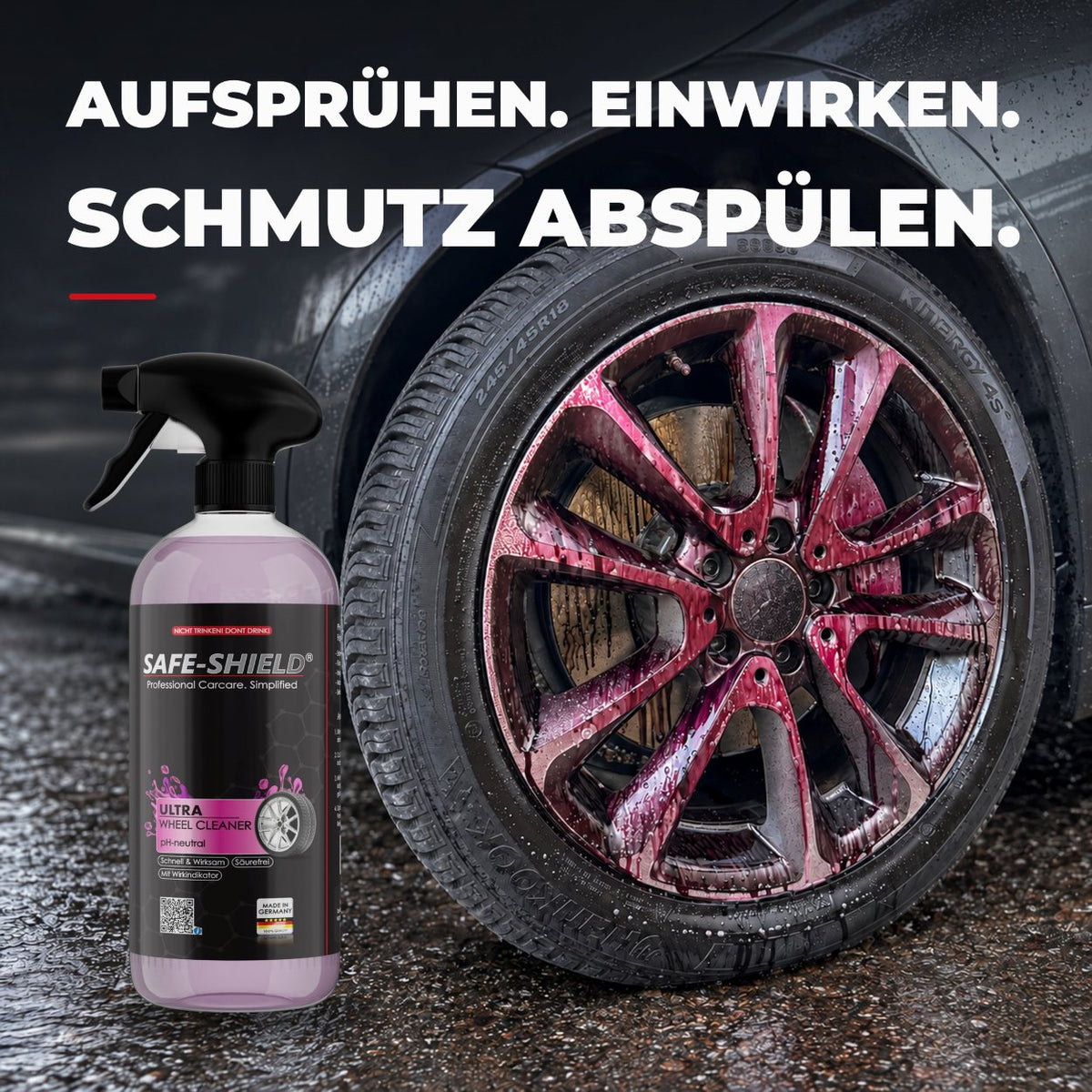
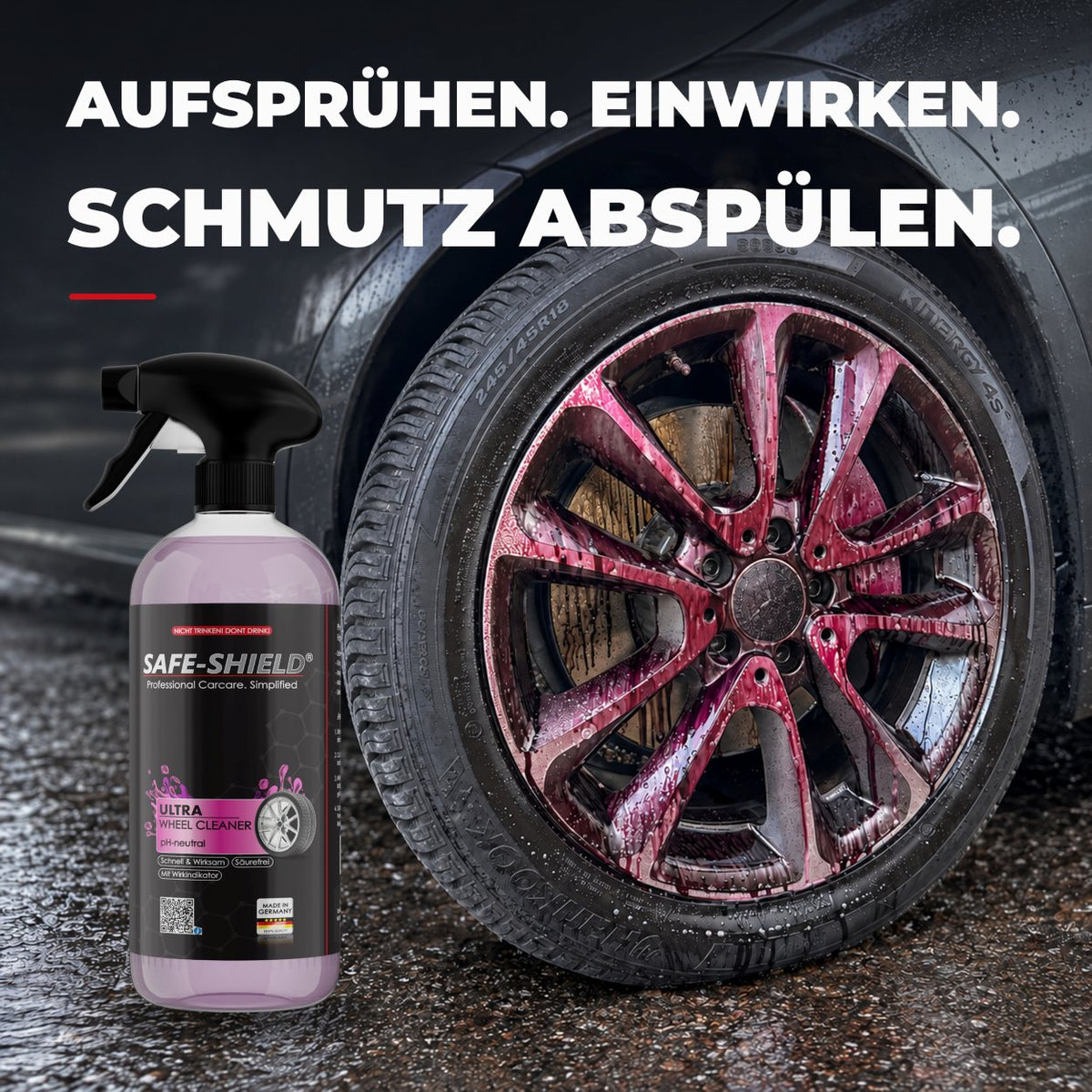
The Safe-Shield Ultra Wheel Cleaner is a pH-neutral wheel cleaner with an effect indicator. It is designed to loosen brake dust and road grime. Choose it based on the current product information and its suitability for your wheels.
In the Safe-Shield process, the cleaner is used according to the label and rinsed off thoroughly. Remaining contamination is then removed with suitable shampoo solution and appropriate tools. All steps are explained in the main article Cleaning wheels properly.
The most important application rules apply regardless of which product you choose
- Work on cool wheels and avoid direct sun.
- Observe the approvals of the wheel, coating and cleaner manufacturers.
- Check compatibility on an inconspicuous area before treating the entire surface.
- Observe the recommended dilution and dwell time; do not let the cleaner dry on the surface.
- Do not mix products and rinse treated areas thoroughly.
- Use protective equipment as specified on the label. A microfiber wash mitt is not a chemical-resistant glove.
- For unclear residues or surface damage, clarify further treatment with a professional.
A suitable cleaner and clean working technique go hand in hand. The right pH range cannot compensate for incorrect use.
Q&A: Choosing a wheel cleaner
Is pH-neutral always the best choice?
For regular maintenance of intact painted wheels, a high-quality, approved pH-neutral wheel cleaner is usually our first choice: it combines effective loosening of dirt with gentle care. However, this is not a blanket guarantee for every wheel. Special finishes, damage and unusual residues require a targeted selection.
Are acid-free wheel cleaners always safe?
No. “Acid-free” is not a general guarantee of safety or compatibility. Observe the hazard warnings, protective measures, material approvals and application instructions of the specific product.
Do I need a special cleaner for black wheels?
Color alone is not decisive. What matters are the type of finish, gloss level, condition and approvals. A black glossy paint finish may need to be treated differently from a matte, polished or damaged surface.
Can I use iron remover as a wheel cleaner?
Only if the manufacturer explicitly approves it for that wheel surface and application. An effect against iron particles alone does not prove full suitability as a wheel cleaner.
Can I use wheel cleaner on the vehicle’s paintwork as well?
Only if it is explicitly approved for paint and this specific use. Approval for wheels cannot automatically be transferred to bodywork, plastic, film or other surfaces.
Which wheel cleaner helps with baked-on brake dust?
First you need to determine whether you are dealing with removable deposits or actual surface damage. A suitable brake dust remover can help with contamination; it cannot repair damaged clear coat. Diagnosis, material approval and controlled application are crucial.

Leave a comment
All comments are moderated before being published.
This site is protected by hCaptcha and the hCaptcha Privacy Policy and Terms of Service apply.