
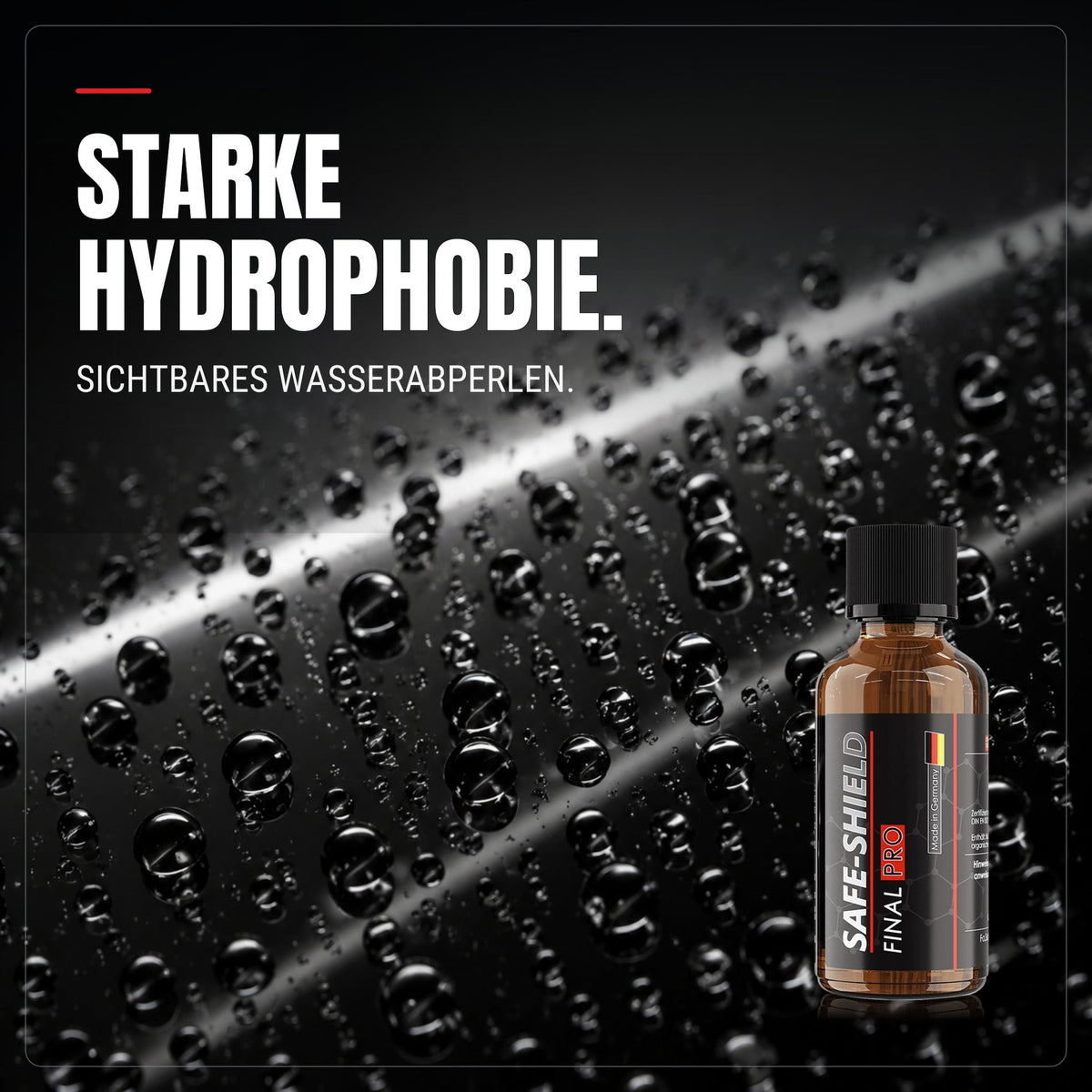
If your ceramic coating no longer beads properly, thoroughly clean the surfaces first before you even think about reapplying a coating. Traffic film, mineral deposits or residues from care products can change the water behaviour. Only after suitable cleaning can you reasonably assess whether the coating has actually diminished.
The key difference: a dirty coating needs to be cleaned. A worn or damaged coating cannot be rebuilt by shampoo. We’ll show you how to better distinguish between the two in everyday use.
Is the ceramic coating gone if the water no longer beads?
No! You cannot reliably conclude that from a single water test. Water first contacts the very top surface. If there is a film of dirt there, it will influence droplet formation even though there may still be coating underneath. Conversely, nice beading alone does not prove the original ceramic layer is intact: a freshly applied detailer or spray sealant can also repel water by itself.
Also distinguish between beading and water sheeting. On a horizontal bonnet, droplets may remain, while water will run off a door more quickly. So try to compare the same area under similar conditions. A powerful pressure washer jet is not a reliable benchmark on its own.
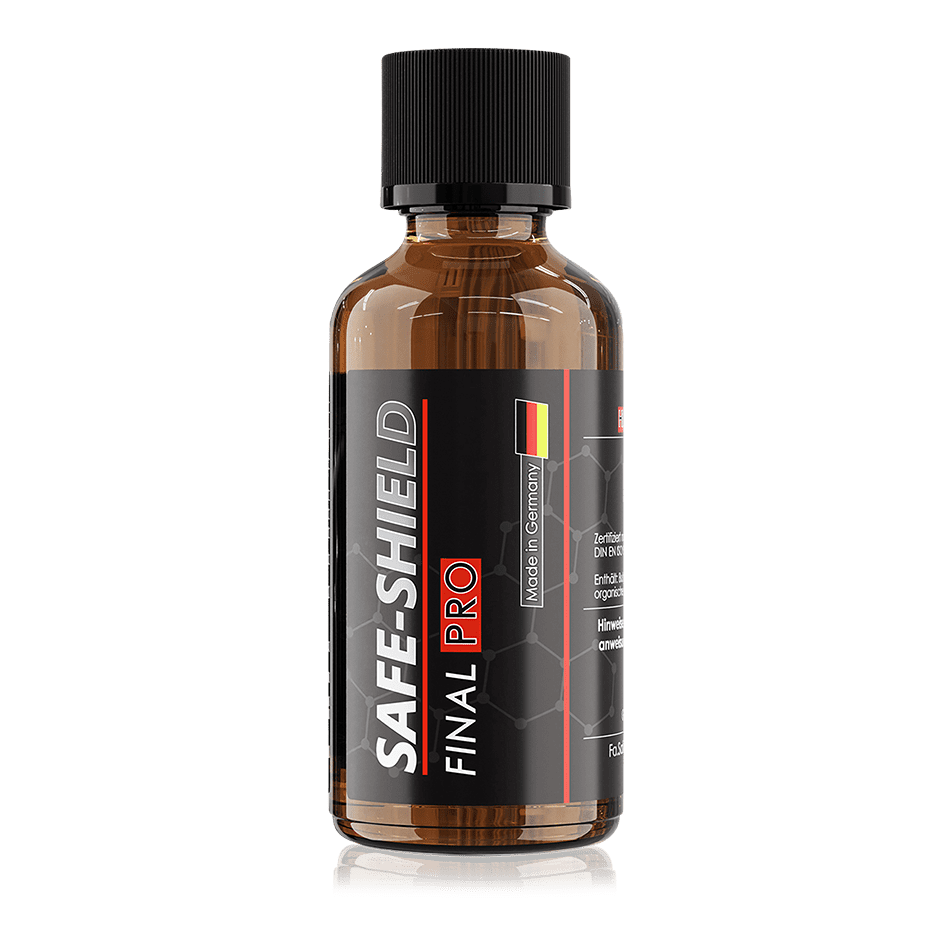
Just coated? Please do not deliberately test a fresh coating with water or special cleaners. For Final PRO at approx. 20 °C: water-resistant and ready to drive after about 12 hours, fully cured and washable after 5 days. Details can be found under Letting ceramic coating cure: rain and the first wash.
Cleaning a ceramic coating and checking beading
1. Start with a complete, gentle wash
On a cured coating, first rinse off loose dirt. Then follow with a contact wash using a clean wash mitt and suitable shampoo. Simply applying foam and rinsing does not always completely remove a bonded film.
For regular maintenance we recommend our Wash & Foam car shampoo. It cleans with a pH-neutral formula and provides lubrication for hand washing. Dose according to the instructions, work on cool surfaces and rinse off all residue thoroughly. Overdosing the shampoo is no substitute for the correct cleaning method.
2. Treat remaining residues in a targeted way
If the result is still not good after a normal wash, the type of residue determines the next step. You do not automatically need a full sequence of acidic and alkaline washes.
- Mineral haze or water spots: A suitable acidic car shampoo or a dedicated water spot remover can dissolve bonded mineral deposits. We explain the individual steps in removing water spots from ceramic coatings.
- Greasy road film or stubborn organic contamination: An alkaline pre-cleaner suitable for the paint and coating can help. Application, dwell time, and the subsequent wash must follow its label.
- Individual tar or metal particles: Here you need a dedicated specialist cleaner for each type. Neither an acidic shampoo nor a random all-purpose cleaner will automatically remove every such contamination.
The pH value alone doesn’t tell you how strong a cleaner actually cleans or which materials it’s compatible with. Formula, dilution and dwell time all play a role. Check whether it’s suitable for the coating, test in an inconspicuous area and don’t let anything dry on. Don’t mix different cleaners; rinse thoroughly with water in between. A clear decision aid is Car wash: pH-neutral, acidic or alkaline?.
3. Reassess without additional protection
When doing the final rinse, check how water runs off the clean surface and which droplets remain. Skip wax, detailer and other products with their own beading effect before this comparison, otherwise you’ll be judging their surface instead.
If the previous behaviour largely returns, deposits have probably played a major role. That’s a positive sign, but not proof of a specific remaining protection duration. Then dry with a clean towel instead of letting water evaporate on the paint for testing.
4. If performance remains weak, identify the cause
If the result remains weak after appropriate cleaning, actual wear, damage or issues with preparation and application may be the cause. Relevant factors include age, usage, previous cleaners and the affected areas. Lower doors, for example, are stressed differently than a garage-kept roof.
Before you clean more aggressively, have the condition assessed. If a Final PRO application seems to lose performance unusually early, photos plus details on preparation, temperature, curing and previous washes help us narrow down the next steps with you.
When should you renew the ceramic coating?
Renewal makes sense if, after cleaning and inspection, the coating is worn or damaged and you want a complete protective build-up again. Simply sealing over dirt or an unclear old layer structure is not a reliable solution. The substrate must be properly prepared.
If you polish for this purpose, the existing ceramic in the treated area will be removed or weakened. How to choose the preparation based on the actual paint condition is explained under Polish before ceramic coating. For subsequent protection, we offer our Final PRO ceramic coating and the Final PRO ceramic coating kit with accessories.
A so‑called topper, meaning an additional maintenance sealant, can change the surface characteristics if the combination is compatible. However, it does not repair an abraded original ceramic layer and does not replace necessary cleaning. You can find our ceramic coatings and matching accessories grouped in this category.
What keeps beading behaviour as stable as possible in daily use?
Remove dirt regularly with a suitable wash, rinse thoroughly and dry the clean paint promptly. For day-to-day care decisions, the level of contamination matters, not a rigid calendar for intensive acidic or alkaline treatments. If the car gets clean with Wash & Foam, you don’t need an additional speciality cleaner.
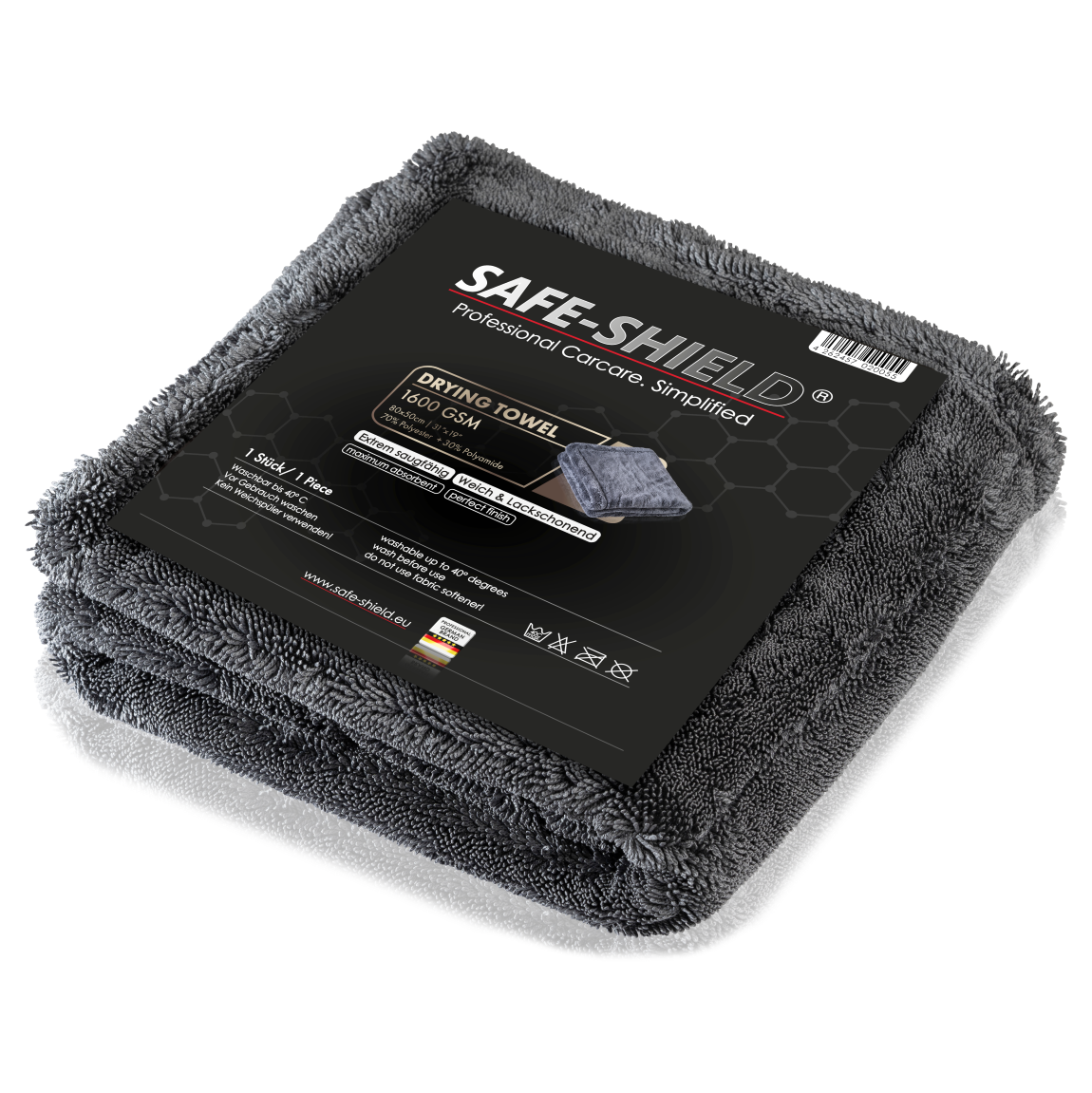
Use clean wash tools and an absorbent drying towel, for example our 1600 GSM drying towel. You can find more about ongoing maintenance under Caring for a car after ceramic coating. For long-term expectations, see our article How long does a ceramic coating last?.
Frequently asked questions
Can a ceramic coating start beading again through washing?
Yes, if deposits are masking the behaviour and the coating underneath is still performing accordingly. Cleaning exposes the surface again; it does not create a new ceramic layer.
Do I always need an acidic shampoo?
No. Start with a normal wash. Acidic products are particularly useful for suitable mineral residues and must be compatible with the coating and the affected materials.
Should I apply a spray sealant right away?
Not initially, for diagnostic purposes. Their own water-repellent effect makes it harder to assess the existing coating. First clean and assess, then decide on a compatible maintenance product.
Does every alkaline wash remove the ceramic?
No, that blanket statement is wrong. A general approval for all alkaline cleaners would be just as wrong. What matters are the specific product, how it is used, and its compatibility with the fully cured coating.

Deja un comentario
Todos los comentarios se revisan antes de su publicación.
Este sitio está protegido por hCaptcha y se aplican la Política de privacidad de hCaptcha y los Términos del servicio.