The right polish before a ceramic coating depends on the condition of the paint: a finishing polish for fine marks, a one-step polish for light to medium defects and stronger correction only if genuinely needed. Paintwork that is already flawless does not automatically have to be polished abrasively, as long as the coating’s preparation requirements are met.
Two separate goals are important: the finish should meet your expectations, and the surface must be suitable for coating and free from interfering residues. A polish does not replace the final cleaning step.
Is polishing always necessary before a ceramic coating?
No. A thoroughly cleaned, intact surface that has been prepared according to the system instructions can be suitable even without additional paint correction. Fine scratches alone do not automatically mean an adhesion problem. However, the coating does not remove them – visible defects will always remain part of the final result.
If wash marring or polishing marks bother you, correct them before coating. Later abrasive correction can impair or remove the coating and make renewed preparation and sealing necessary. If there is an existing old coating, first clarify how it must be prepared or removed for the new system.
Which of our polishes is suitable before the coating?
Perfect Finish for fine marks and final gloss
Our Perfect Finish anti-hologram polish with the Perfect Finish polishing pad is designed to refine the polishing finish. It’s a starting point for fine marks or after heavier correction.
Black-One for correction and gloss in a single step
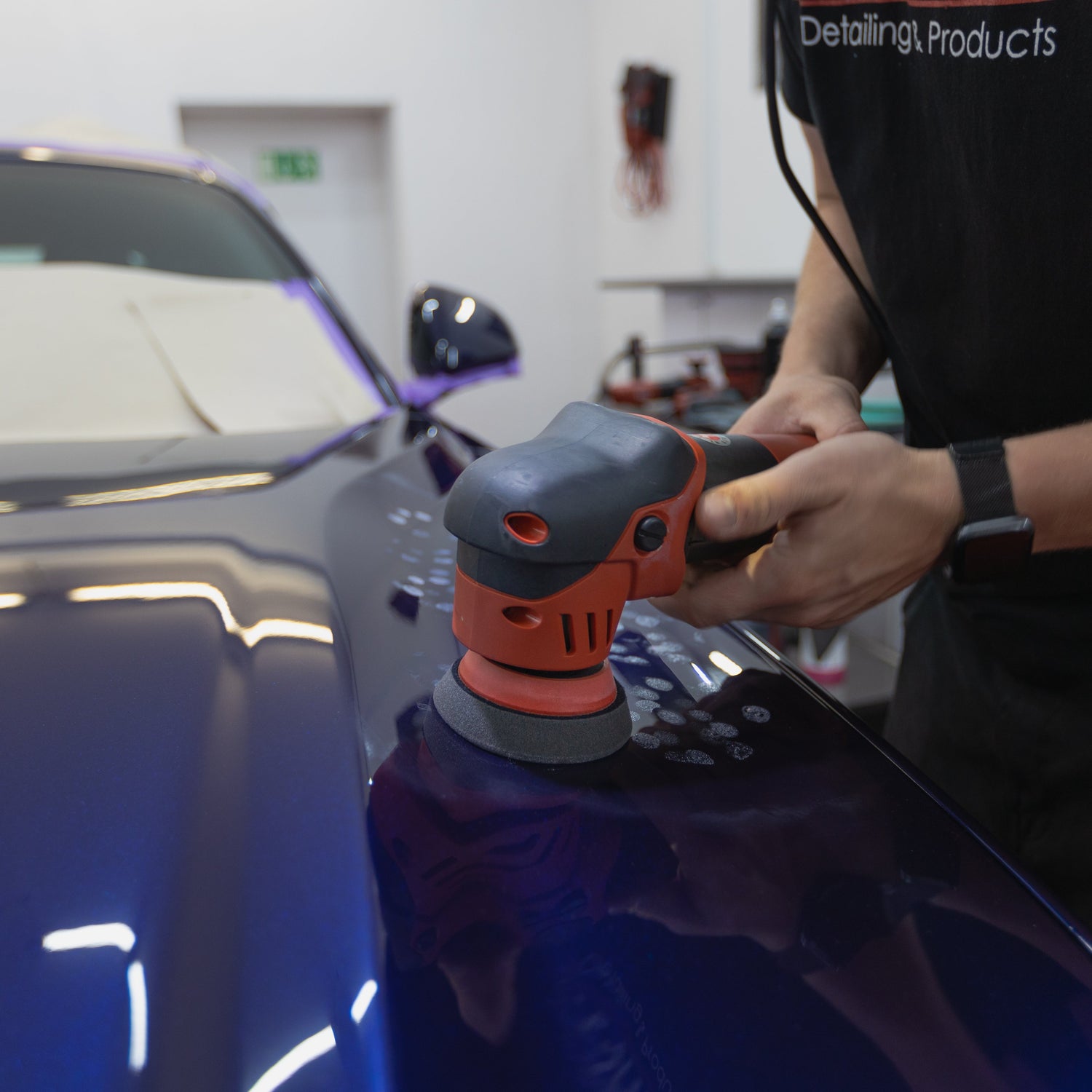
For light to moderate defects, you can test our Black-One one-step polish with the Medium One-Step polishing pad. If the test spot looks good after cleaning and inspection, you don’t need an additional finishing step.
Max Cut for stronger, correctable defects
Our Max Cut compound with the Max Cut pad is designed for higher cut. Only use it where stronger correction is sensible and acceptable. Then check whether Perfect Finish needs to refine remaining marks.
Compare the combinations in the polishing pad guide. A coating does not require a blanket three-step program. What matters is the controlled result on your paint.
How to prepare the paint after polishing
- Create a clean base: Wash the car, remove adhering deposits selectively if needed and dry thoroughly.
- Polish a test spot: Start with the mildest combination that is likely to be effective. Our guide to polishing your car explains the process.
- Remove residues: Use clean, soft microfiber cloths and avoid unnecessary wiping pressure.
- Remove polishing oils and film residues: Our Ultra Degreaser prepares suitable vehicle surfaces for wax, polymer and ceramic coatings. Observe the application instructions, material compatibility and the preparation requirements of your coating.
- Check the dry surface: Under a suitable inspection light, check for remaining marks and residues. Only then decide on further correction or applying the coating.
- Apply the coating: The surfaces must meet the requirements of the respective system. Follow its instructions precisely for application, flash time, wipe-off and curing.
You’ll find the next step in our guide Applying a ceramic coating yourself.
These mistakes should be avoided
- Confusing silicone-free with residue-free: Even a silicone-free polish can leave oils or other residues behind. The final wipe-down remains important.
- Pre-treating with wax-containing products without checking suitability: Combination products can leave unwanted protective films behind. Use a preparation process that matches the coating.
- Simply sealing over holograms: A coating is not defect correction. The finish should be right beforehand.
- Transferring paint polish to every surface: Glass, matte surfaces, film and different wheel finishes each require their own approved products and processes.
Frequently asked questions about polishing before ceramic coating
Is a one-step polish enough before ceramic coating?
Yes, if it achieves the desired paint condition and the surface is then prepared appropriately for the coating. An additional finishing step is not mandatory.
Does a new car need to be polished first?
Not automatically. Check the actual condition. Correct any existing, disturbing defects if necessary and then meet the coating’s preparation requirements.
Does a degreaser remove an old ceramic coating?
You should not rely on that. A control cleaner for removing oils is not a universal remover for fully cured coatings. The old coating must be assessed according to its system.
Can I polish out small scratches after coating?
Abrasive polishing can also remove the new coating. So correct desired defects as far as possible beforehand. For later correction work, you must reassess the paint protection on the affected area.


Deja un comentario
Todos los comentarios se revisan antes de su publicación.
Este sitio está protegido por hCaptcha y se aplican la Política de privacidad de hCaptcha y los Términos del servicio.