Nuestro pulimento se desarrolla y fabrica en Alemania según los estándares más modernos.
🟢 NUEVO ARTÍCULO ONLINE 👉 El sistema de pulido Safe-Shield, explicado en detalle.
Pad, machine and paint hardness affect the result.
Show all polishes5 productos
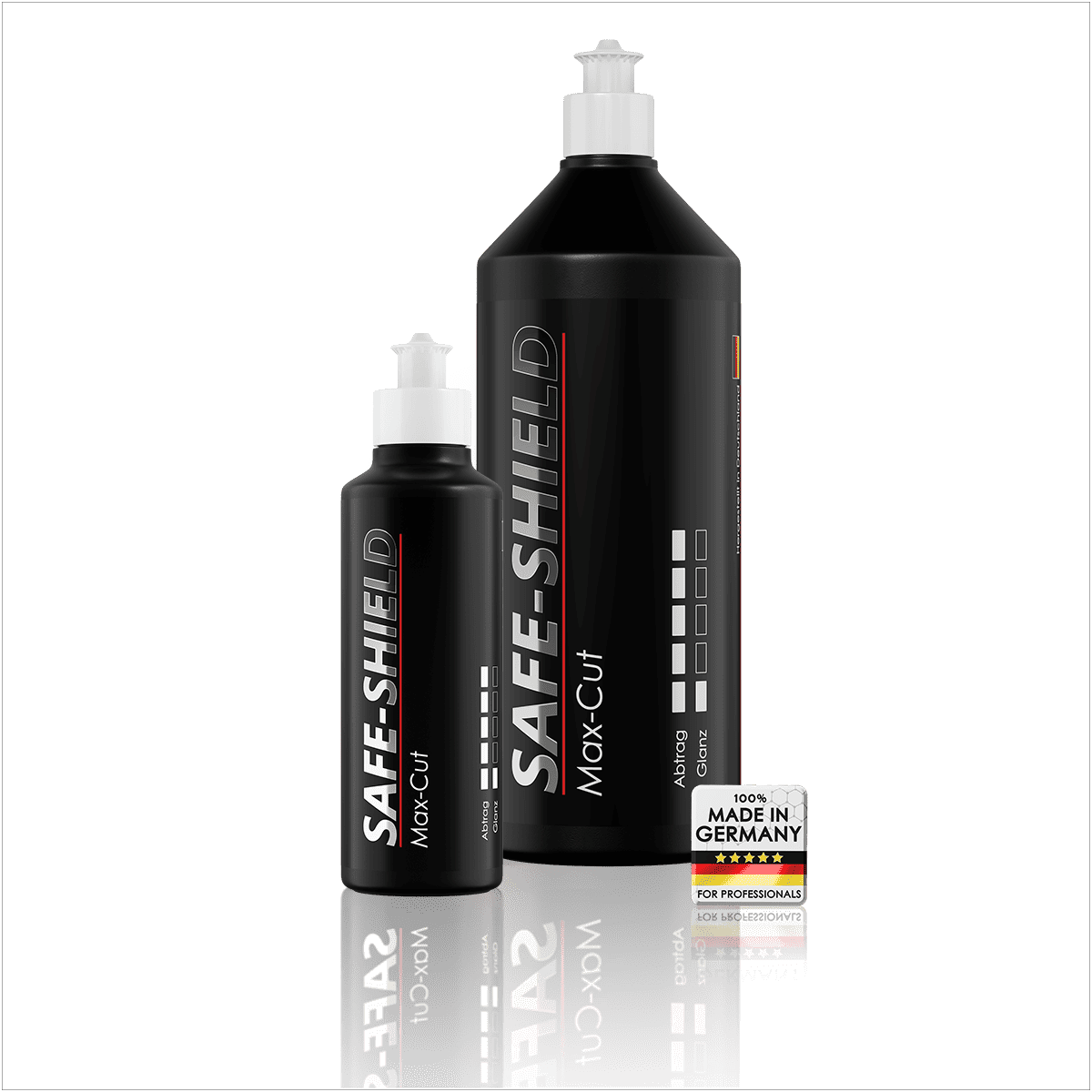
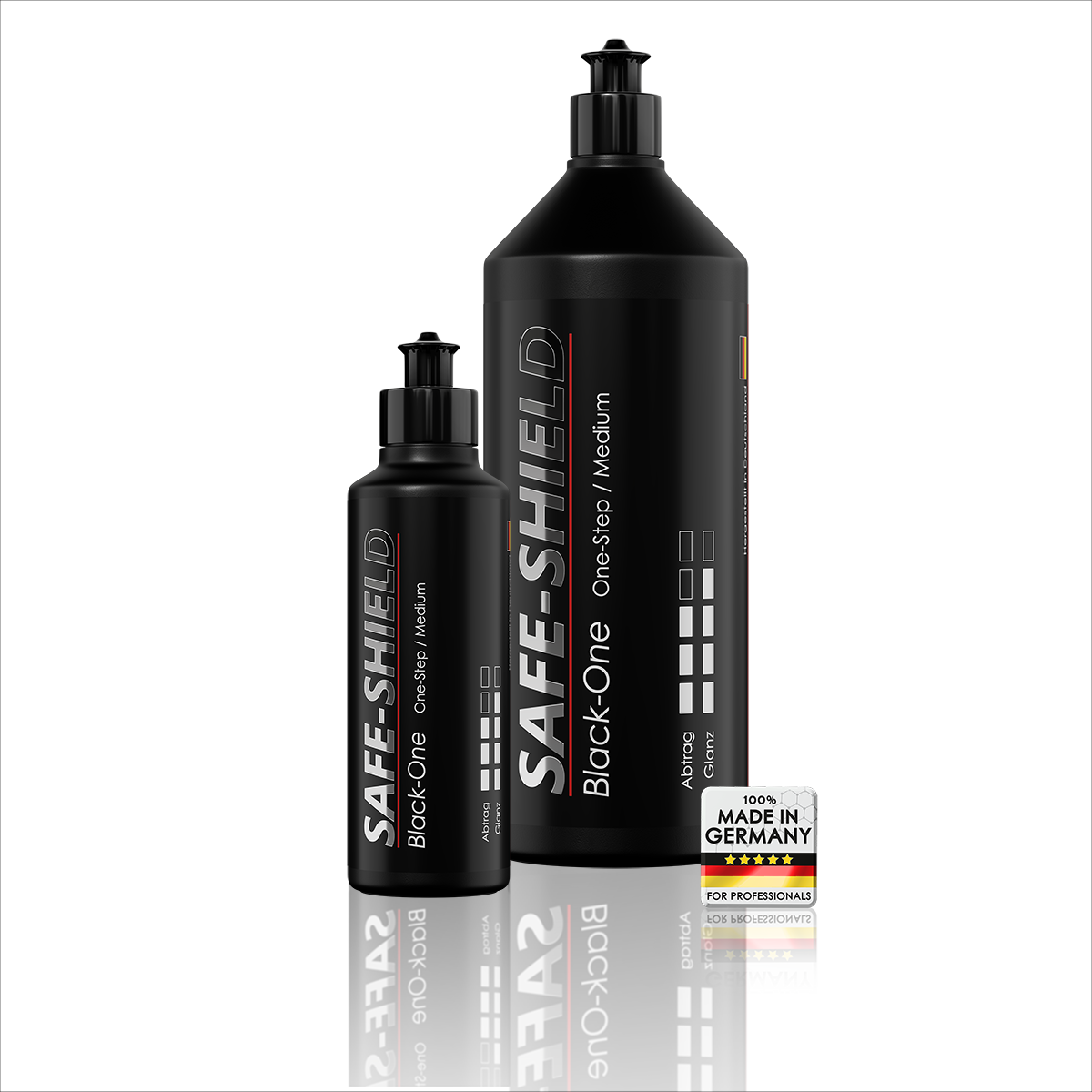
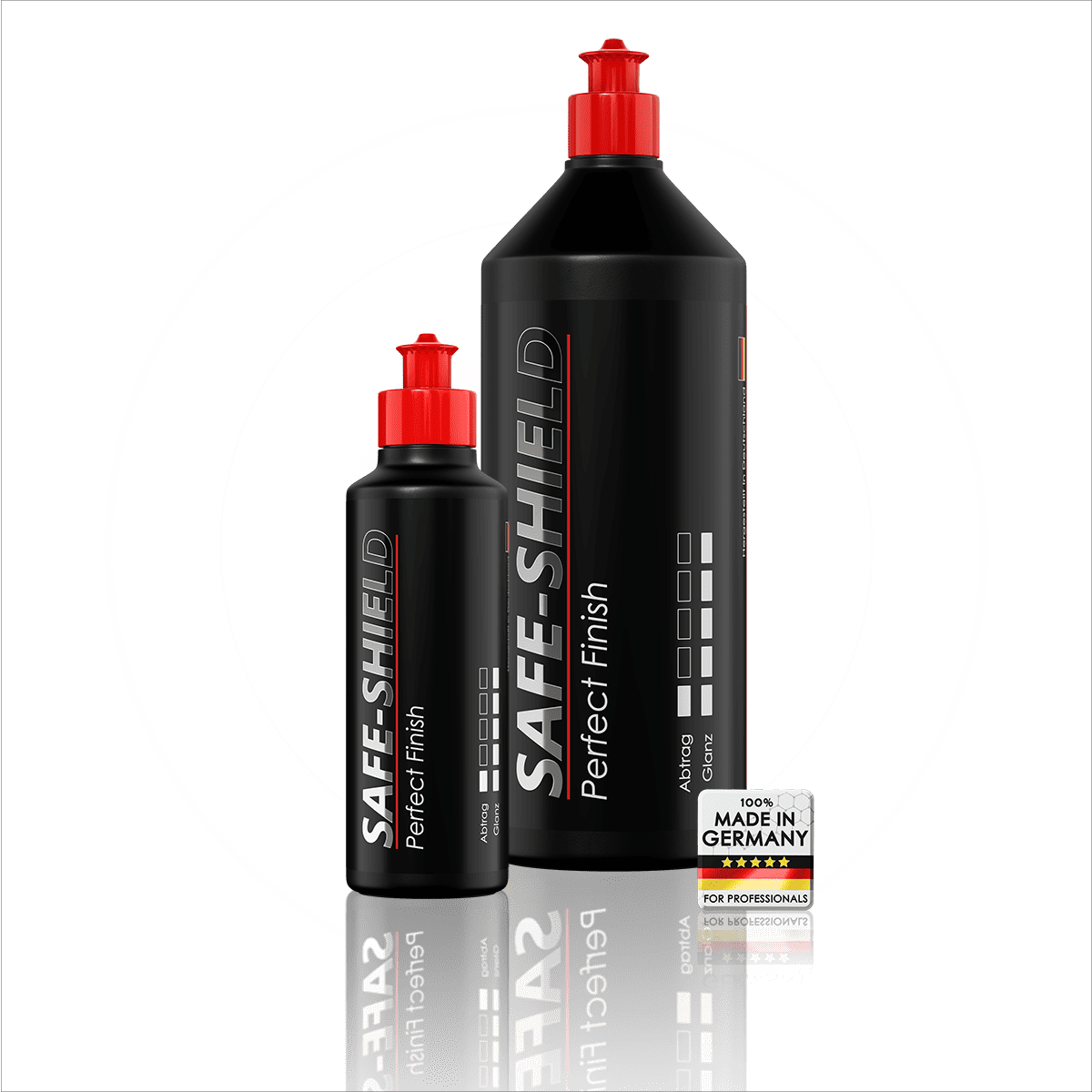
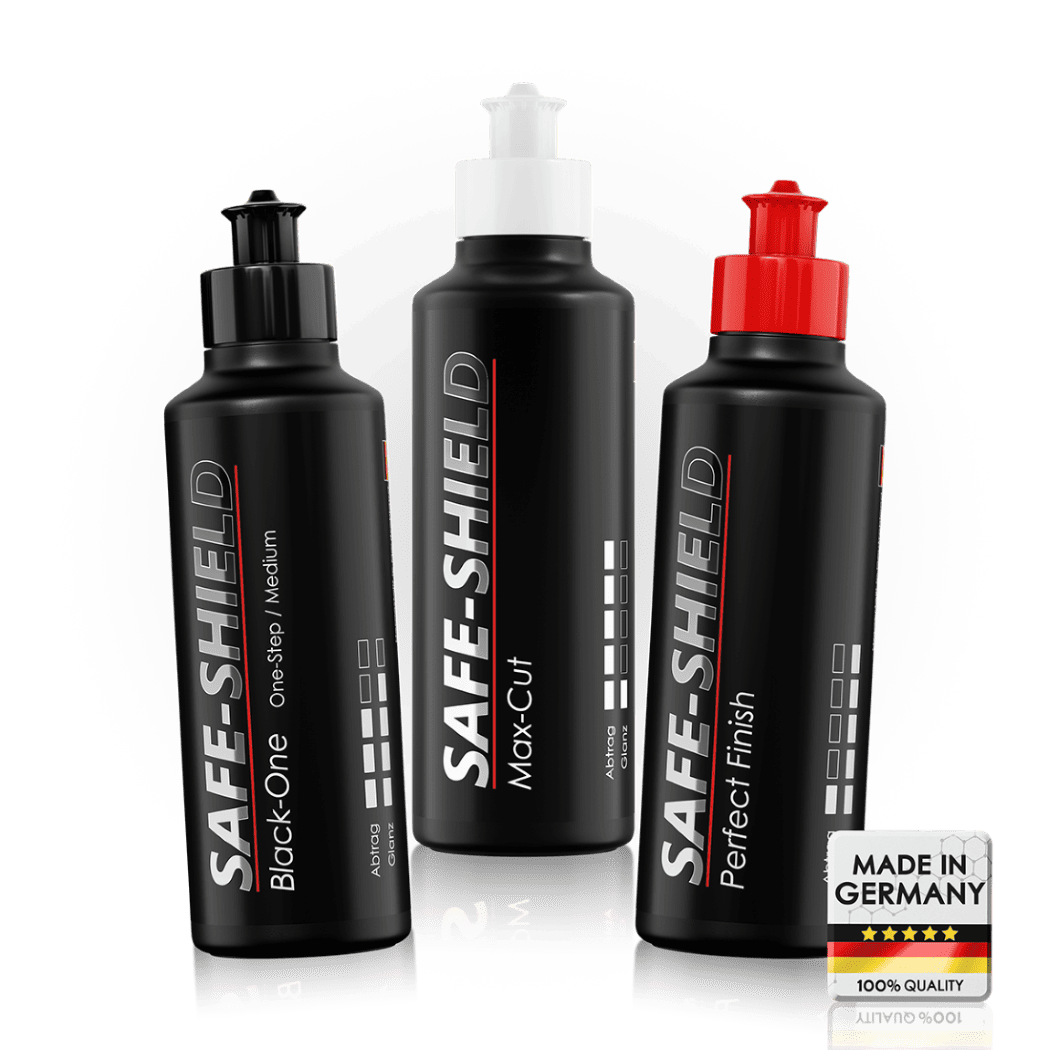
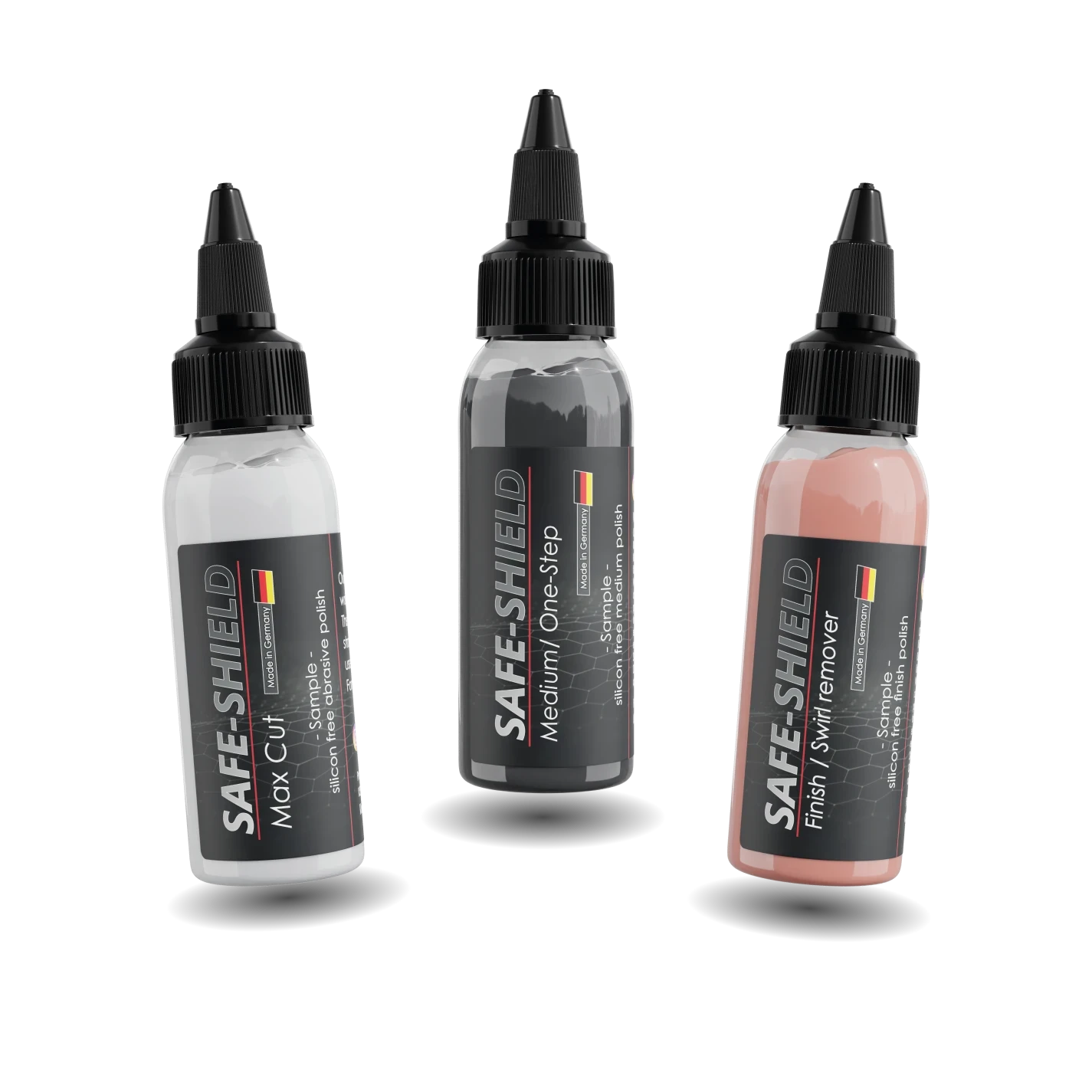
The polish determines the working step. The pad adjusts cut and finish to the paintwork and its defects.
For light scratches, wash marks and a quick paintwork refresh, we recommend the Black One one-step polish . It combines defect correction and a high-gloss finish in one polishing step.
For deeper scratches and more noticeable paint defects, work in two stages. First, Max Cut provides the required cut. Then, Perfect Finish refines the result and creates a clear, high-gloss finish.
Yes. The one-step and two-step approaches shown are matched recommendations, not a rigid system. Experienced users can adapt cut and finish to paint hardness, defects and the machine by using different pad combinations.
In demanding specialist cases, a three-stage process is also possible: Max Cut for defect correction, Black One as a refining intermediate step and Perfect Finish for the final high-gloss finish.
Only add polishing stages after checking the result and confirming they are actually needed.
Actual cutting performance comes from the combination of polish, pad, machine and paint hardness. Our matched polishing pads make it easier to choose a combination for cut, one-step polishing and finishing.
View matching polishing padsNo. The polishes can also be used on suitable painted surfaces on motorhomes, motorcycles and boats. Check the material, coating and paint condition first. Test unfamiliar or sensitive surfaces in an inconspicuous area.

Safe-Shield grew out of hands-on vehicle detailing. The practical experience of managing director and detailer Tim Kohl continues to shape the development of our products and systems.