
You clean wheels thoroughly by first loosening brake dust with a suitable wheel cleaner and rinsing it off. You then remove remaining dirt with shampoo water and clean tools appropriate for the wheel. Work on cool wheels, observe material approvals and never let cleaners dry on the surface.
The key is not to scrub as hard as possible. A controlled process is easier on the surface and also reaches areas that remain dirty when you just blast them quickly with water. This guide shows you how to clean wheels with Safe-Shield Wheel Cleaner and explains what matters for alloy wheels, spokes and the wheel barrel.
Cleaning alloy wheels: the surface is what matters
“Alloy wheel” initially only describes the base material. For cleaning, what matters most is what’s on top of it: for example paint, clear coat or another surface treatment. That’s why there is no universal cleaner approval for every alloy wheel.
- Intact painted wheels: Use a wheel cleaner suitable for this surface and first test compatibility in an inconspicuous area.
- Matte, polished, anodized or special finishes: Explicitly follow the approvals of both the wheel and cleaner manufacturers. Matte wheels must not be polished to a shine during cleaning.
- Machined or damaged wheels: Check the clear coat, edges, and existing stone chips. If there is flaking coating, corrosion, or an unknown surface, get professional clarification first instead of experimenting with stronger chemicals.
Important: Even pH-neutral does not automatically mean “suitable for every surface.” Formula, dwell time, wheel condition and application all interact.
What do you need for cleaning wheels?
A cleaner loosens dirt. Brushes, detailing brushes and wash mitts for wheels help wherever residue or wheel design make targeted follow-up cleaning necessary.
- Suitable wheel cleaner: The pH-neutral Ultra Wheel Cleaner is designed to loosen brake dust and road grime.
- Shampoo solution: For the subsequent contact wash, use a suitable car shampoo according to its dosing instructions.
- Separate wheel tools: A suitable brush, a soft microfibre mitt and, if necessary, an appropriate detailing brush.
- Water and a dedicated bucket: Enough water for thorough rinsing and for regularly rinsing out your tools.
- Separate clean towel: For drying the cleaned wheel surfaces.
- Protective equipment as per label: Suitable chemical-resistant gloves; further protective measures according to the product information.
Which product suits your wheels? Our comparison of pH-neutral, acid-free and acidic wheel cleaners helps you choose.
Cleaning wheels properly in 6 steps
Clean the wheels preferably before washing the rest of the vehicle. Work one wheel at a time so you can keep track of the dwell time. Use a wash bay intended for vehicle washing and observe its rules for using your own cleaners.
1. Let the wheel cool down and check its condition
Don’t start immediately after driving with hot wheels or in blazing sun. Let the wheel cool down and check the surface. Get your cleaner, water and tools ready before you begin.
Rinse off coarse sand or mud without contact first. Whether the cleaner is then used on a dry or wet wheel depends on its current instructions. Do not wipe off loose dirt with a dry cloth.
2. Apply wheel cleaner evenly
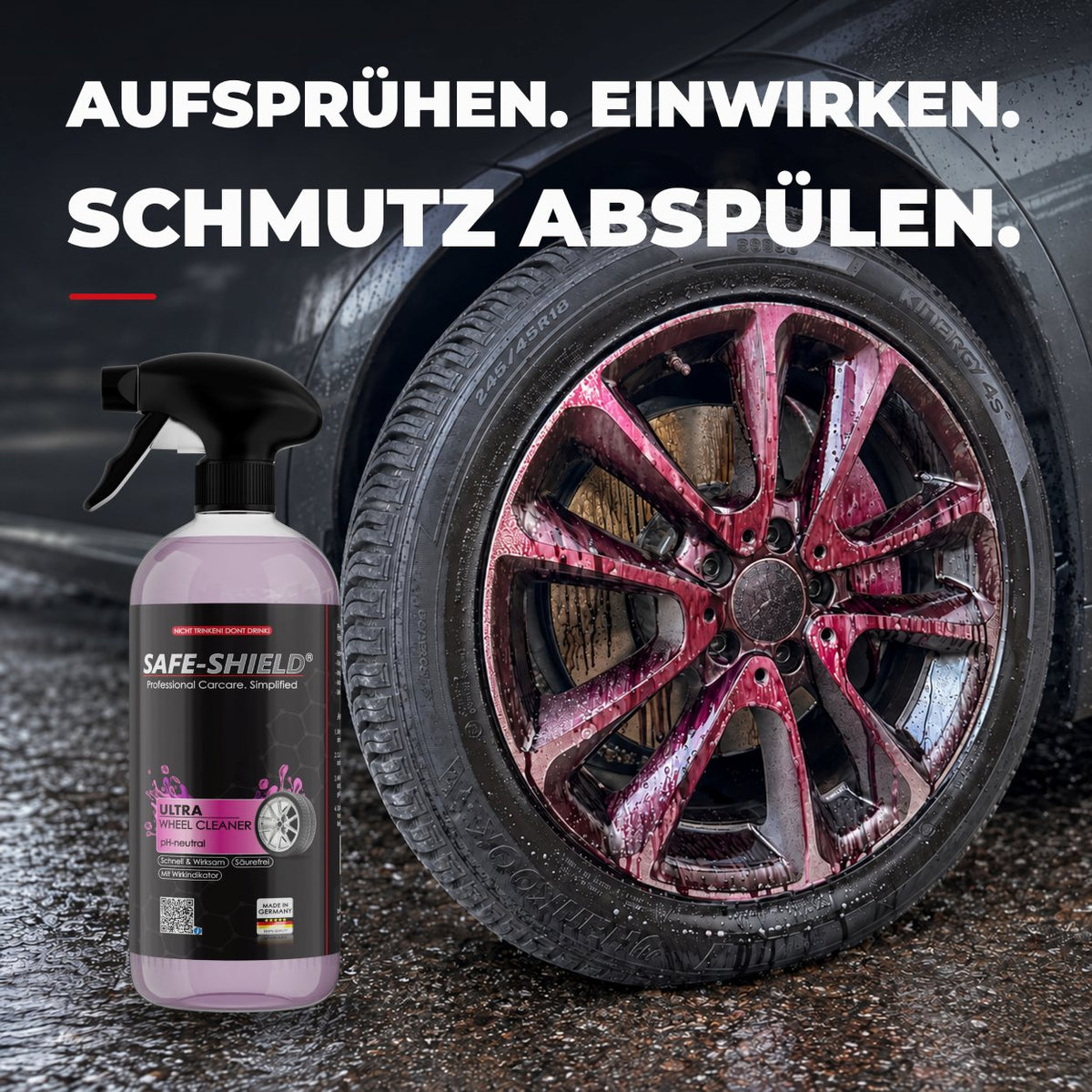
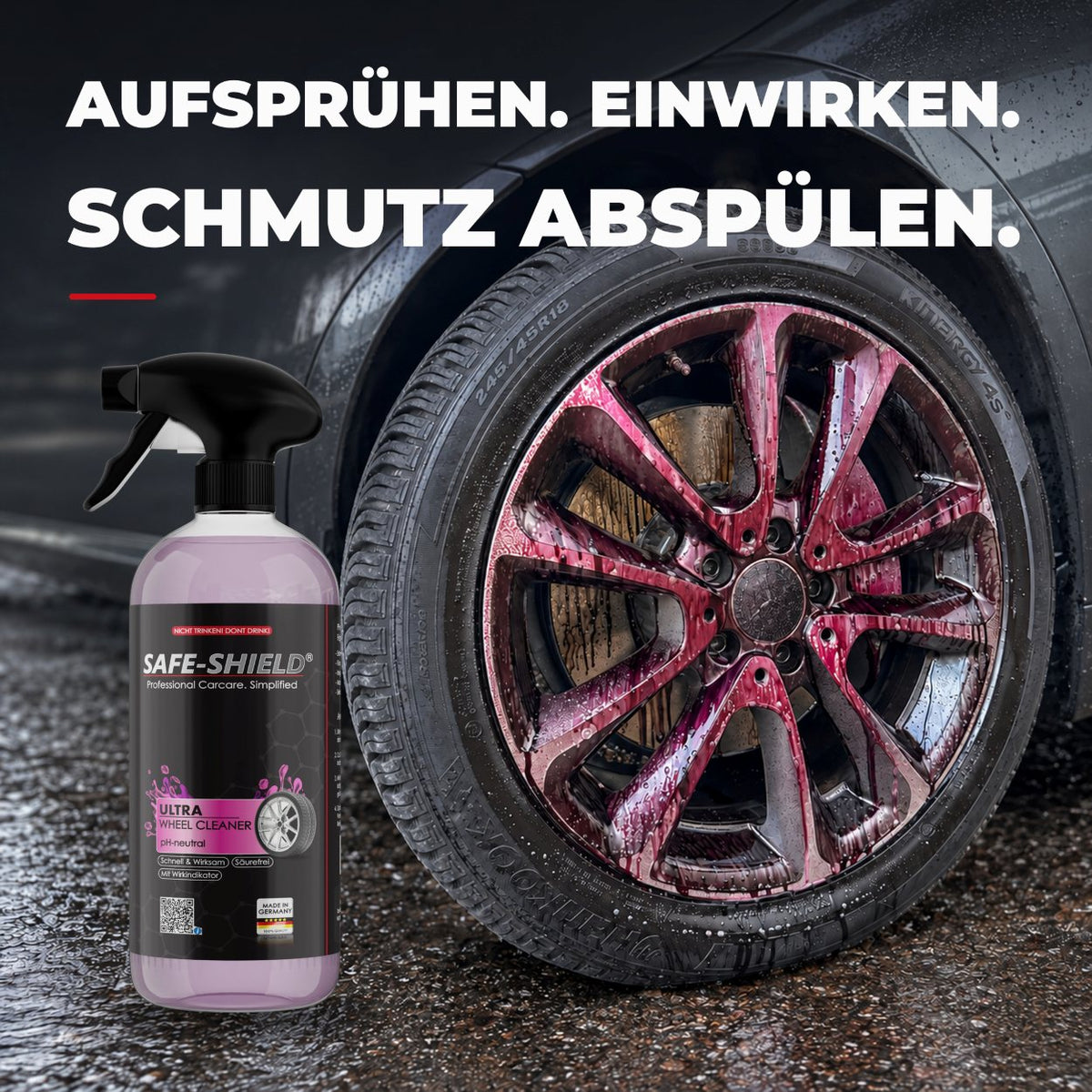
Spray the Wheel Cleaner onto the dirty, suitable wheel areas. Follow the instructions on the label. Spoke edges and recesses are easily missed when spraying quickly, so work systematically.
The purple discoloration of the reaction indicator shows the reaction with iron-containing contamination. It is not proof that all dirt has already been dissolved and does not replace the specified dwell time.
3. Allow to dwell and rinse thoroughly
Follow the dwell time specified on your product. Do not allow the cleaner to dry on the surface. If the area starts to dry, rinse it off thoroughly immediately instead of waiting for a stronger colour change.
Rinse all treated areas thoroughly with water. When using a pressure washer, follow the distance and usage instructions provided by the equipment and wheel manufacturers. Do not hold the jet close to and continuously on damaged paint areas.
4. Clean the wheel barrel, spokes and details
Check where dirt remains. Re-clean these areas with suitable shampoo water and a clean tool. Keep the surface and tool well lubricated, work with light pressure and rinse the tools regularly.
- Wheel barrel: Choose a brush that passes through the spokes without jamming. The flat wheel brush with microfiber cover is suitable for narrow gaps – depending on wheel design.
- Face and accessible spokes: A wheel wash mitt allows controlled cleaning by hand.
- Contours and the backs of spokes: FingerFit microfiber gloves help you work accessible areas in a targeted way. Wear them over suitable chemical-resistant gloves.
- Recesses: Use a soft detailing brush suitable for the surface if needed.
If a brush does not pass freely through the gap, use a smaller or flatter one. Do not pull out a jammed brush with force. Not every area behind the spokes is accessible with the wheel mounted.

5. Rinse off shampoo and loosened dirt completely
Rinse the wheel thoroughly again. Pay particular attention to recesses, spoke edges and the inner barrel. Do not simply spread residue around with the drying towel: if dirt is still visible, clean that area again first.
6. Dry and check the result
Dry the clean, accessible wheel surfaces with a separate soft towel and light pressure. This leaves less water on the surface. Then inspect the wheel in good light.
Clean the tools you used according to their care instructions and let them dry completely. A brush with stubbornly embedded dirt or a damaged cover should not be used again for the next wash.
What to do if brake dust or black spots remain?
Not every dark residue is brake dust. Tar, other deposits or a damaged coating can look similar. More pressure or longer dwell time is therefore not automatically the right solution.
- Uniform film of dirt: First check whether the contact wash with shampoo and water is actually reaching all areas.
- Stubborn isolated deposits: Assess the residues after rinsing. Further treatment is only an option within the product instructions and if the surface is compatible.
- Rough, dull or undercut areas: These may indicate surface damage. Cleaner will not restore a compromised coating.
If the result remains unclear, have the area assessed by a detailer or a specialist wheel shop. Avoid sanding sponges, wire brushes and uncontrolled experiments with stronger cleaners.
For stubborn residues you will find a targeted diagnostic procedure in the guide Removing baked-on brake dust: When wheel cleaner is not enough.
These mistakes should be avoided
- Working on hot wheels: Liquid dries faster and the application becomes harder to control.
- Spraying all four wheels at once: If you work slowly, the cleaner may already start to dry on the last wheels.
- Extending dwell time until everything turns purple: The color change is not a stopwatch and not proof that everything is perfectly clean.
- Continuing to scrub with dirty tools: Rinse tools frequently and do not drag dirt across the surface.
- Using household remedies without material approval: Oven cleaner, vinegar or scouring agents are not a reliably approved alternative for wheel care. Use a suitable product according to its instructions.
- Mixing cleaners: Use products separately and according to their instructions; rinse thoroughly between steps.
Which wheel cleaning kit is right for you?
You already have suitable tools? You can also buy the Ultra Wheel Cleaner separately.
For the subsequent paint wash you can find the procedure and how the cleaners fit together in our guide to proper car washing.
Q&A: Frequently asked questions about wheel cleaning
How often should I clean my wheels?
Base the interval on use and contamination. Check the wheels every time you wash the car and remove visible deposits promptly. Heavily used or quickly soiling wheels need more frequent attention than rarely driven vehicles. Not every light soiling requires the same intensive cleaning.
Can I clean wheels using only car shampoo?
For light soiling, a suitable car shampoo for the surface may be enough. However, it will not always remove stubborn brake dust. In that case, a suitable wheel cleaner as a separate step before contact washing will help.
Do I need to wet the wheels before using wheel cleaner?
That depends on the product. First remove coarse sand and mud without contact. Whether the cleaner should then be applied to a dry or wet surface is stated in its application instructions. There is no universal rule for all wheel cleaners.
Is an acid-free wheel cleaner automatically pH-neutral?
No. “Acid-free” and “pH-neutral” are not the same; an acid-free cleaner can also be alkaline. Also pay attention to approval for your wheel surface and the application instructions. The pH value alone does not fully describe material compatibility.
Can I clean coated wheels the same way?
Use cleaners that are compatible with both the wheel surface and the existing coating. Follow the care instructions for the coating. A coating does not make the wheel immune to unsuitable chemicals, dirty tools or excessive pressure.
Why don’t my wheels get clean even with wheel cleaner?
Often, hard-to-reach areas were not fully wetted or require a targeted contact wash. If individual spots remain, a different type of contamination or surface damage may be present. First identify the cause instead of arbitrarily extending the dwell time.


Deja un comentario
Todos los comentarios se revisan antes de su publicación.
Este sitio está protegido por hCaptcha y se aplican la Política de privacidad de hCaptcha y los Términos del servicio.