
First remove water spots on a ceramic coating with a gentle wash. If mineral rings remain, a mildly acidic car shampoo suitable for the coating or a dedicated water spot remover can help. If the surface has already changed, cleaning alone will not be enough. The crucial question is therefore whether there is still a deposit on top or damage has already occurred.
We’ll show you how to build these steps on each other in a sensible way. You don’t have to start polishing immediately or rush into renewing the ceramic coating.
Freshly coated? The following cleaning steps apply to fully cured coatings. For Final PRO, under the conditions in our instructions, this is about 5 days at approx. 20 °C. During this time, do not wash or experiment with acidic specialty cleaners. For a fresh coating, first read when rain and the first wash after Final PRO are possible.
Why do water spots occur despite a ceramic coating?
When water evaporates on the vehicle, the dissolved minerals and carried dirt remain. Particularly hard tap water can leave pronounced marks. This happens, for example, after washing if droplets are allowed to dry on the paint.
A ceramic coating makes maintenance easier, but it does not remove minerals from the water. Even nicely shaped beads can remain on horizontal surfaces and dry in. Water spots therefore do not automatically mean that the coating has failed.
Light edges or a chalky haze can indicate deposits. However, appearance alone is not enough for a reliable diagnosis: there may also be an already damaged surface underneath the deposit. To see whether the mark will disappear, test with a gentle cleaning on a small area.
Why sun and residue on the roof and hood are especially critical
If the car is parked outside, sticky residues such as honeydew or tree sap and other dirt can accumulate on the paint under trees. When moisture, such residues and intense sun come together, stubborn deposits can form and attack the surface. Depending on the severity, this can affect the coating or even the underlying paint. A ceramic coating offers additional protection, but it cannot prevent such damage under all conditions.
Water and contamination tend to sit longer on the roof, hood and trunk lid. These areas can therefore be more affected than the sides. Not every visible ring is already damage: you first need to distinguish removable deposits from permanent surface changes.
Removing water spots: step-by-step guide
1. Let it cool down and wash off loose dirt
Work in the shade on cool surfaces. Rinse off loose dirt and wash the paint with a clean wash mitt and a suitable shampoo. For regular maintenance we use our Wash & Foam car shampoo. It cleans pH-neutrally and supports gentle gliding of the mitt.
Rinse off all shampoo and dry the clean paint. If the spots are gone, you’re done. A specialty cleaner will not add any benefit then. If rings remain, do not rub harder with the drying towel.
2. Target mineral residues with an acidic cleaner
For stubborn mineral deposits there are acidic car shampoos and dedicated water spot removers. They can do more against this type of contamination than a normal pH-neutral wash. That does not automatically make them the better choice for every car wash.
Choose a product that is explicitly suitable for the affected surface and the existing coating. An acidic wheel cleaner or a household descaler is not a random substitute for a paint cleaner. Adjacent metals, trims, films and plastics must also tolerate the application.
- Test a small area: Check compatibility on an inconspicuous spot before treating larger areas.
- Follow the product directions: Dilution, wet or dry surface and dwell time depend on the specific cleaner. It would be wrong to give the same dosage for all acidic products.
- Prevent drying on the surface: Work in sections on cool panels and follow the safety instructions on the label.
- Rinse thoroughly and inspect: Remove all cleaner residues and then dry. Assess the area in good light before continuing.
A repeat application is only an option if the product instructions allow it and the surface remains unremarkable. Do not mix acidic and alkaline cleaners. Rinse thoroughly with water between different products.
3. Choose the cleaner based on the residue
A greasy traffic film is a different task than limescale. For that, a suitable alkaline pre-cleaner can be useful. Tar, adhesive residue and industrial fallout each require an appropriate specialist treatment. “Acidic” does not mean that every stubborn contamination will disappear. We explain the differences in Car wash: pH-neutral, acidic or alkaline?.
What to do if the water spots won’t disappear?
If an edge remains clearly visible after proper cleaning, the coating or the clear coat underneath may already be attacked. Further, increasingly strong chemicals will not repair such changes. At the latest now, contact a professional instead of extending the dwell time on your own.
On suitable glossy paint, a properly chosen polish can help depending on the defect. However, this will also remove the ceramic coating in the treated area; you must then rebuild the protection there. Complete removal of deep damage is not always possible. Matte surfaces must not be polished to a gloss!
Detailing clay is also not our first step for mineral water spots: it can leave marks and affect the coating. For a necessary reconditioning, our article Which polish before a ceramic coating? helps you decide.
How do you avoid new water spots?
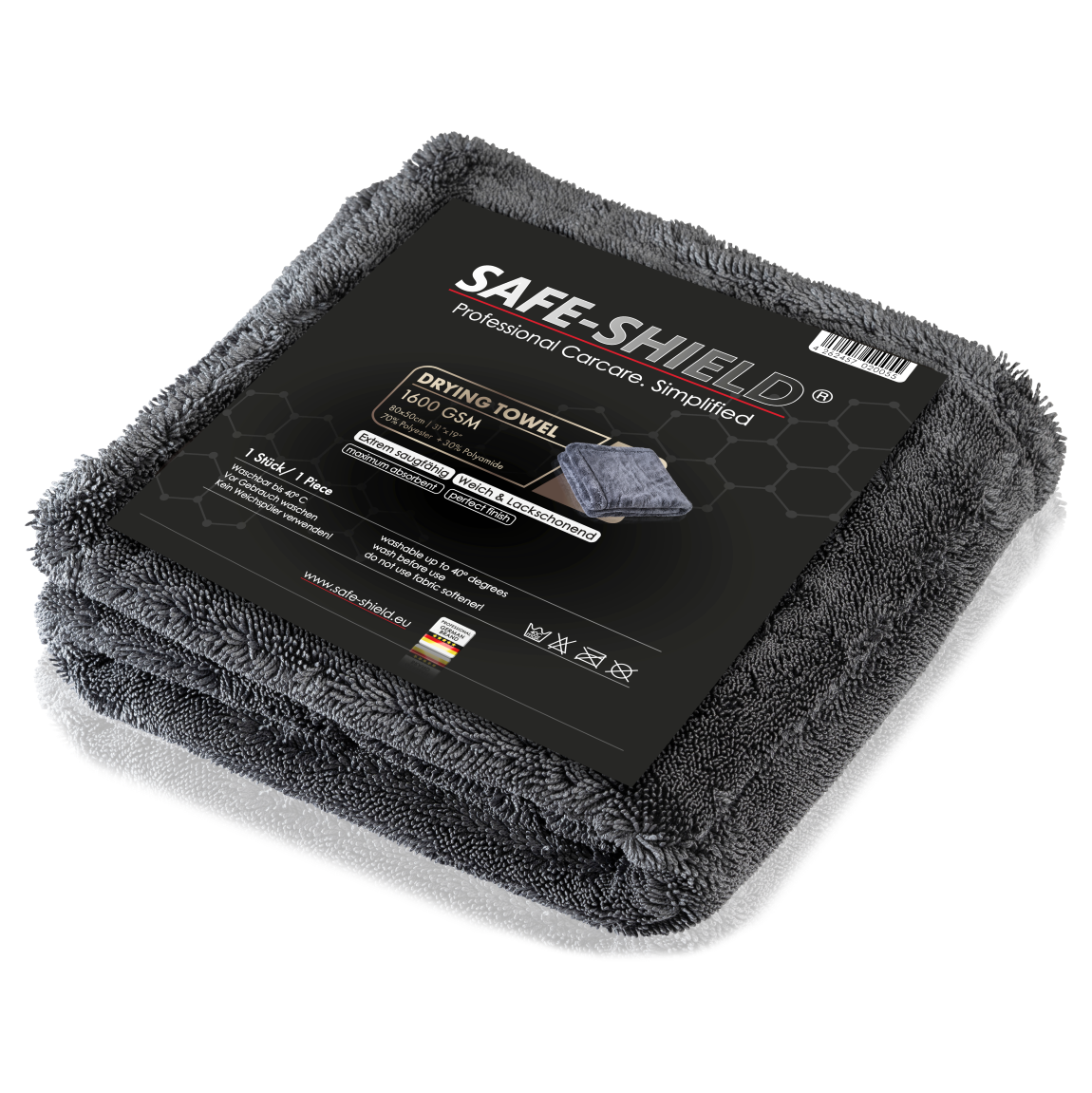
Wash on cool paint, never let shampoo dry on the surface and dry the clean paint soon after the final rinse. Our 1600 GSM drying towel is ideal: lay it on the clean, wet paint and gently pull it off without extra pressure. Replace a saturated or soiled towel. Also watch for water that later runs out of mirrors and trim.
The full process is explained under Drying a car without water spots. Suitable products for regular washing can be found in our car shampoos and vehicle cleaners. We recommend targeted special cleaning only when a normal wash does not remove the specific residue.
If the beading behaviour is also weaker, read Ceramic coating no longer beads: clean or renew?. Both symptoms can be related to deposits, but must be assessed separately.
Are you allowed to follow up with a detailer after cleaning?
Yes. A detailer that matches the ceramic coating and provides water-repellent care can be a useful addition after washing. This also applies if individual areas no longer bead as strongly as at the beginning. Deposits, wear and changes to the surface can reduce beading without the coating having completely disappeared in those areas.
A suitable detailer can refresh slickness, gloss and water repellency. However, it will not remove etched-in water spots or repair a damaged ceramic layer. Use it on a clean, fully cured coating and follow the specific application instructions. Thorough drying remains important even afterwards.
Frequently asked questions
Can I remove water spots with a pH-neutral shampoo?
Fresh, lightly adhering residues can come off during a normal wash. More stubborn mineral deposits may require a suitable acidic product. Our Wash & Foam is the basis for regular washing, not a dedicated limescale remover.
Will an acidic cleaner also remove the ceramic coating?
That depends on the formulation, application and coating. Only use a suitable product on fully cured ceramic and follow the care instructions. Neither “acid is always harmful” nor “every ceramic tolerates every acidic cleaner” is correct.
Can I use vinegar or citric acid?
We recommend a cleaner developed specifically for automotive paint and coatings. With household remedies, clear guidance on concentration and material compatibility is often lacking for this type of use.
Do I have to reapply the coating after water spots?
Not if loose residues can be gently removed and the coating is still working. If polishing is used for correction, the protection in the treated area must be rebuilt.

Leave a comment
All comments are moderated before being published.
This site is protected by hCaptcha and the hCaptcha Privacy Policy and Terms of Service apply.