
For a clear finish on black paint, we recommend our Perfect Finish polish. On sensitive black paint, combine it with our Ultra Soft Pad. On less sensitive paint, use the Perfect Finish Polishing Pad. What matters is how refined the surface looks after polishing, rather than removing as much material as possible.
Fine scratches, holograms and milky haze are particularly easy to see on black paint. The aim is therefore a clear result, rather than maximum material removal. We show you which combination to start with and what to change if the paint still does not look clear after polishing.
Which polish and pad suit black paint?
Sensitive black paint: Perfect Finish + Ultra Soft Pad
Our Ultra Soft Pad is specifically designed to minimise holograms on very soft, dark and sensitive paint. Combined with Perfect Finish polish, it is our recommendation for the finest finishing marks and final gloss. This particularly gentle combination is worth trying if another finishing pad still leaves light haze.
The pad is deliberately designed for minimal abrasive action. Its purpose is to refine the finish, not remove deep scratches. Clean pads, light pressure and gentle wipe-off remain essential.
Less sensitive black paint: Perfect Finish + finishing pad
On more robust black paint, start with Perfect Finish and our Perfect Finish Polishing Pad for fine polishing marks. This combination suits the final finishing stage on many automotive paint finishes. If the cleaned test area still shows very fine haze, try the Ultra Soft Pad before working on the whole car.
Light to moderate wash-induced scratches
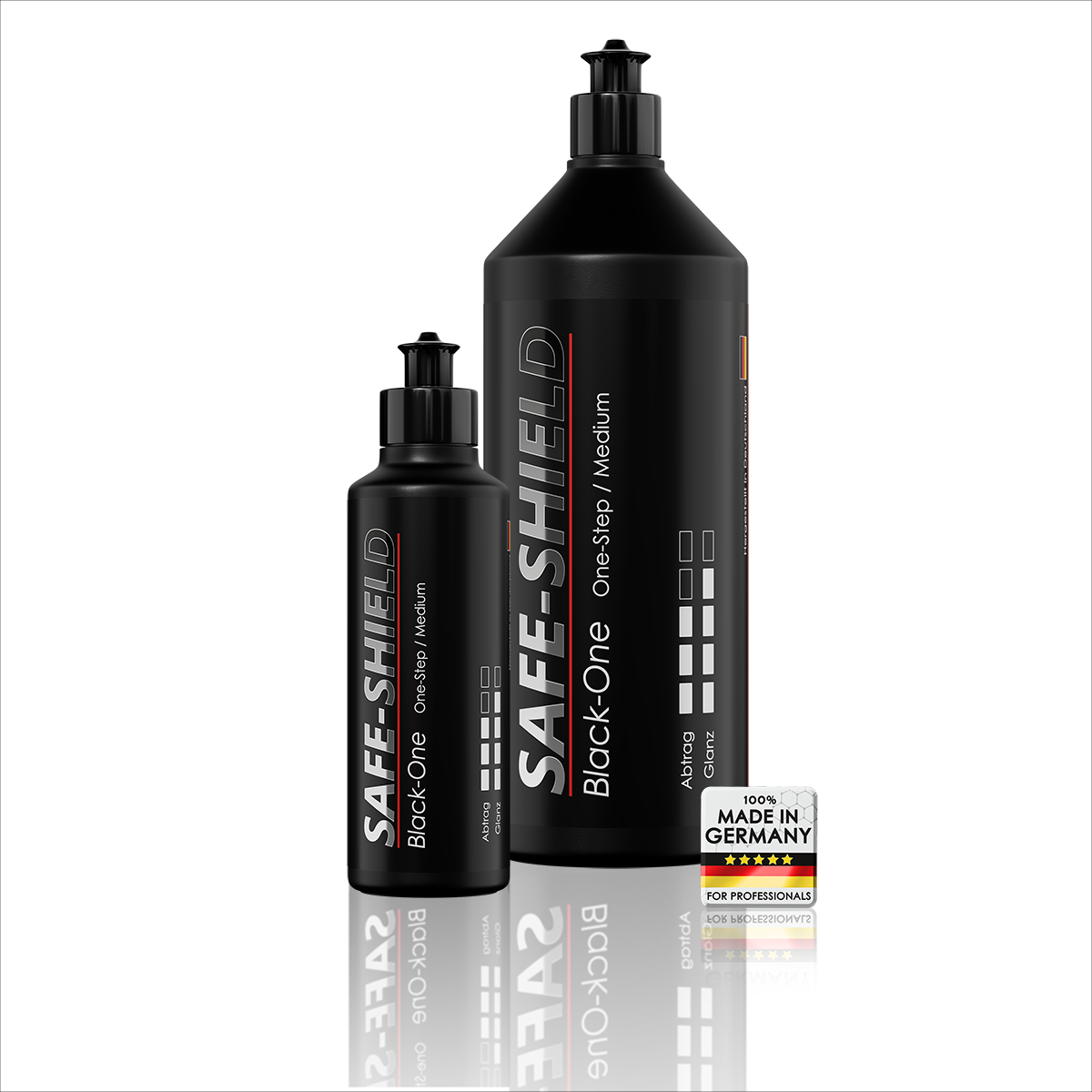
Our Black-One One-Step Polish with the Medium One-Step Polishing Pad is a sensible starting point if you want correction and gloss in a single stage. Black-One is not limited to black vehicles. The test spot determines whether your paint needs any additional finishing.
More pronounced defects that can be safely corrected
If a milder combination is not enough, Max Cut with a suitable cutting pad may be needed. Afterwards, check whether a finishing stage is necessary to remove remaining fine marks. An additional medium polishing stage is not compulsory. See One-step or two-step polishing to decide between one and two stages.
Black does not automatically mean soft. Black paint can also be hard. Repainted panels can react differently from the rest of the car. The vehicle brand and colour are therefore no substitute for a small test area.
How to find the right combination on a test spot
- Prepare thoroughly: Wash and dry the paint thoroughly. Remove bonded contaminants selectively; do not clay every area as a precaution. Claying can itself leave marks.
- Inspect defects under light: Choose a manageable, reasonably flat area. Start with the mildest combination you expect to give sufficient correction.
- Polish with control: Keep the pad as flat as possible and move the machine evenly in overlapping passes. More pressure is not a reliable substitute for the right combination.
- Wipe off gently: Use a clean, soft towel and light wiping pressure. Turn to a clean side before dragging collected residue over the paint again.
- Inspect without a film of polish: Remove remaining oils from compatible paint with our Ultra Degreaser. Test the cleaner on a small area first. Inspect the dry surface with an inspection light from several angles.
If the unwanted defects are sufficiently reduced and the reflections are clear, you do not need to continue polishing. If fine haze remains on sensitive black paint, try Perfect Finish with a fresh Ultra Soft Pad. For the full process, see our guide to polishing a car.
Why does haze remain after polishing?
Haze does not always have the same cause. Distinguish residue, fine polishing marks and new scratches caused during wiping:
- Oily streaks that change as you wipe: Remove residue with a fresh towel and inspect the clean surface. If wipe-off remains difficult, see our guide Polish smearing or difficult to wipe off.
- Uniform fine haze despite a clean surface: The finish may be too coarse. Test Perfect Finish with a clean Ultra Soft Pad on sensitive paint, or with the Perfect Finish Polishing Pad on less sensitive paint. Change only one variable at a time.
- Fine lines in the wiping direction: Check the towel, particles and pressure. On sensitive paint, wipe-off alone can leave new marks. More polish will not solve this problem.
- Curved light trails: These may be holograms. For targeted refinement, see Identifying and removing holograms.
A soft 400 GSM polishing towel helps with wipe-off. Cleanliness and light pressure remain essential: even a soft towel containing trapped particles can cause scratches.
How do you keep black paint looking good after polishing?
Polish does not provide durable paint protection. Afterwards, choose protection suited to your maintenance routine and working conditions. Our guide Wax or ceramic coating also explains the polymer sealant alternative.
For everyday care, a clean hand wash and gentle drying are more useful than frequent repolishing. Do not wipe dust off dry paint. This helps prevent new wiping marks immediately after detailing.
Frequently asked questions
Do I need a colour-tinted polish for a black car?
For abrasive paint correction, the right cutting action is what matters. A coloured product is not required. With products containing fillers or protective ingredients, check whether defects are merely hidden or genuinely reduced.
Is Black-One only suitable for black cars?
No. Black-One is our one-step and medium polish for light to moderate paint defects. Choose according to paint condition, not colour.
Does black paint always need two-stage polishing?
No. If your test spot with a one-step combination provides sufficient correction and a clear finish, that stage is enough. Another stage makes sense only if marks remain.
Why do I see more scratches in sunlight than in the garage?
Directional light often reveals fine defects more clearly. Use a suitable inspection light from several angles. Diffuse overhead lighting alone is often insufficient for assessing the finish.

Leave a comment
All comments are moderated before being published.
This site is protected by hCaptcha and the hCaptcha Privacy Policy and Terms of Service apply.