Machine polish fine scratches out of real glass with a rotary polisher and Glass Pad.
Inkl. moms.
Leveranstid: 2–4 arbetsdagar · Italien
For scratch correction: Rotary polisher + Safe-Shield Glass Pad. Dual-action polishers are for intensive glass cleaning only. Machine and pad are not included.
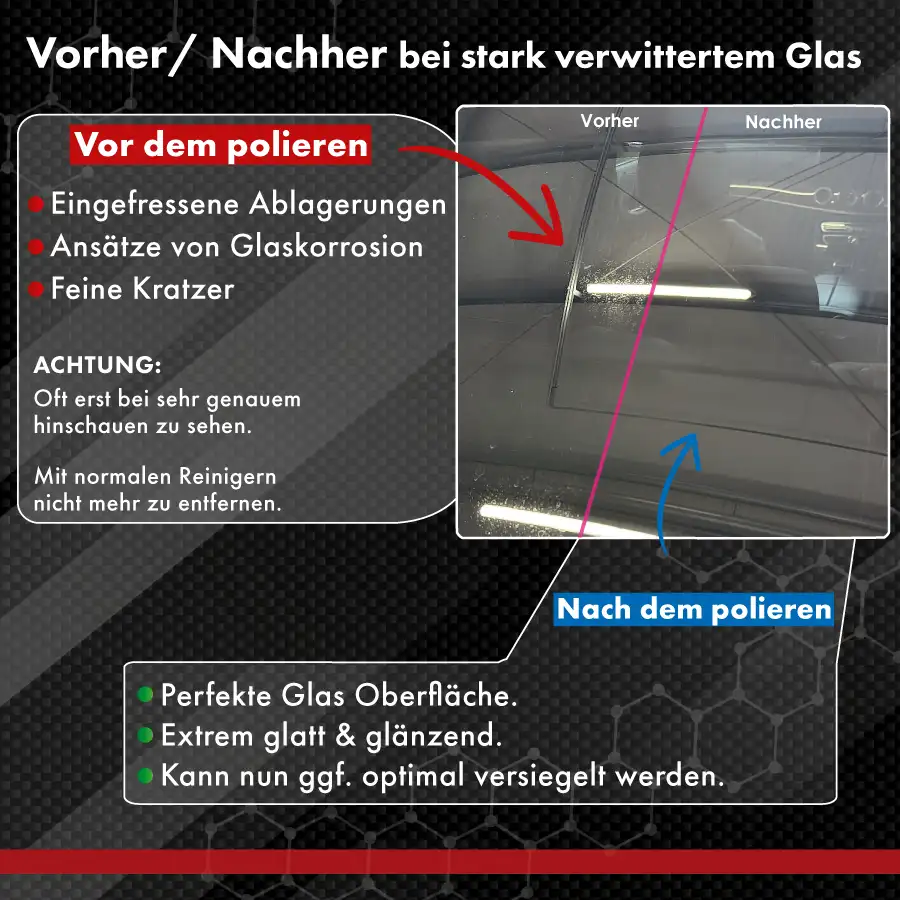
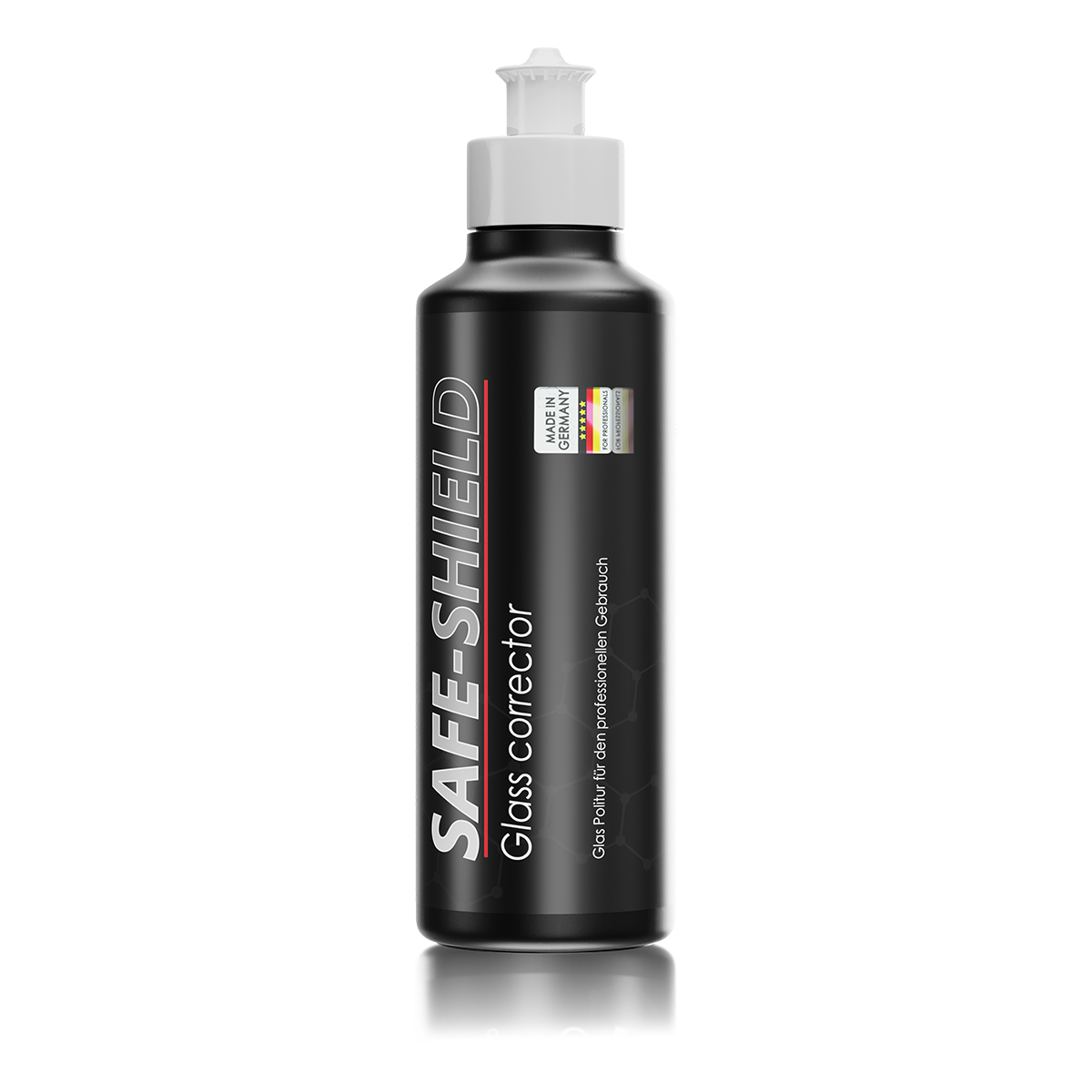
Machine polish fine scratches out of real glass. Use a rotary polisher and our compressed-felt Glass Pad. You can also target wiper marks, mineral deposits and weathering. Glass Corrector works where ordinary glass cleaning is no longer enough. Its hard-core abrasive particles provide genuine glass cutting, allowing correction of scratches where their depth permits.
Not every scratch can be removed completely. Deep scratches that clearly catch a fingernail often allow only limited improvement. A test area shows what is achievable. Glass polishing takes experience and patience; extra pressure or prolonged polishing in one spot cannot replace controlled technique.
The 100 ml bottle does not guarantee coverage of a specific number of windows. Consumption and working time depend on the glass condition and correction required.
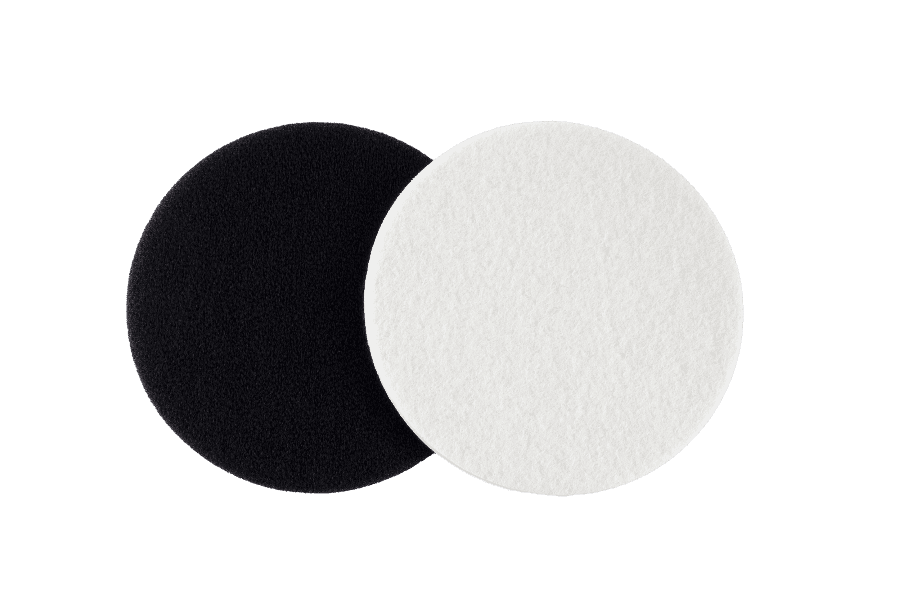
For scratch correction, use only a rotary polisher and our compressed-felt Glass Pad. The firm felt maintains the compression resistance needed for glass polishing. Work at 400–1,500 rpm, taking the machine, pad size and heat build-up into account.
A dual-action polisher is suitable only for intensive glass cleaning, for example to treat limescale and water spots. This is not scratch correction. A soft paint polishing pad is not a substitute for the Glass Pad.
Work in small areas, keep the machine moving evenly and monitor temperature continuously. Stop if the glass becomes excessively warm. If you are unfamiliar with machine glass correction, leave the work to a specialist.
For real vehicle glass, such as windscreens and side windows. Not for paintwork, acrylic glass, polycarbonate, films, displays or coated interior surfaces. Check suitability first for specialist glazing and existing coatings.
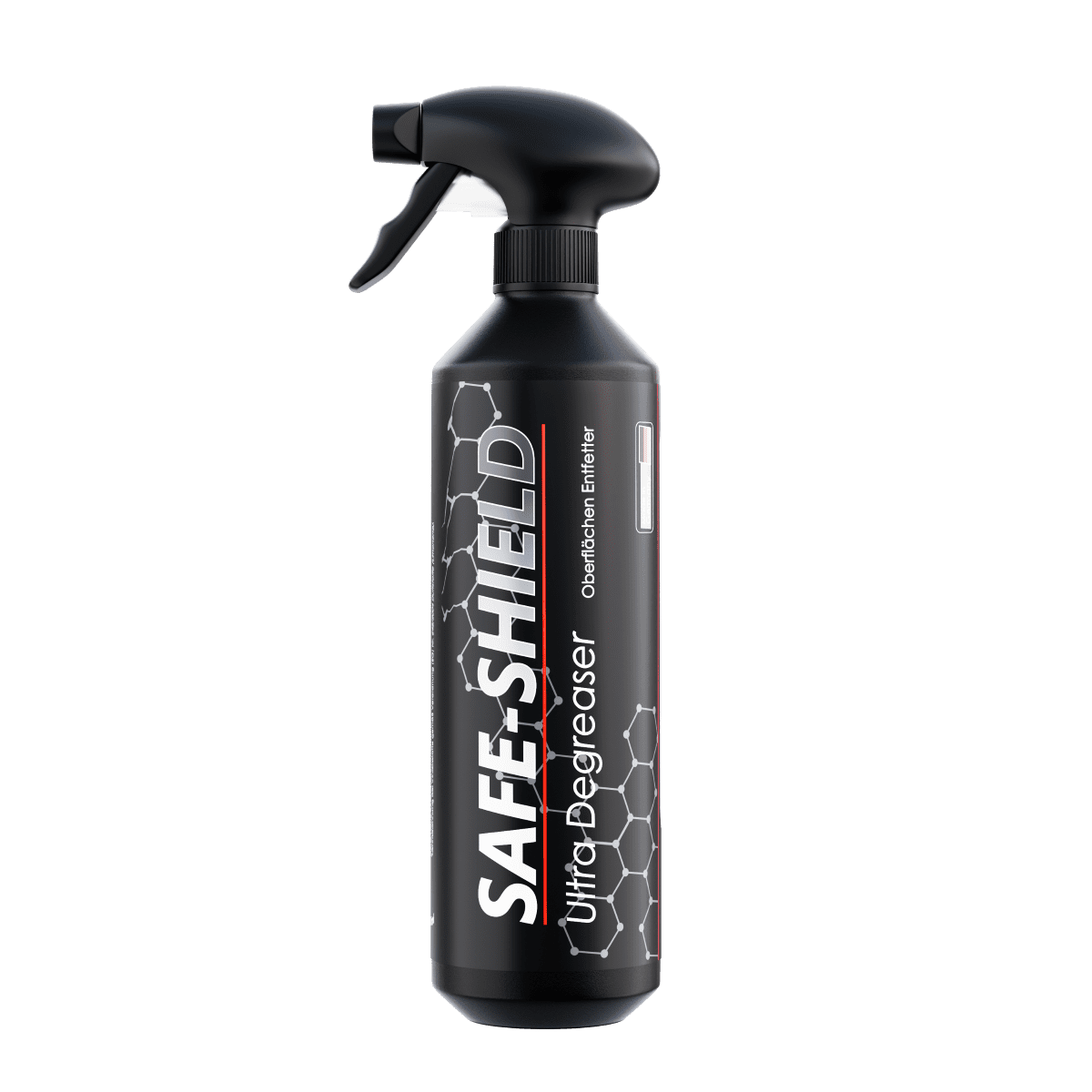
Remove all polish residue, clean the glass and inspect under good lighting. Before applying a new glass coating, degrease with Ultra Degreaser according to its instructions.
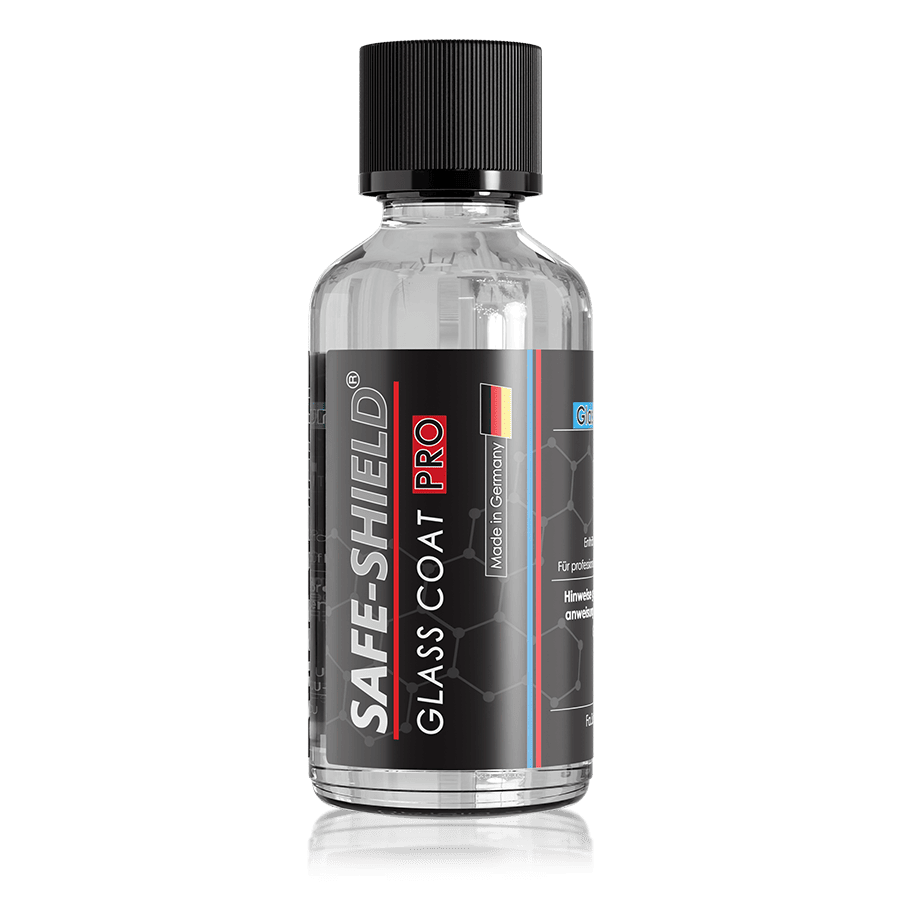
Glass Corrector prepares the glass; it is not a coating. For subsequent water beading, add Glass Coat. Both stages are also available in the Glass Polishing & Coating Set.
Die behandelte Ware enthält Biozidprodukte als Schutzmittel.
EUH208 Enthält Reaktionsmasse aus 5-Chlor-2-methyl-2H-isothiazol-3-on und 2-Methyl-2H-isothiazol-3-on (3:1). Kann allergische Reaktionen hervorrufen.
P102 Darf nicht in die Hände von Kindern gelangen. EUH210 Sicherheitsdatenblatt auf Anfrage erhältlich.

Professional glass correction
The glass is clean, but fine scratches are still visible? Glass Corrector was developed for machine polishing real glass. With a rotary polisher and Glass Pad, you remove a controlled amount of glass to polish out suitable fine scratches. Stubborn limescale and water spots can also be treated.
Hard-core abrasive particles for genuine glass cutting. Combined with our compressed Glass Pads and a rotary polisher, the polish can correct suitable scratches. The combination of polish, firm felt and controlled machine movement makes the difference. Defect depth determines what can be achieved.
A thorough foundation for your glass coating. The silicone-free polish helps prepare the glass before coating. Once all polish residue has been removed and the glass degreased, the surface is ready for the next care step.
Thoroughly pre-clean the glass, protect adjacent components and check for damage. Choose a suitable Glass Pad and begin with a small test area.
Use Glass Corrector with the Glass Pad. For correction, use a rotary polisher at 400–1,500 rpm. Move evenly, monitor heat continuously and pause if the glass becomes warm.
Remove all polish residue and inspect under good lighting. Degrease the surface before applying a glass coating.
Monitor heat build-up: overheating can damage glass. Wear safety glasses and suitable protective gloves, and work in a well-ventilated area. If unsure, consult a specialist.