
If polish smears or is hard to remove, first check towel, pad, product amount and temperature. Rubbing harder is rarely the right solution: on sensitive paint it can create additional marks. Continue first on a small area only until you have narrowed down the cause.
A wet smear film, dried-on residue and fine polishing marks can look similar at first glance. But they require different steps. Here we show you how to tell them apart and get your process back under control.
Polish won’t wipe off: what should you do first?
- Interrupt polishing. Switch the machine off before lifting it away. Do not continue with ever more pressure and allow a noticeably warmed area to cool down.
- Use a fresh towel. Take a clean, soft polishing towel and try to remove the residue on a small area without heavy rubbing. If that works, your previous towel was likely already saturated.
- Assess the residue. A film that can be moved around suggests remaining product. If, after appropriate cleaning, fixed light trails remain in the paint, there may be an issue with the polishing finish itself.
- Check pad and technique. If the pad is saturated or noticeably warm, switch to a clean, dry one. Start the next attempt on a smaller area with adjusted product amount.
Then change only one factor at a time. If you change polish, pad, machine speed and product amount all at once, you won’t know what made the difference. A small test area therefore often saves you more time than quickly continuing to polish the whole car.
Smear film, dried polish or actual polishing marks?
The polish spreads into an oily film as you wipe
First check how much product the towel can still absorb. A side that is already loaded with polish will tend to spread residue rather than pick it up. Switch to a fresh side or a new towel. If a thin oily film remains, our Ultra Degreaser can help with the inspection wipe on suitable paintwork if used as directed.
The residue is dry and firmly bonded
Do not work on them with your fingernail, a stiff brush or heavy wiping pressure. Let the surface cool down and test on a small area whether the residues can be gently removed with a slightly damp, soft towel. If needed, choose a cleaner suitable for both paint and residue and follow its instructions. If the remains cannot be removed without force, check the application instructions of the polish you used or ask specifically before you abrade the area again.
A degreaser for light film residue is not a universal solution for thick, fully dried polish layers. Going straight back over hard residue with the machine is not a clean restart either: first, both the surface and pad must be controllably clean again.
The surface is clean but still shows haze or light trails
In that case, further wiping may not help. Fine polishing marks lie within the surface and require appropriate correction or a finishing step. Under Removing holograms we explain how to distinguish and correct them. On sensitive paint, new wipe marks can also appear if the towel or wiping pressure is unsuitable.
The most common causes – and what you can change
1. Too much polish or an already saturated pad
More product does not automatically improve cut. Excess can build up in the pad and remain as a film that is difficult to remove. If the pad is already saturated, another dollop will not fix the problem. Clean it or switch to a fresh pad, then dose according to the application instructions.
The difference matters: a fresh, not yet primed pad needs an appropriate initial amount of product; a pad that’s already in use does not need the same amount before every new section. The exact quantity depends on product, pad, and work area size. A fixed number of drops for every combination would therefore be misleading.
2. Paint or pad are getting too warm
On a warm surface, the way the product works and wipes off can change. With our Black-One, too much heat in the panel or pad is an important point to check if residues are hard to remove. Work on cooled paint in the shade, keep sections manageable and adjust working time and machine settings. Replace a noticeably warmed pad instead of overloading it with additional long passes.
3. The area is too large or wipe-off is too late
If you polish the entire hood first and only then start wiping off, the first residues may already be harder to remove. Divide large panels into manageable sections. Work and inspect each section before moving on. This also helps you notice more quickly if the behavior changes.
4. The application method does not match the polish
If you work too briefly, a lot of unworked product can remain; polishing for too long can create unnecessary heat or let residue dry out. This does not translate into a fixed rule in minutes. Base your timing on the specific polish, the paint, and the observed result. Remove our machine polishes after each polishing section; an additional general drying time, as with some waxes, is not automatically required.
5. The towel or paint surface is introducing residues
A towel with fabric softener or care product residues can make removal more difficult. An insufficiently cleaned starting surface can also interfere with the process. Use clean, clearly assigned towels and prepare the paint thoroughly before polishing. How to care for towels is explained in How to wash car microfibre towels correctly.
How to check the next polishing section
Start on a clean, cool, small area with a suitable fresh pad. Spread the intended amount evenly, work in a controlled manner and then remove the residue with a fresh towel. If removal is now easy, transfer this process to the other comparable areas and keep checking regularly.
If the issue persists, first reduce the section size and review the application instructions before changing polish level. A more aggressive polish will not fix an overloaded cloth. If the cause remains unclear, details about polish, pad, machine, surface and working method are more helpful than additional passes on speculation.
Which of our products help with which step?
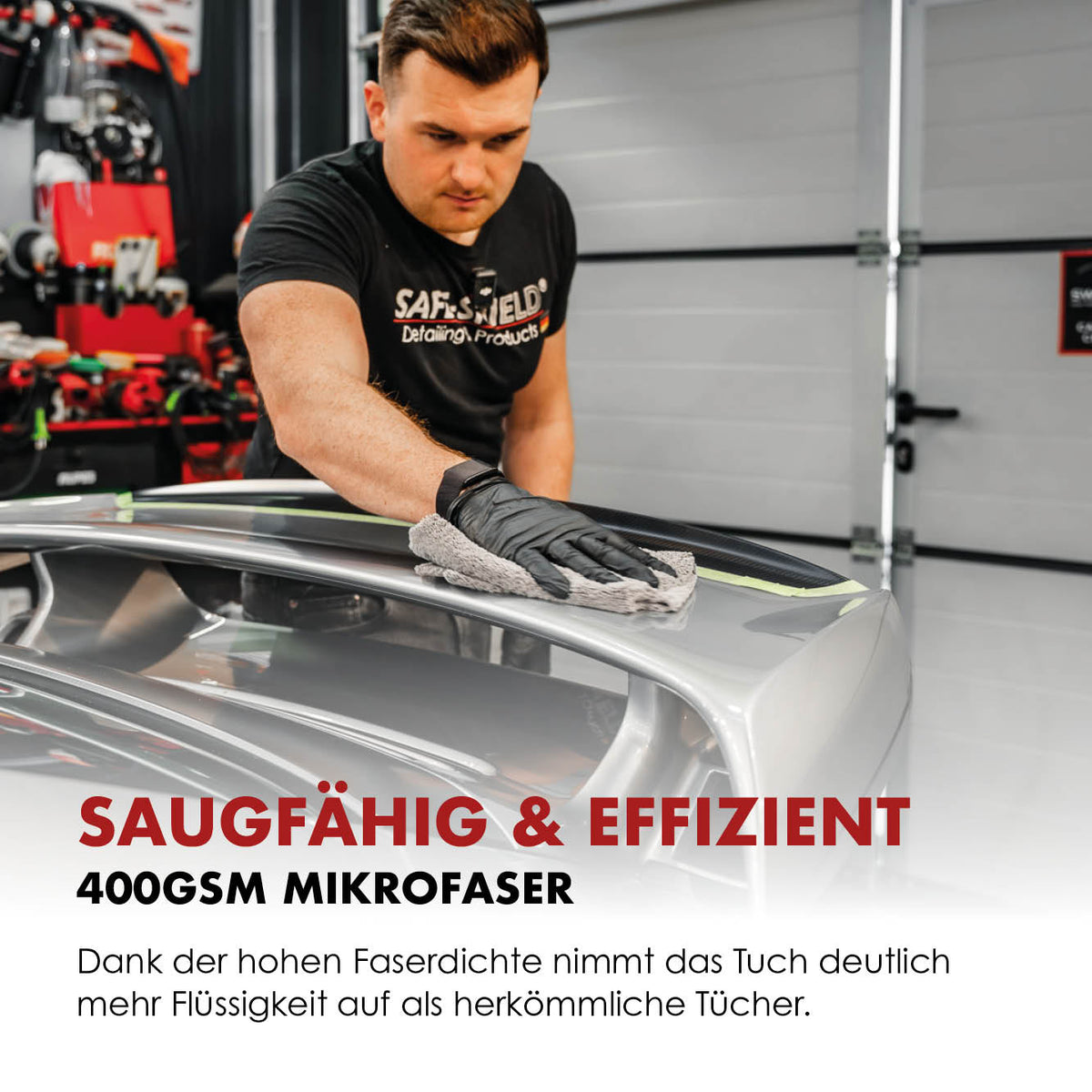
- Removing residues: Our 400 GSM all-round and polishing towels are designed for wipe-off. Have several clean towels ready and work without unnecessary wiping pressure.
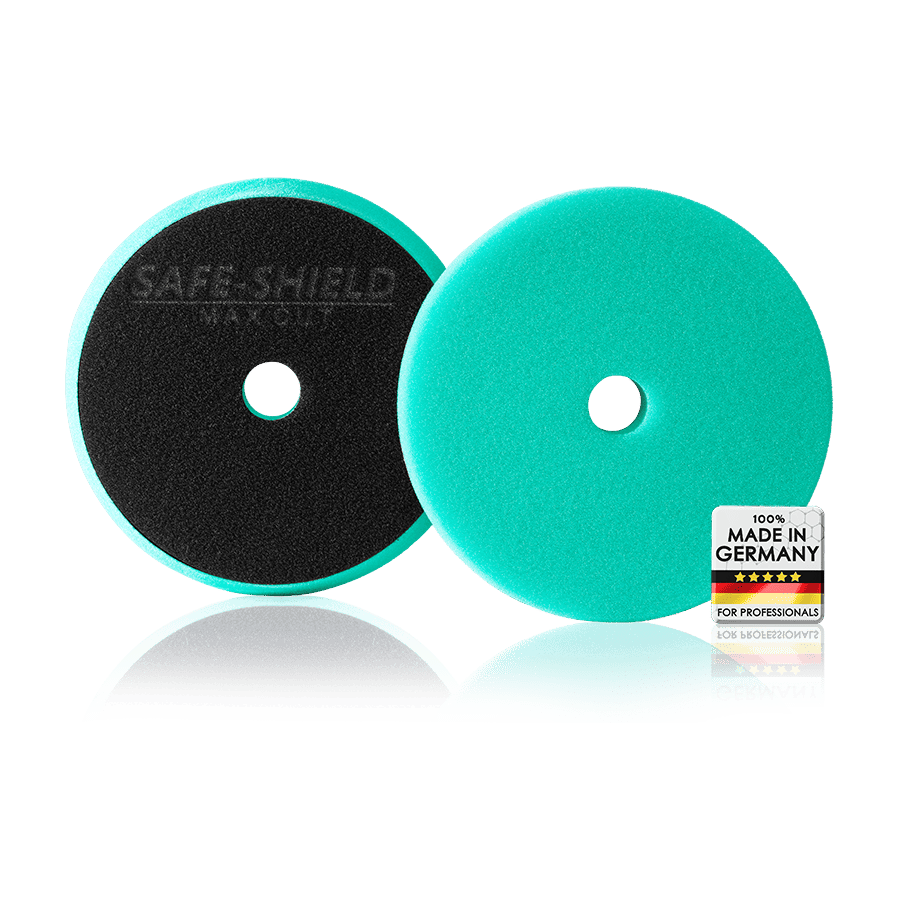
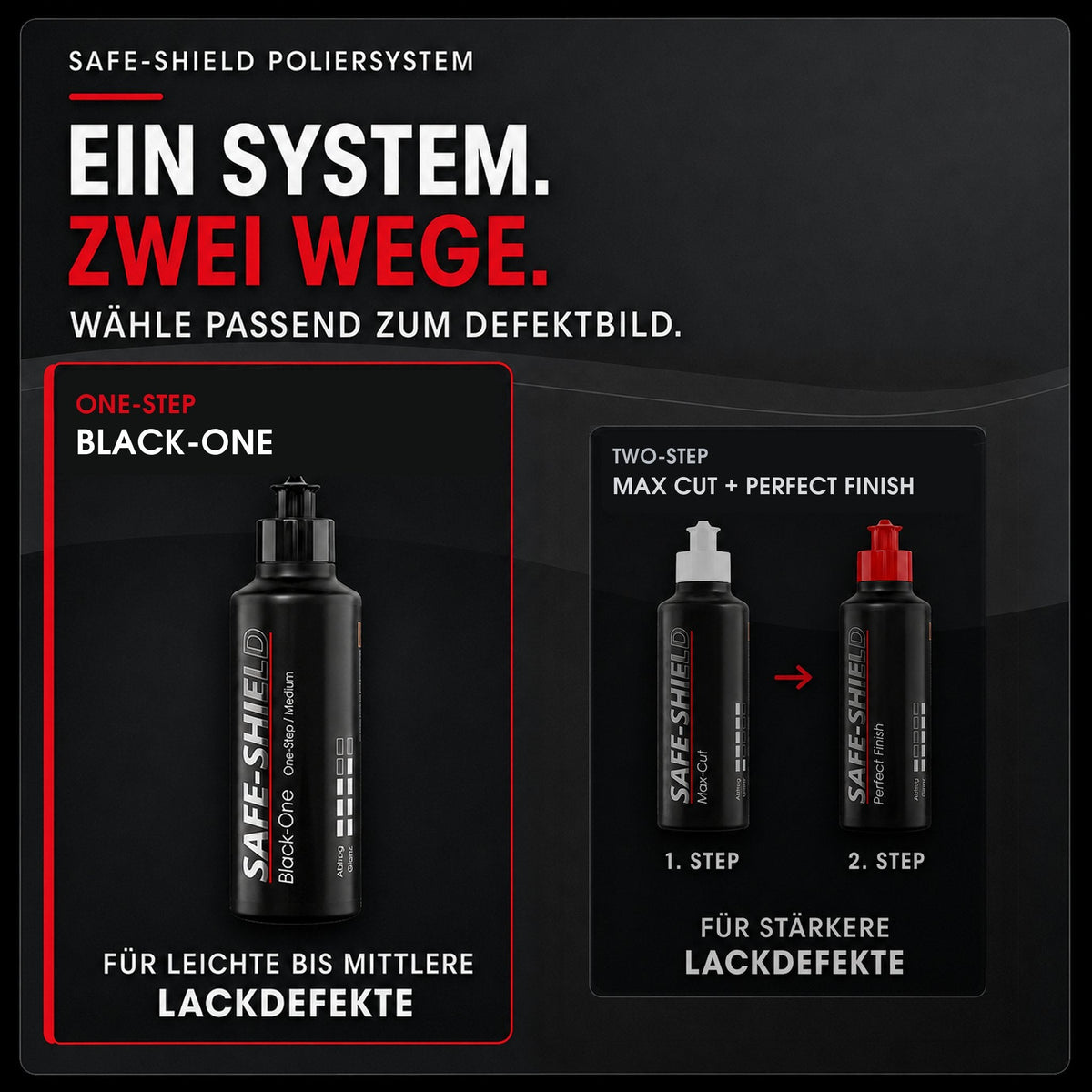
- Set up the polishing process correctly: For light to moderate defects, combine Black-One with the Medium One-Step Pad. A clean, suitable pad condition is just as important as the polish itself.
- Refine fine marks after correction: Perfect Finish with the Perfect Finish Pad is intended for the finishing pass, not as a cleaner for simply wiping away product residue.
If you want to completely rework the whole process, How to polish your car properly will help. The choice between one and several stages is explained in One-step or two-stage polishing?.
Frequently asked questions about polish that is hard to remove
Should I press harder if polish residue doesn’t come off?
No. First check the towel, temperature and type of residue. Vigorous rubbing can create new marks and hide the actual cause.
Can I spray water onto the pad to make the polish run longer?
Not as a general rule. Additional liquid changes the system and should only be used as specified in the application instructions. First check heat, product amount and pad condition instead of thinning the polish on your own.
Does every polish need to dry before wiping off?
No. Machine polishes and all-in-one products can have different requirements. Do not transfer the flash-off time of a wax to a paint polish. The instructions for the specific product are what count.
Is a polish unsuitable if it smears?
You can’t deduce that from this alone. A saturated pad, an overloaded towel, heat or unsuitable technique can cause similar symptoms. Check these points on a small area before changing products.

Efterlad en kommentar
Alle kommentarer er modereres, før de bliver offentliggjort.
'Denne side er beskyttet af hCaptcha, og hCaptchas Politik om beskyttelse af persondata og Servicevilkår er gældende.