
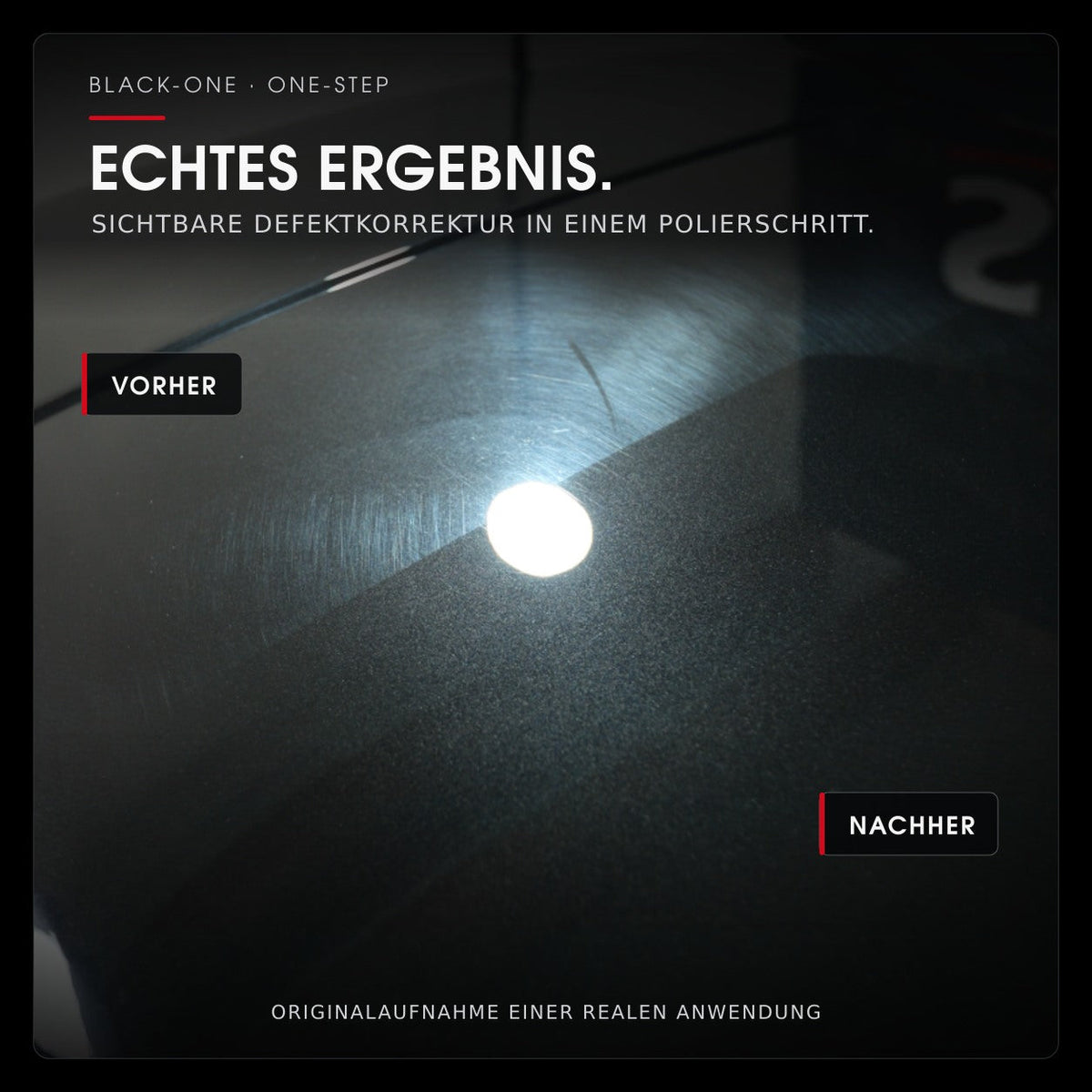
Fine scratches in automotive paint can often be significantly reduced or removed by polishing. Deep damage down into the color coat, primer or bare metal cannot be repaired by polish. The key question therefore is first: is gentle correction still possible, or is paint already missing?
We guide you through this decision and show you when our Black-One, Perfect Finish or Max Cut is the right direction. The goal is a visibly improved paint condition with as little removal as possible – not to eliminate every deep individual scratch at any cost.
Which scratches in car paint can be removed?
Gently clean and dry the affected area before assessing the damage. Dirt, foreign paint, or adhering residue can make a scratch look worse than it is. Inspect the area under good lighting from several angles.
Fine wash marks and superficial traces
Many fine lines that become especially visible around a light source are typical candidates for polishing. On intact gloss paint, a mild combination may already be enough. A controlled test spot will show whether they disappear completely.
Pronounced individual scratch in the clear coat
This is a tougher decision. Even if a scratch lies within the clear coat, completely removing it may not be the best idea: you’d have to remove enough surrounding material. An optical improvement with a remaining, reduced scratch can be the more paint-friendly solution.
Missing colour, exposed primer or damaged paint
Missing material is not replaced by polish. Visible chipping, rust or damage down to deeper layers belong to paint repair. Have it checked whether a local repair or repaint is appropriate. Matte paint and wraps are also not covered by this polishing guide.
Which polish and which pad do you need for scratches?
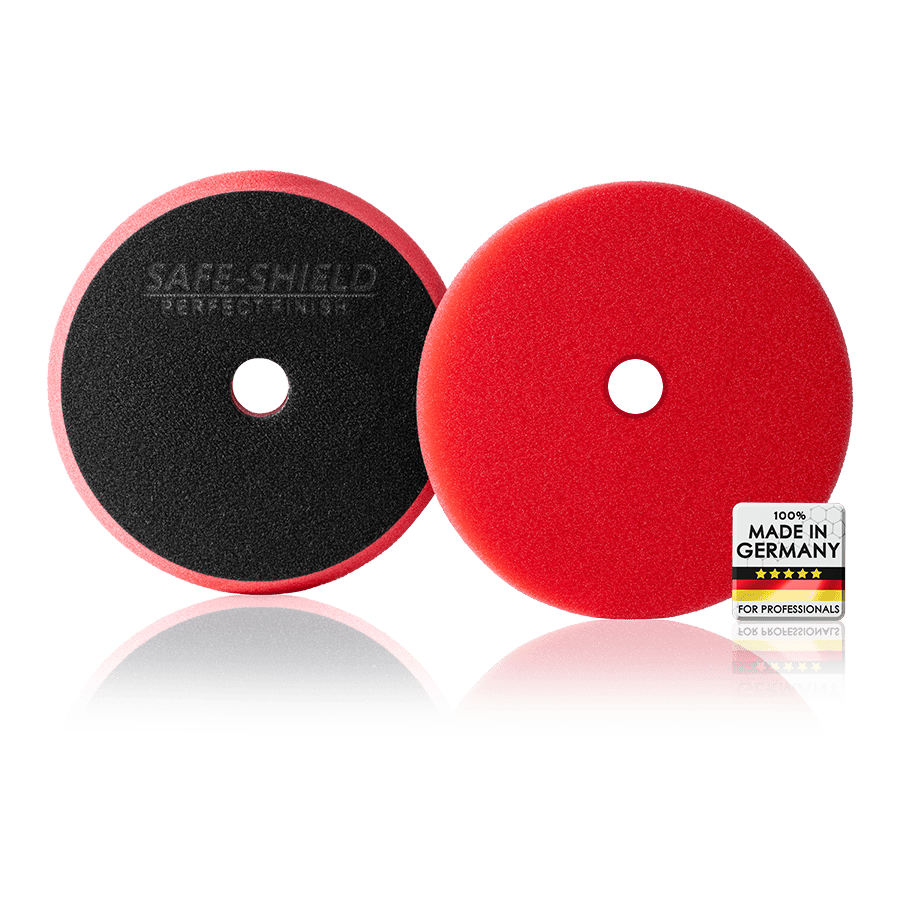
- Very fine marks or a light finishing haze: Try our Perfect Finish Polish with the Perfect Finish Pad.
- Light to moderate wash marring: Our Black-One one-step polish with the Medium One-Step Pad is a combination for correction and high gloss in a single working step.
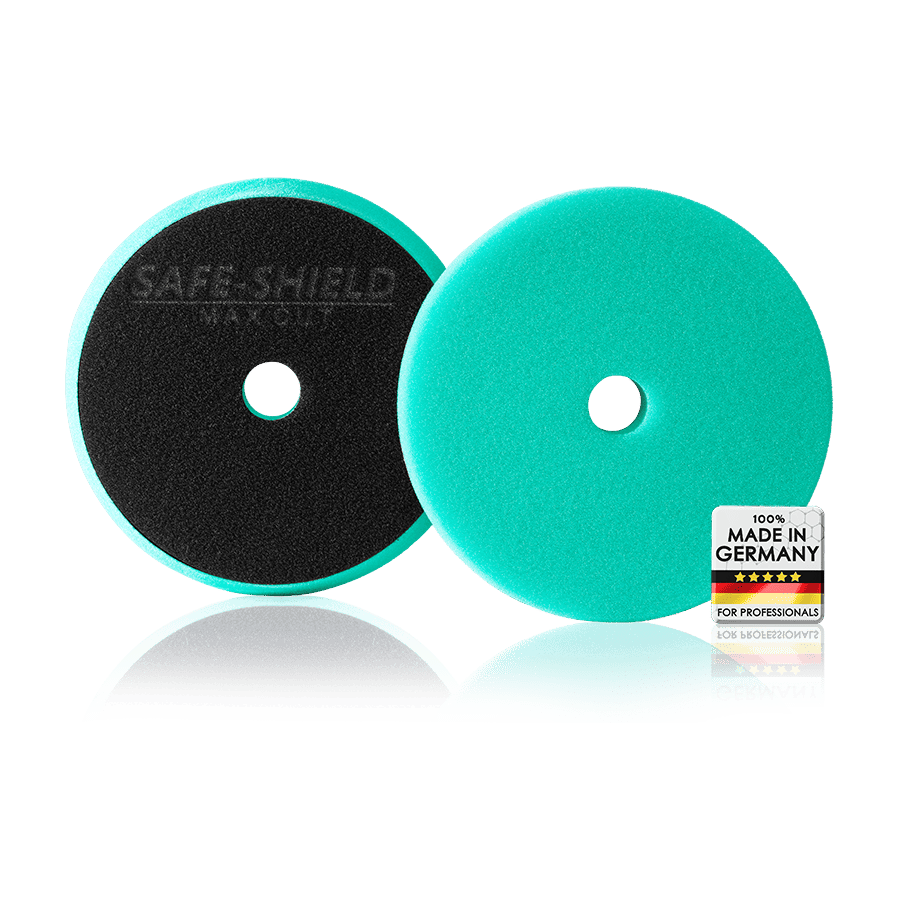
- Heavier, safely correctable defects: Our Max Cut compound with the Max Cut pad offers more cut. Only use it after assessing the paint and doing a test spot. A subsequent finishing step may be necessary.
A harder pad is no substitute for proper damage assessment. Paint condition, machine and technique all influence the result together. In our polishing pad guide we explain pad selection in more detail. If you don’t yet know a suitable combination, our test kit of pads and polish samples helps you compare options.
Polishing out scratches: how to proceed in a controlled way
- Create a clean starting surface: Wash, remove bonded contaminants as needed, and dry. Never polish on dust or dirt!
- Set boundaries: Do not treat damaged paint areas, delicate edges and unknown resprays aggressively. If in doubt, have the condition assessed by a professional.
- Set up a mild test spot: Choose the polish–pad combination that is likely to be sufficient and work a small, manageable area according to the product and machine instructions.
- Guide the machine evenly: Work with overlapping passes without dwelling on the scratch or using the pad edge. Avoid heavy pressure and unnecessary heat.
- Wipe off and inspect: Remove polish residue with a clean, soft cloth. On suitable paintwork, our Ultra Degreaser removes polishing oils as directed for a more honest inspection.
- Assess the result: If the improvement is sufficient, stop the correction. If clear marks remain, do not automatically increase the level of cut. First check whether further work is justifiable.
- Refine finish and add protection: If necessary, refine fine traces of correction with a finishing step. Then prepare for the chosen paint protection.
You’ll find the full process including preparation and machine technique under Polishing your car properly. For elongated light streaks after polishing, our guide Removing holograms will help.
When should you stop polishing?
Stop when the defect is significantly improved and further passes only make a minor difference, the paint condition is unclear, or critical areas are involved. A paint thickness gauge can indicate irregularities, but typical devices do not measure the remaining clear coat separately. A blanket micrometer limit therefore does not make continued polishing inherently safe.
Wet sanding is not an extra beginner step for a stubborn scratch. It increases the level of intervention in the paint and belongs only in a professionally assessed process. Toothpaste, scouring agents or aggressive household sponges are also not controlled alternatives to a matched paint polish.
To keep new wash marring to a minimum, it’s worth using the right hand wash and gentle drying techniques. More frequent polishing is no substitute for this care.
Common questions about paint scratches
Can I completely polish out deep scratches?
Not reliably and not always without excessive paint removal. If the damage reaches into the color layer or deeper, polishing cannot replace missing paint. Have the repair options assessed.
Can I remove scratches by hand?
Minor superficial marks can be improved with a polish suitable for hand application. For larger, even correction, machine work is usually more efficient. Check the intended application method of the specific polish.
Does a wax remove scratches?
No. Depending on the product, it can make marks temporarily less visible, but it does not perform any abrasive correction. We explain the difference under Waxing or Polishing.
Is the strongest cutting polish the best against scratches?
No. Choose the mildest combination that achieves your realistic goal. A stronger polish can mean more follow-up work and unnecessary removal of clear coat without being able to repair a deep defect.

Lämna en kommentar
Alla kommentarer granskas innan publicering.
Denna webbplats är skyddad av hCaptcha och hCaptchas integritetspolicy . Användarvillkor gäller.