Inkl. moms.
Leveranstid: 2–4 arbetsdagar · Italien
Important: Always use clay lubricant. Only use on paintwork if you plan to polish afterwards, as claying can leave fine marring.
The Clay Disc is designed for a dual-action polisher. Choose 80 or 125 mm to suit your backing plate and the area you need to reach. The backing plate must fit the disc and must not extend beyond its edge. This is not a general approval for use with rotary polishers.
You receive one Clay Disc in your selected size. Machine and lubricant are not included. Start slowly, use light pressure and follow your machine's instructions.
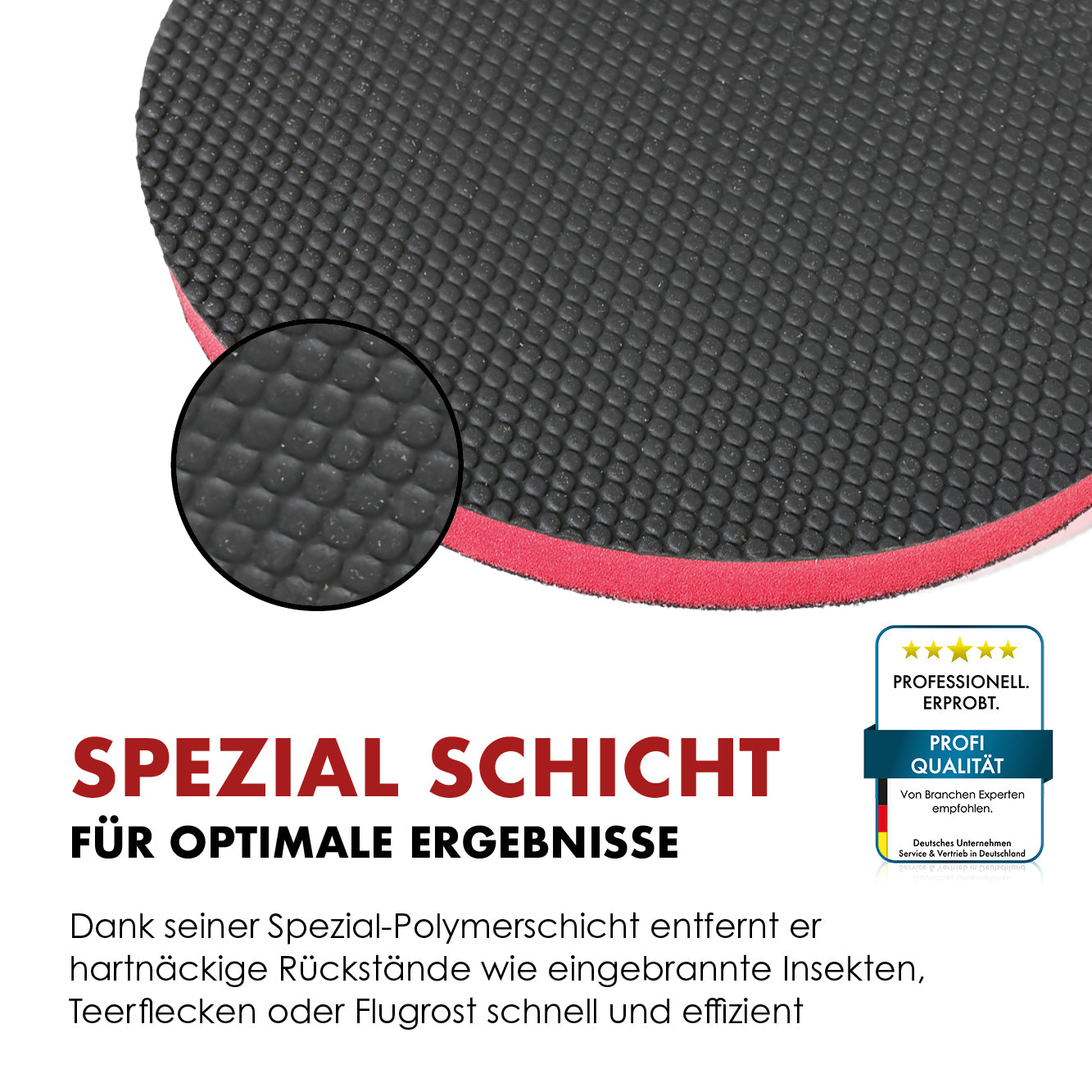
No. It cleans the surface before polishing. Its polymer face removes bonded contamination such as iron fallout particles, tar and insect residue. It is not a cutting or finishing pad and is used with lubricant, not polish.
Suitable for gloss paintwork, glass and compatible smooth plastics after a spot test. Do not use on matt paint or textured surfaces. It can leave fine marring on paintwork, so polish afterwards.
Always use plenty of clay lubricant or a dilute mix of Wash & Foam and water. Switch off the machine regularly, remove the disc, rinse it and check for particles. Leave to air dry after use; do not wring out or machine wash.
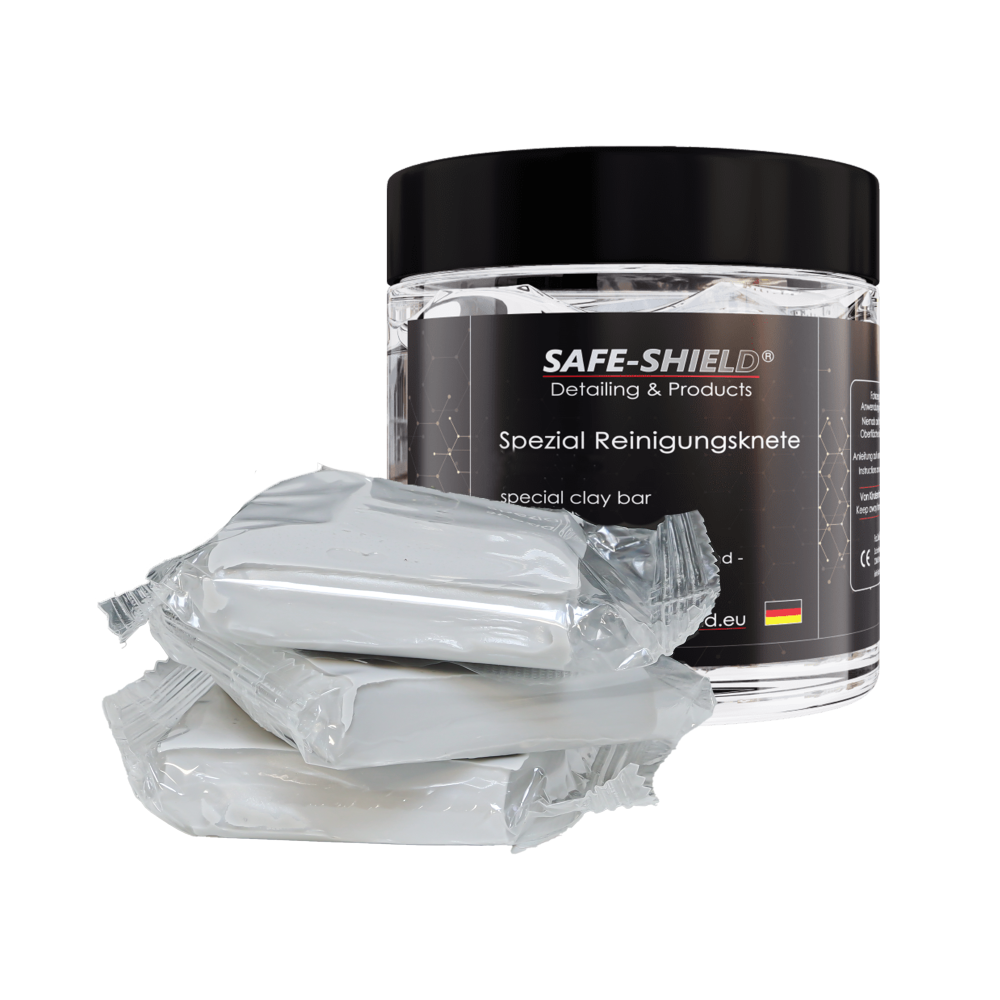
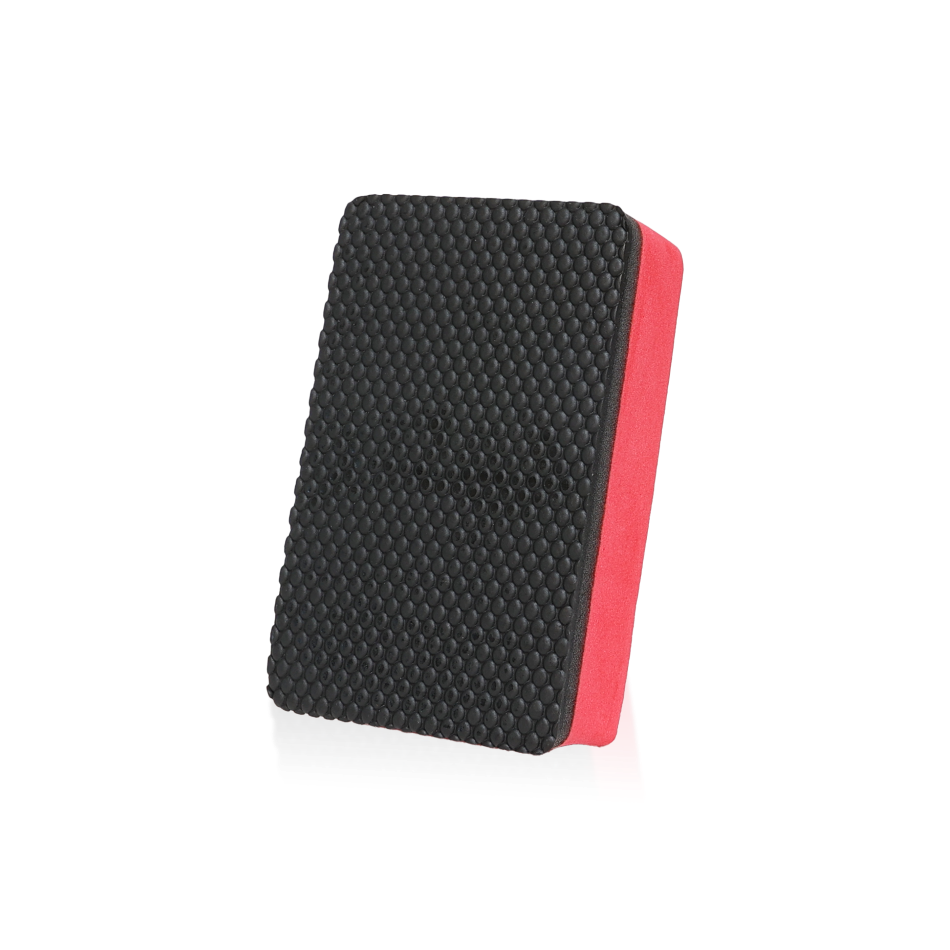
If the disc is damaged, has trapped dirt or has touched the ground, stop using it on paintwork. For manual use, choose the Clay Sponge for smooth surfaces or a clay bar for contours.
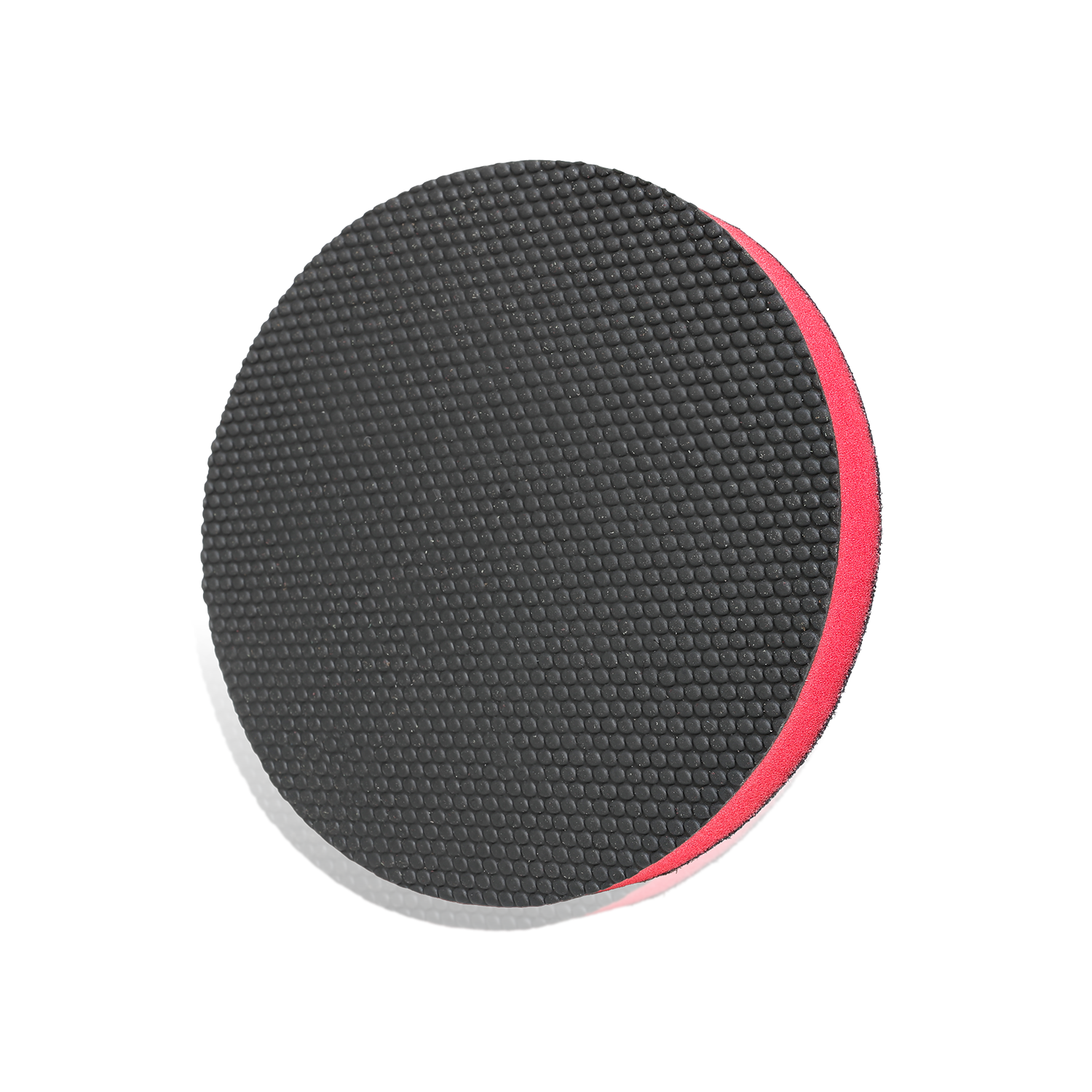

Efficient paint preparation with a dual-action polisher
Paint preparation that saves time in your detailing routine. The Clay Disc combines an effective polymer face with the movement of your dual-action polisher. It lets you cover larger, easily accessible areas evenly and remove bonded contamination before polishing.
Clean paintwork helps keep your polishing pad clean. Removed particles cannot enter the subsequent polishing stage. Two diameters let you match the disc to your machine and the panel.
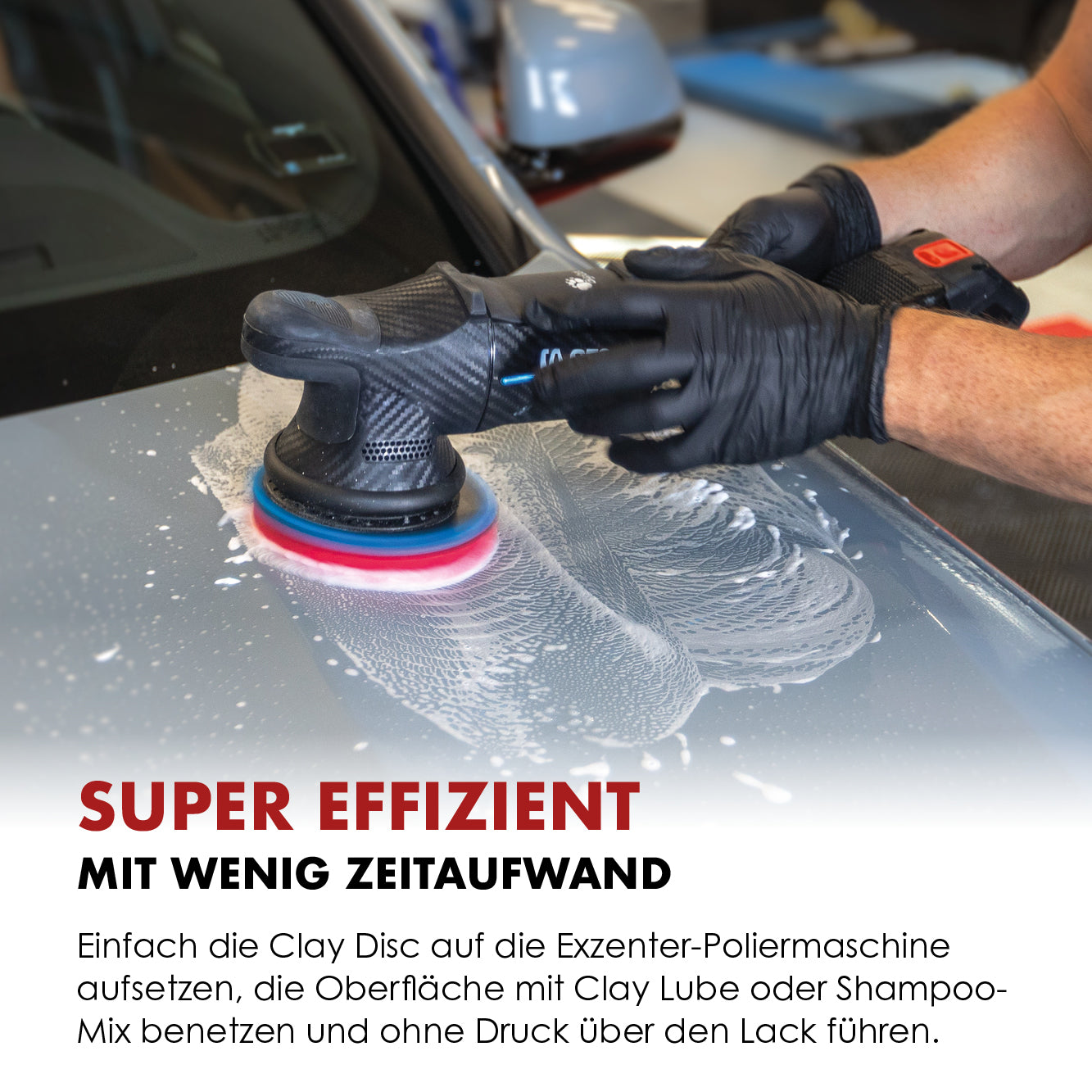
Wash the vehicle thoroughly. With the machine switched off, securely attach the correct disc. Apply plenty of lubricant to both the surface and the disc.
Start at a low machine setting and keep the disc flat, moving evenly. Maintain lubrication. Stop regularly to inspect and rinse the disc.
Remove residue and inspect the paintwork. Switch to a suitable polishing pad for paint correction. Rinse the Clay Disc and leave it to air dry.
Never use dry. Test on an inconspicuous area and keep replenishing the lubricant. Stop immediately if particles become trapped or the working face is damaged.