

New Car Ceramic Coating – Pro Guide: This is what often goes wrong!
Many new cars look perfect at first glance – and that’s exactly where the biggest misconception lies. In this article, we explain why ceramic coating on new cars is almost always prepared incorrectly, which mistakes are particularly common, and what the correct professional procedure looks like.
Why this article is so important
Anyone searching for information on ceramic coating a new car mainly wants to know one thing: Does a new car really need to be thoroughly polished – or is washing alone enough? The short answer is: Polishing is mandatory. The detailed explanation follows now.
1.1 The biggest misconception: new car = perfect paint
Newly delivered vehicles appear almost flawless under daylight or in the showroom. But on closer inspection – especially under focused LED/spot lighting or direct sunlight – the following paint defects almost always become visible:
- fine wash-induced scratches (a single wash is enough) and swirls
- Micro-scratches caused by transport films
- Haze caused by quick machine polishing at the dealership
- non-optimized or contaminated paint surfaces
These defects do not occur because of the customer, but during transport, interim storage, preparation and vehicle handover.
1.2 Why ceramic coating on new cars without polishing is problematic
A ceramic coating requires a clean, “open” and even paint surface, in order to bond correctly on a chemical level. That is hardly ever the case with a brand-new car.
If a ceramic coating is applied directly to unpolished paint, the following problems occur:
- reduced adhesion of the ceramic coating
- reduced durability (shorter lifespan) of the coating
- potentially diminished gloss finish
- Preservation of existing defects under the coating
The coating may then “protect” – but only on a poor technical foundation. Shorter durability and poor performance are the price you pay.
1.3 Clear pro rule: Polishing is always mandatory – even for new cars
In professional vehicle detailing, the following applies:A brand-new car is treated technically just like a used car.
The necessary steps before applying a ceramic coating are identical:
- thorough hand wash
- Chemical and mechanical paint decontamination
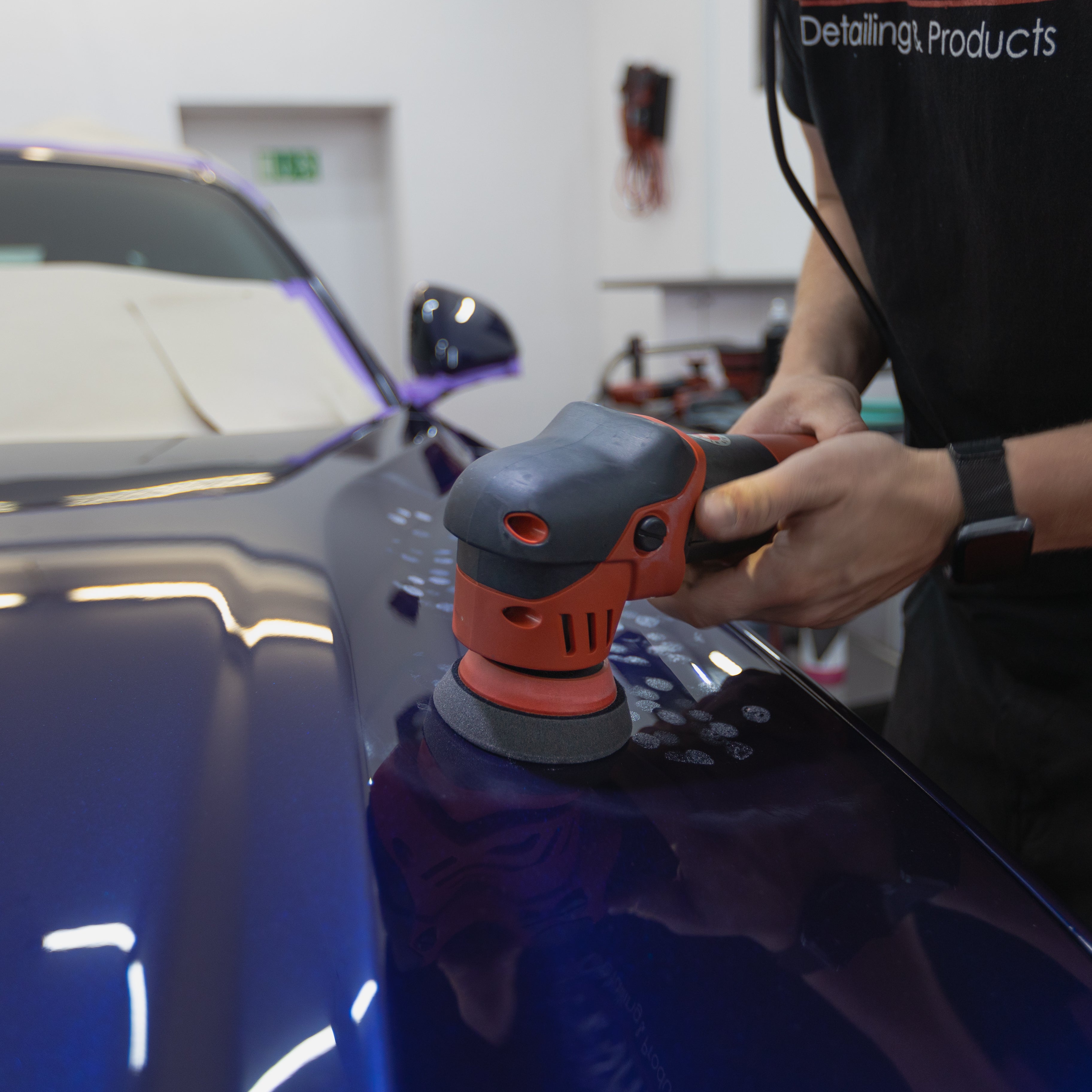
- machine polishing (at least a one-step polish)
- Degreasing
- Apply the ceramic coating on an optimally prepared surface
- Observe drying time
1.4 Which polish makes sense for a new car?
For new cars, a clean one-step or finishing polish, to remove micro-damage, prepare the paintwork, and create maximum gloss.
The decisive factor is the right combination of machine, pad and polish. You can find professional solutions in our collection of polishing pads and polishes for professional paint correction.
1.5 The right ceramic coating for new cars
Once the paintwork has been correctly prepared, the ceramic coating can reach its full potential: maximum adhesion, long durability and an extremely clear finish.
For professional users, we recommend the Final PRO Ceramic Coating for professional vehicle detailing, developed for optimally prepared paint surfaces.
You can find an overview of other high-quality coatings in our ceramic coating collection for professionals and enthusiasts.
Summary: Properly sealing a new car
- Brand-new cars are almost never perfect in terms of paintwork
- Micro-damage is the rule, not the exception
- Ceramic coating without polishing is technically incorrect
- The preparation process is the same as for a used car.
- Only perfect preparation ensures maximum durability
FAQ: New Car Ceramic Coating – Frequently Asked Questions
Does a new car really need to be polished before ceramic coating?
Yes. Even brand-new cars almost always show micro-damage, light swirls, transport marks or areas of paint that have not been optimally prepared. Polishing (at least a one-step/finish) is essential to ensure the ceramic coating bonds properly and achieves maximum durability.
Why aren’t washing and degreasing enough for a new car?
Washing and degreasing remove dirt and oils – but not micro-scratches, haze or uneven surfaces. These defects would otherwise remain trapped “under” the ceramic coating and can worsen adhesion, appearance and durability.
How can I tell if the paint on my new car has defects?
Under diffuse daylight, paint often looks perfect. Use focused light sources (LED/spot) or sunlight reflections to make swirls, haze, and micro-scratches visible. They are easiest to see from a short distance and at an oblique viewing angle.
Which steps are the same for new and used cars before applying ceramic coating?
In a professional setup, the steps are practically identical: thorough wash, chemical decontamination, clay (if necessary), machine polishing, then degreasing (panel wipe), and only then the ceramic coating.
Which polish makes sense for a new car?
In most cases, a one-step or finishing polish is sufficient to remove micro-damage, refine the finish, and create an ideal surface for the ceramic coating.

Laisser un commentaire
Tous les commentaires sont modérés avant d'être publiés.
Ce site est protégé par hCaptcha, et la Politique de confidentialité et les Conditions de service de hCaptcha s’appliquent.