
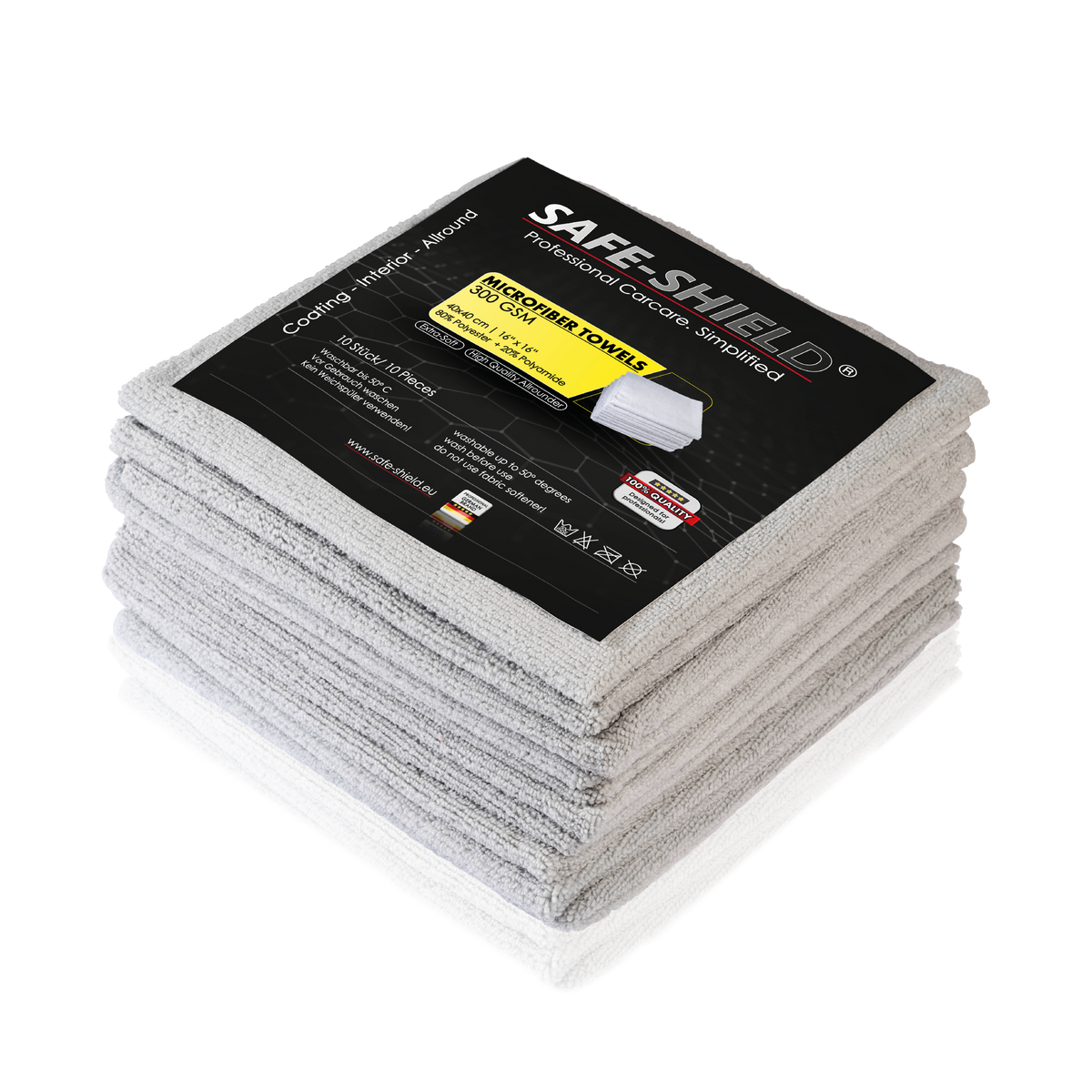
White polish residue on plastic is best removed straight away with our Ultra Degreaser and a soft microfibre towel. Spray it onto the affected area, allow a few seconds of dwell time and wipe off the residue. Our Ultra Degreaser is suitable for cleaning automotive plastics. A soft brush can help on textured areas if needed.
Which type of plastic are you working on?
Unpainted, textured trim needs a different cleaning approach from a painted plastic component. On painted parts, assess the paint surface; on textured unpainted plastic, residue may sit in recesses. High-gloss trim and coated surfaces are often particularly sensitive to friction.
For piano black trim inside the car, follow the gentle approach in Cleaning piano black trim in a car. This is not an instruction to treat the trim with paint polish.
Removing polish residue with Ultra Degreaser
- Stop polishing as soon as you notice residue on the plastic. Work on a cool surface away from direct sunlight.
- Shake our Ultra Degreaser and spray it undiluted onto the affected area. Test an inconspicuous spot first on unfamiliar or specially coated surfaces.
- Allow a few seconds of dwell time. On textured plastic, you can gently loosen residue from recesses with our soft detailing brush. Very little pressure is enough.
- Wipe off cleaner and loosened polish residue with a soft microfibre towel. Our 300 GSM Allround Towel is suitable. Switch to a clean side rather than spreading the residue further.
- Let the surface dry and inspect the result. If residue remains, repeat the short cleaning step. Do not allow the cleaner to dry on the surface.
What about dried white residue around edges?
Our Ultra Degreaser is also the first choice for dried polish residue. Follow the process above: spray, allow a few seconds of dwell time and wipe off with a clean towel. A soft brush helps on textured plastic. Repeat if needed rather than scrubbing harder or trying increasingly aggressive products.
If the mark remains unchanged on the dry surface, the polish may already have affected the plastic. In that case, the discolouration cannot simply be wiped away. Do not use several chemicals at once, and stop before vigorous rubbing further alters the surface.
Shortcuts to avoid
- Do not routinely use acetone, brake cleaner or other aggressive solvents.
- Do not use a melamine cleaning sponge, sandpaper or stiff brushing as a standard solution: these can also alter the texture.
- Do not apply paint polish to unpainted plastic in an attempt to ‘polish over’ white residue.
- Do not mix different cleaners or allow the cleaner to dry on the surface.
Last resort: coating the entire plastic section evenly
If polish has affected the plastic and thorough cleaning no longer helps, a ceramic coating may still improve its appearance. Our Final PRO Ceramic Coating is also suitable for plastic. It can deepen the colour and restore a more even appearance with a lasting effect.
This is a last resort, not a substitute for removing polish residue. Clean and degrease completely first, let the surface dry and test Final PRO on an inconspicuous area. Check whether you like the colour effect. Then coat the entire continuous plastic section evenly rather than treating only the pale patch. Carefully remove excess product and observe the curing times.
The coating can improve the appearance and protect the plastic, but cannot reverse damage to its texture. If the test area does not produce an even result, do not simply coat the entire section.
Preventing residue during your next polishing stage
Before polishing, mask sensitive unpainted trim and rubber parts with suitable tape. Use a small amount of polish and guide the pad carefully rather than letting the machine skip across adjacent parts.
Our guide to Masking a car before polishing shows the relevant areas. If the polish is also difficult to remove from the paint, see Making polish residue easier to wipe off to identify the cause.
Frequently asked questions
Is every white mark polish residue?
No. Weathering, abrasion or a damaged coating can look similar. Assess the clean, dry surface.
Does our Ultra Degreaser remove polish residue from plastic?
Yes. Spray it onto the affected plastic, allow a few seconds of dwell time and wipe off the loosened residue with a soft microfibre towel. Test an inconspicuous area first on unfamiliar or specially coated surfaces. Work on cool surfaces and do not let it dry.
What helps if polish has affected the plastic itself?
If thorough cleaning no longer helps, our Final PRO Ceramic Coating may achieve a more even appearance as a last resort. Test the colour effect first, then coat the entire continuous section. This does not repair damage to the texture.
How do I prevent new white residue around edges?
Mask appropriately, use polish sparingly and keep the pad away from unpainted trim. Gently remove fresh splashes immediately.

Deja un comentario
Todos los comentarios se revisan antes de su publicación.
Este sitio está protegido por hCaptcha y se aplican la Política de privacidad de hCaptcha y los Términos del servicio.