
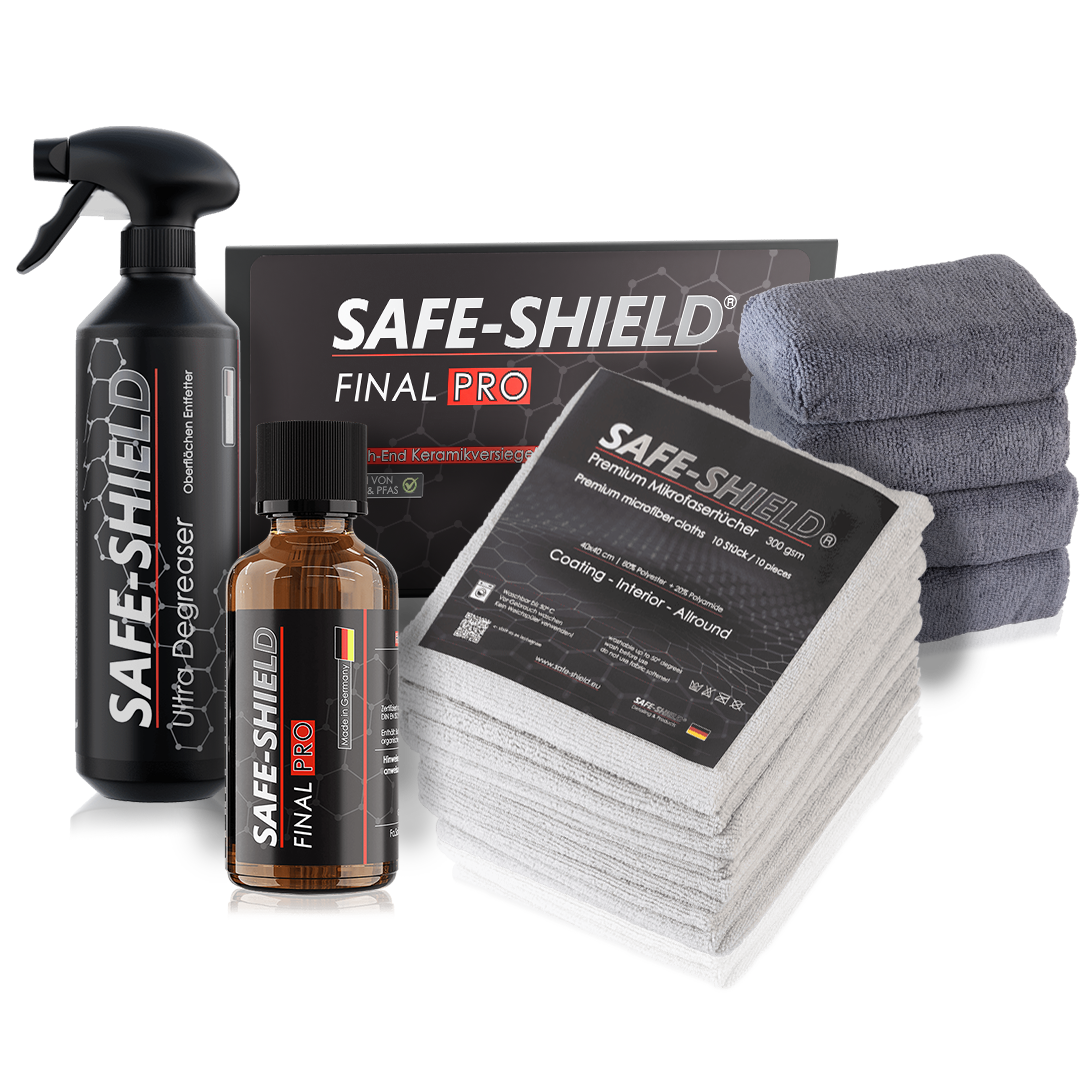
A ceramic coating on wheels makes later cleaning easier and can reduce how strongly dirt sticks. However, it does not prevent brake dust from forming or settling on the wheel. For suitable, intact painted wheels you can use our Final PRO. The key factors are clean preparation, controlled wipe-off, and sufficient curing.
Here you’ll learn which surfaces are suitable and how to coat wheels sensibly without turning an easier maintenance routine into an unrealistic “never clean again” promise.
Can you apply a ceramic coating to any alloy wheel?
The term “alloy wheel” doesn’t tell you enough about the actual surface. For product selection, what matters is what’s really on the outside: an intact paint finish, bare metal, a special coating or an already damaged surface. Final PRO is suitable for intact painted wheels.
With diamond-cut wheels, you must clarify whether the areas to be treated are protected by an intact, suitable clear coat. For bare or high-gloss polished aluminum without clear coat, chrome and unknown special finishes, we do not give a blanket recommendation. If in doubt, ask the manufacturer before use and carry out the prescribed compatibility test on an inconspicuous area.
A coating does not repair flaking, corrosion or underfilm damage. Such defects must be assessed first. On matte-finished wheels, Final PRO can slightly deepen the colour and create a subtle satin-matte look; check the desired appearance on a small test area first. Our guide Ceramic coating for matte paint is a good match here.
Preparing wheels for ceramic coating
1. Let it cool down and clean thoroughly
Start on fully cooled wheels. Remove normal dirt and brake dust with a finish-safe cleaner and soft tools. Our Ultra Wheel Cleaner is a pH-neutral option for suitable surfaces; check the application instructions and do not let the cleaner dry on. You can find suitable cleaners and tools in our wheel care category.
Also clean the backs of the spokes and the wheel barrel as far as accessible. Rinse thoroughly. The exact wash process is described in How to clean wheels properly. Do not simply coat over firmly bonded residue.
2. Check for remaining deposits and damage
If particles remain, first determine what they are. Brake dust, tar spots and mineral stains do not automatically require the same cleaner. Our article Removing baked-on brake dust helps you plan the next steps.
New wheels do not automatically need polishing. On used gloss-painted wheels, correcting visible paint defects can make sense if the surface and condition allow it. Matte paint is not polished as preparation for gloss. Aggressive scrubbing and unsuitable brushes create new marks that a clear coating will not make disappear.
3. Dry and degrease suitable painted surfaces
Remove water thoroughly, including from recesses and transitions. Then prepare suitable painted surfaces with Ultra Degreaser as directed. It removes oils as well as light care and film residues. Before application, the surface must be clean, dry and free from interfering residues.
Removing the wheels makes it easier to access the wheel barrel. However, removal is not a prerequisite for coating easily accessible outer surfaces. If wheels are removed, proper removal and installation must be carried out by suitably qualified personnel. Only coat the intended wheel surfaces; hub contact areas, bolt or nut seats and brake components must remain free.
Applying Final PRO to wheels: small sections, good control
Work at +15 to +25 °C in a dry, clean and well-ventilated area, out of direct sunlight and away from hot surfaces. Follow the safety instructions in the product manual. Prepare a suitable applicator and several clean towels; our 300 GSM coating microfiber towels are ideal for wiping off.
- Select a section: Work on a few spokes or a well-controlled area of the wheel barrel. Tackling an entire complex wheel at once is especially difficult to wipe off evenly when you’re just starting out.
- Spread a small amount: Apply Final PRO evenly. Avoid product build-up in corners and around recesses.
- Remove excess product: With Final PRO, wipe off after about 3 minutes using a soft 300 GSM cloth without pressure.
- Check immediately: Inspect the surface from different light angles. Visible excess can be lightly wiped off according to the instructions for up to a maximum of 10 minutes after application. Don’t deliberately wait that long.
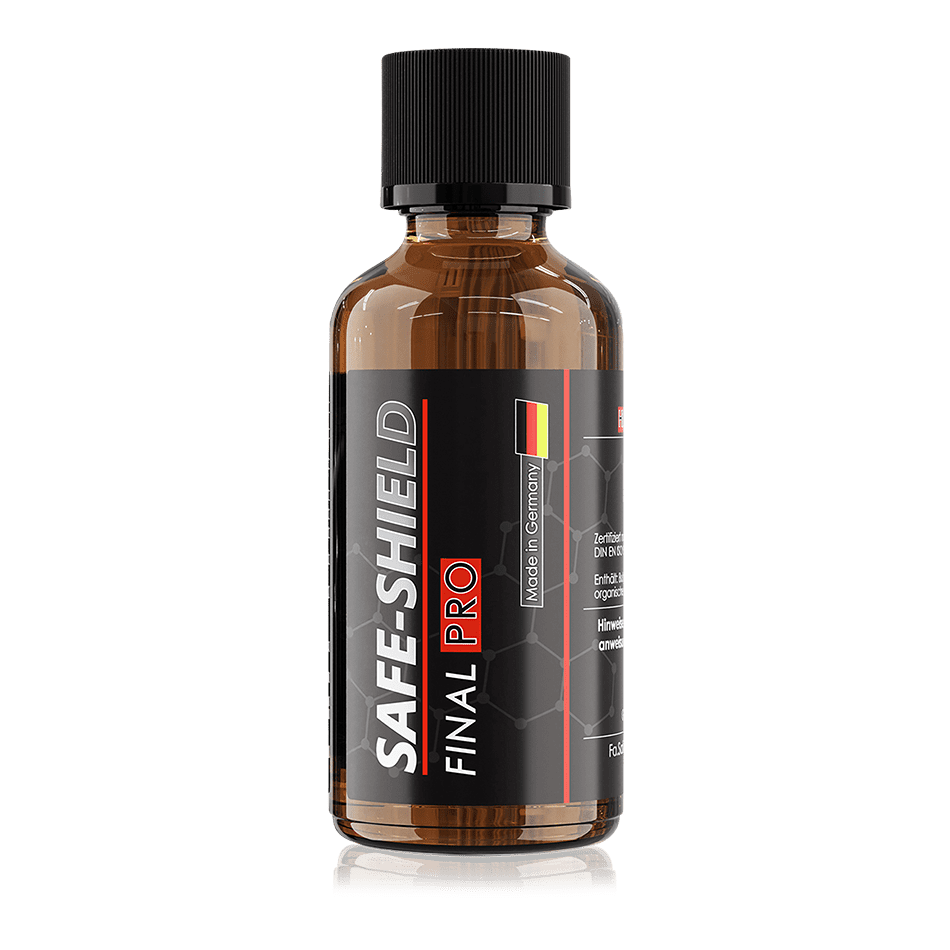
Final PRO is designed for a single layer. More product or additional layers are no substitute for careful preparation. If conspicuous areas remain, see Streaks after ceramic coating: understanding high spots. For the coating and accessories, there is the Final PRO ceramic coating kit.
When can you drive and wash the wheels again?
For Final PRO, at around 20 °C you should allow roughly 12 hours until it’s water-resistant and the car is ready to drive. After 5 days the coating is fully cured and can be washed. Times may vary depending on climate. Protect freshly treated wheels from water and dirt during the initial phase. You’ll find details in Curing ceramic coatings: rain and the first wash.
Even coated wheels need regular cleaning. Start on cool surfaces with a gentle wash; for light dirt, a suitable shampoo wash may be enough. For heavier brake dust, use an appropriate wheel cleaner as directed. The finish and coating determine compatibility, not the pH value alone. Our guide Wheel cleaners: pH-neutral, acid-free or acidic? explains the differences.
How long does ceramic last on wheels – and is the effort worth it?
Actual durability depends on the substrate, preparation, mileage, braking load and cleaning, among other factors. A durability figure for vehicle paint cannot simply be applied to every wheel. We therefore do not promise a fixed wheel durability regardless of how you use your car.
The practical advantage lies in easier maintenance. If you clean your wheels regularly and don’t let dirt sit for long, you’ll get the most benefit in daily use. The coating is not a repair or mechanical protective film against curb rash, stone chips or existing paint damage. You’ll find our ceramic coatings and matching accessories in the overview.
Frequently asked questions
Do coated wheels stay free of brake dust?
No. Brake dust will still be produced and can settle. The coating makes maintenance easier; it does not replace regular cleaning.
Can I use Final PRO on black wheels?
Yes, on suitable, intact painted wheels. The decisive factors are the paint and its condition, not the colour. Check compatibility beforehand; with matte finishes also check for possible darkening.
Do the wheels need to be removed for coating?
Not strictly necessary for accessible exterior surfaces. However, removing the wheels makes cleaning and coating the inner barrel significantly easier! Safe wheel installation must be ensured at all times.
Do I have to polish new wheels before coating them?
No. Check the condition, remove disturbing residues and prepare the surface appropriately. A polish only makes sense on suitable glossy paint surfaces with correctable defects; matte paint is not polished.

Deja un comentario
Todos los comentarios se revisan antes de su publicación.
Este sitio está protegido por hCaptcha y se aplican la Política de privacidad de hCaptcha y los Términos del servicio.