
You remove holograms in the paint with a controlled finishing pass using a fine polish and a clean, soft pad. First you must be sure that you’re actually seeing polishing marks: streaks from polishing oils or care residues can look similar, but they need cleaning first.
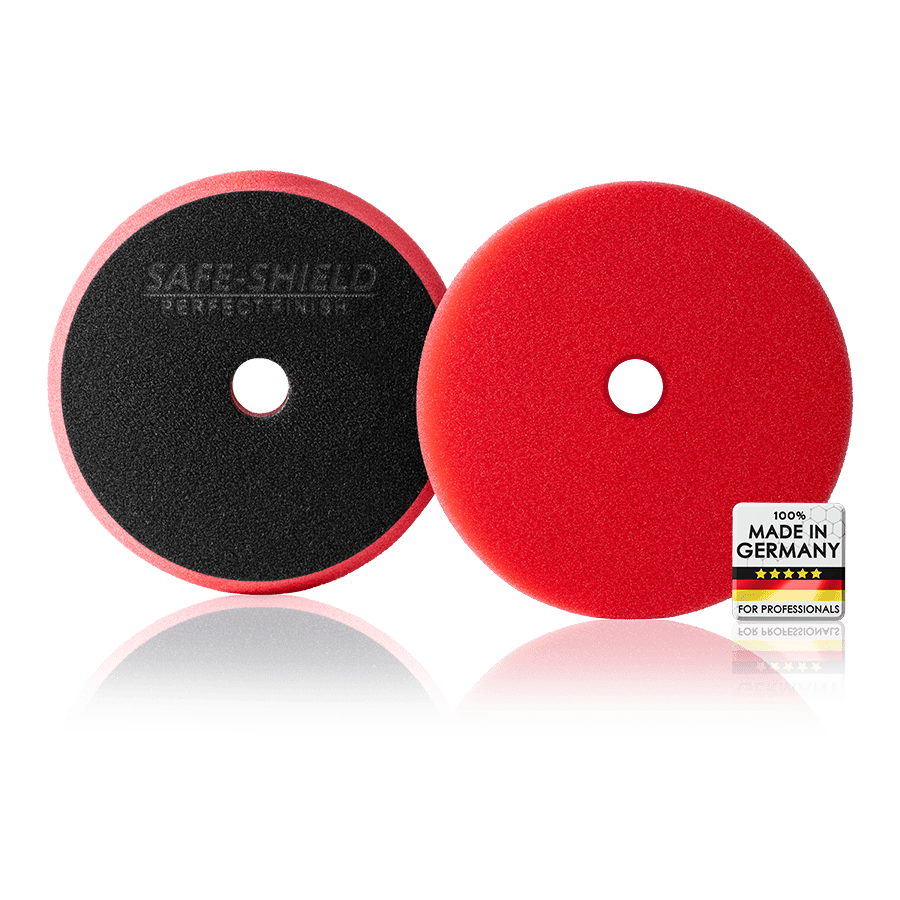
Our starting point for true holograms is Perfect Finish together with the Perfect Finish polishing pad. A test spot lets you check whether this combination finishes cleanly on your paint. Here we show you the path from identifying the issue through to inspection.
Are they really holograms in the paint?
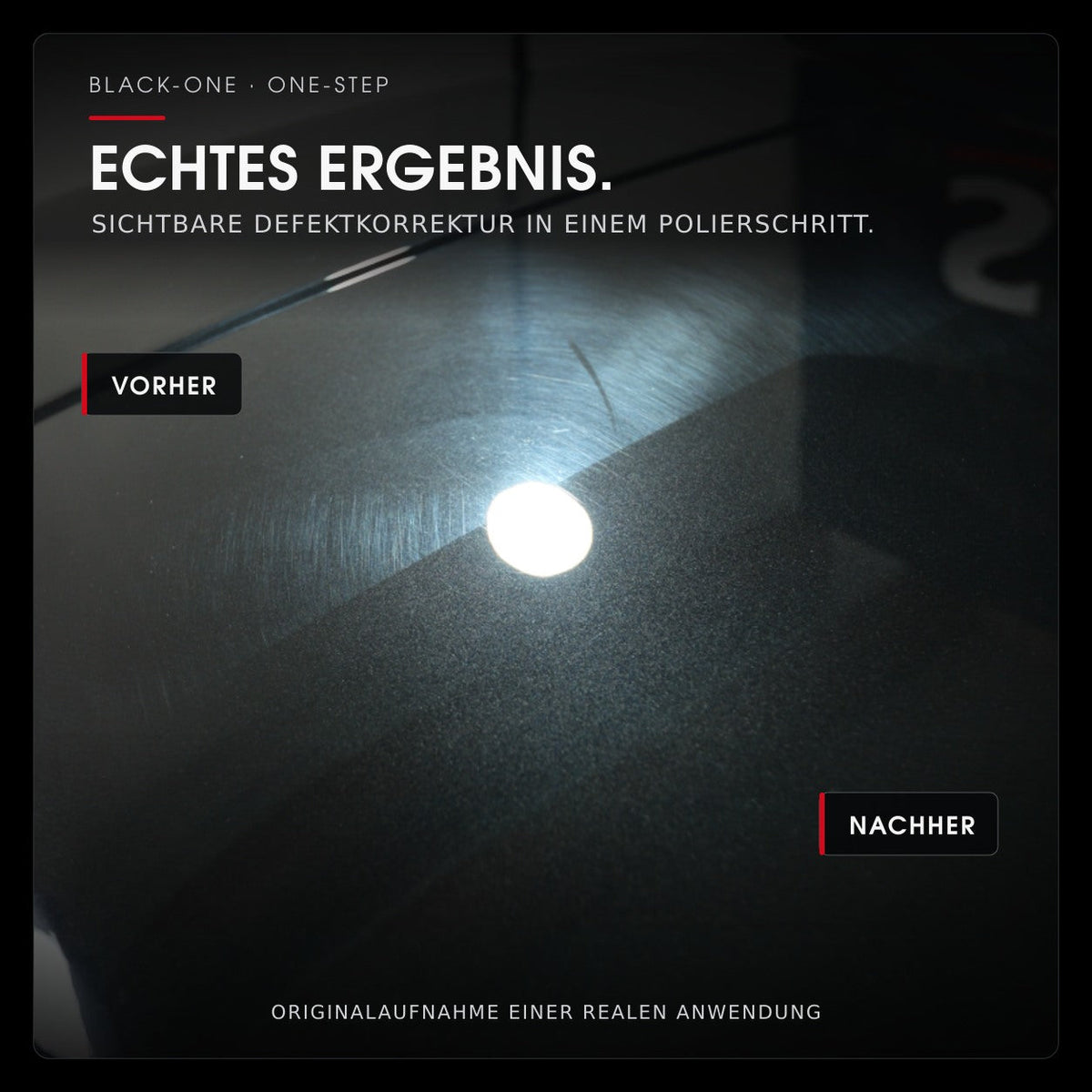
Holograms often appear in sunlight or under a suitable inspection light as elongated, arc-shaped light patterns whose appearance changes with your viewing angle. They typically arise during machine polishing, especially when rotary polishing has not been sufficiently refined. They are often more visible on dark paint.
- Holograms: directional fine polishing marks in the paint; they require suitable mechanical refinement.
- Swirls: many fine wash or wipe marks that can appear circular around a light source. Depending on severity, more correction than just a finishing step may be necessary.
- Residues: Oily or uneven smears on the paint. First remove them with a suitable cleaner.
On clean, cooled, glossy paint, test a small area with our Ultra Degreaser as directed. Wipe gently with a clean towel and reassess the dry surface. If the marks disappear, further polishing may not have been necessary. If they remain, examine the defect pattern from several angles. A freshly applied coating with spots or streaks is a different case; here you must follow the correction procedure for the specific coating system.
Which polish helps against holograms?
Our Perfect Finish anti-hologram polish is designed for fine polishing marks and final gloss. First combine it with the Perfect Finish polishing pad. On particularly sensitive paint you can compare the Ultra Soft Pad on a test spot. A softer pad is not automatically better on every paint; the decisive factor is a clean result.
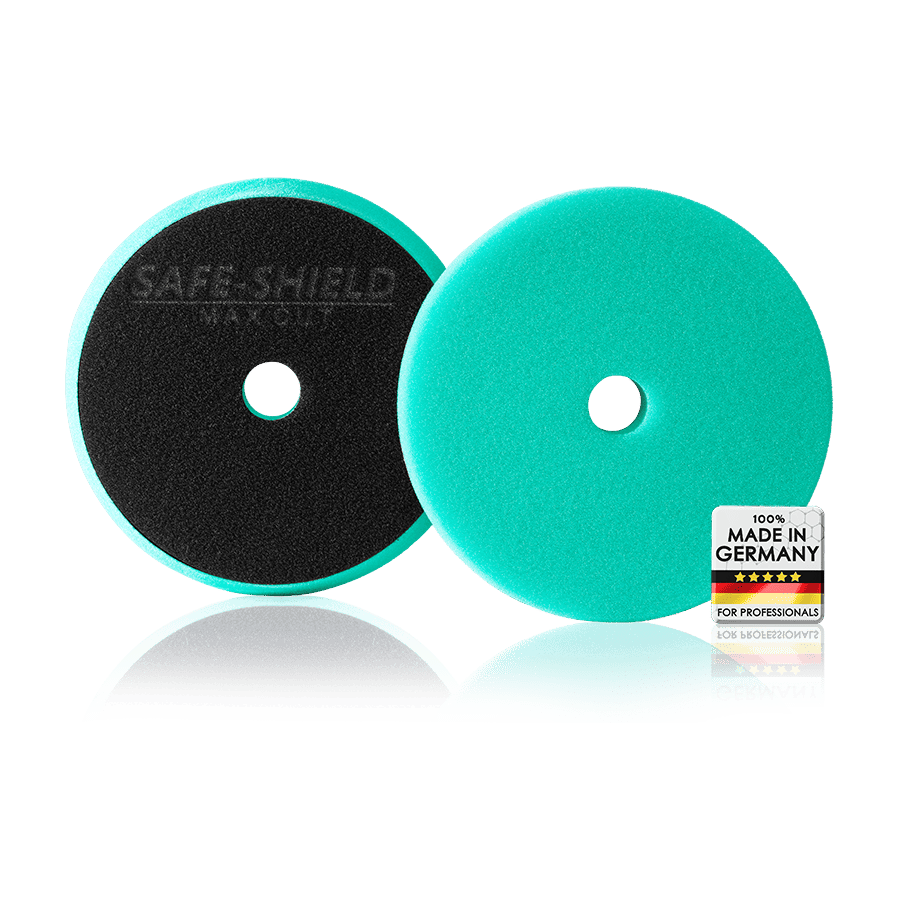
A more aggressive cutting polish is usually not the first step for pure holograms. If there are also more pronounced wash scratches, a different correction stage may be necessary beforehand. Our guide: Which polishing pad for which polish? explains the selection.
Removing holograms: step by step
- Preparation: Keep the paint clean and dry, mask off sensitive adjacent areas. These instructions apply to intact gloss paint, not to matte paint or wraps/film.
- Use a clean finishing pad: Use a dedicated pad with no residue of heavy-cut polish. Center it on the appropriate backing plate.
- Choose a test spot: Start on a manageable, flat area. A free-spinning dual action polisher is a well-controllable choice for many users; even so, incorrect use can create new marks.
- Spread and work in the polish: Prime and dose pad and polish according to the application instructions. Guide the machine flat with overlapping passes. Avoid unnecessary pressure, long dwell times and dry polishing. Settings depend on the machine and polish.
- Gently remove residue: Use a clean, soft microfiber towel. Vigorous rubbing can create new wipe marks, especially on sensitive paint.
- Check: On suitable paint, remove polishing oils with the appropriate inspection cleaner. Inspect the dry surface under an inspection light and from different angles.
- Transfer the result: Only once the test spot is clearly successful do you move on to the remaining affected areas. Keep pads clean, change them in good time and check every panel.
How do you avoid new holograms and wipe marks?
Keep cut and finish pads strictly separate. A pad loaded with heavy-cut polish does not become a finishing pad just because you add a drop of finishing polish. Clean pads regularly while working and have several pads ready. Our article Cleaning and changing polishing pads shows you when cleaning is enough and when you need a fresh pad.
The towels are part of the process too: use clean sides, control particles and wipe off without unnecessary pressure. Here’s how to wash microfibre towels correctly. Only apply a sealant once the controlled finish is right. A wax can make marks temporarily less visible but does not remove them.
For the full process, see the guide to polishing your car; before a coating, see polishing before ceramic coating.
Frequently asked questions about holograms
Can I remove holograms without polishing?
Genuine polishing marks in the paint do not disappear through washing or degreasing. Residues that only look like holograms, on the other hand, can sometimes be removed by cleaning. That’s why diagnosis starts with a small inspection area.
Can a dual action polisher cause holograms?
Classic directional holograms occur mainly with rotary polishing. However, a dual-action machine can also leave haze and fine marks, for example due to an overly aggressive combination, contaminated pads or unsuitable technique.
Why do the marks reappear after washing?
Polish oils or care products can temporarily hide existing marks. They become visible again after cleaning. So before sealing, always inspect the finish on a surface that has been freed from residues.
Do I need a special polish for black paint?
Color alone is not decisive. Fine marks are easier to see on dark paint; you need to assess its hardness and sensitivity in a test spot. Perfect Finish with the appropriate clean pad is our starting point for the finishing step.

Efterlad en kommentar
Alle kommentarer er modereres, før de bliver offentliggjort.
'Denne side er beskyttet af hCaptcha, og hCaptchas Politik om beskyttelse af persondata og Servicevilkår er gældende.