
Some random orbital sanders can polish car paint, but only if the manufacturer expressly specifies this use. A hook-and-loop backing plate alone is not approval. For regular paint care, a purpose-built polisher is usually the more sensible choice.
What distinguishes a sander from a polisher?
A random orbital sander is primarily designed for sanding. Its backing plate, speed range, orbit, handling and accessories are matched to its intended tasks. For polishing, the machine, polishing pad and polish need to work together on the paint. Similar movement does not make tools interchangeable.
Some combination tools expressly support both sanding and polishing. In those cases, polishing belongs to the intended system. That does not make any ordinary DIY-store sander suitable. We explain the drive types in Dual-action or rotary polisher.
Checking your existing machine
- Look in the operating manual for the intended use. ‘Suitable for polishing’ must apply to your model, rather than only the product family.
- Check the specified backing plate and approved accessories. Pad size, attachment and permitted speed must be compatible.
- Completely remove sanding dust from the tool and accessories before approaching washed paint. Abrasives do not belong beneath a polishing pad.
- If there is no clear approval for polishing or no suitable accessory combination, use a polisher. Improvised adapters are a poor foundation for good results.
Even with an approved combination tool, start on a small trial area. Use a test spot to assess whether the combination reduces scratches and produces a suitable finish.
Which polish-and-pad combination suits a first attempt?
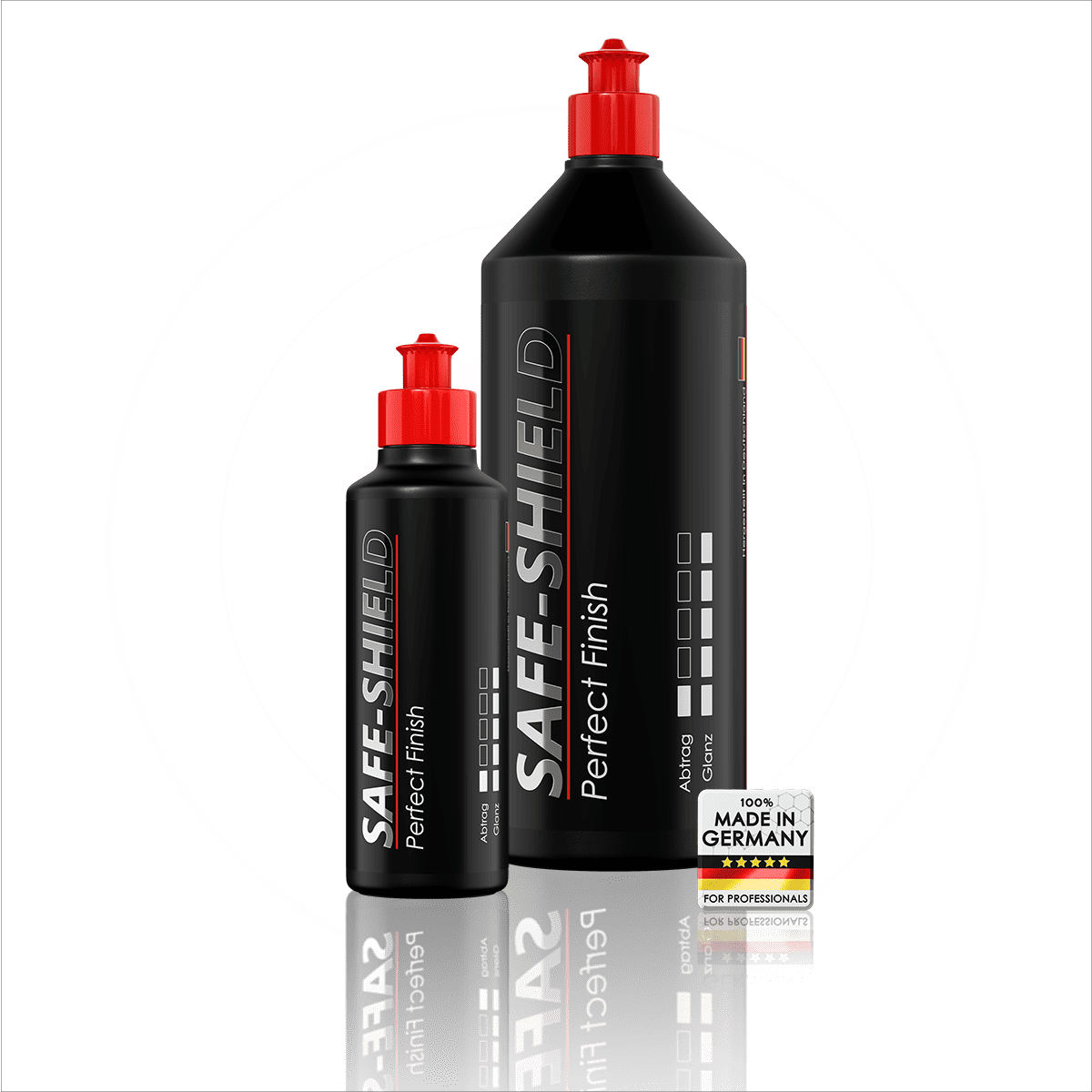
For light to moderate scratches, consider Black-One with the Medium One-Step Pad. If your main aim is to refine fine marks, use Perfect Finish with the Perfect Finish Pad.
These combinations do not constitute blanket approval as accessories for your sander. Size and machine compatibility must also be correct. On sensitive paint, a gentler test combination is more useful than immediately choosing the strongest cut.
When is a purpose-built polisher worthwhile?
If you want to work on a whole car or polish regularly, a tool with handling and accessories designed for this task is worthwhile. Compare more than the purchase price. Missing accessories, awkward handling and rework also cost time.
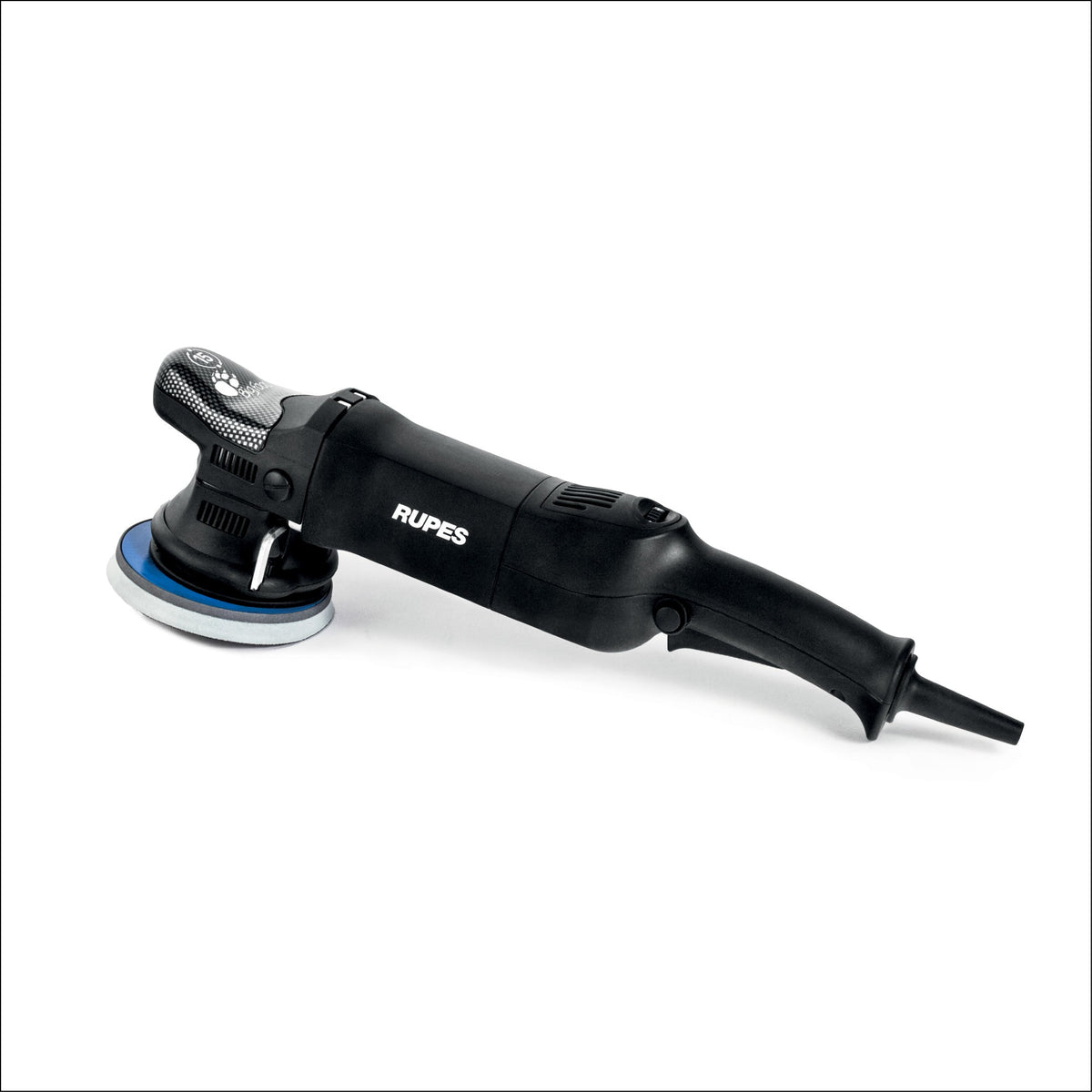
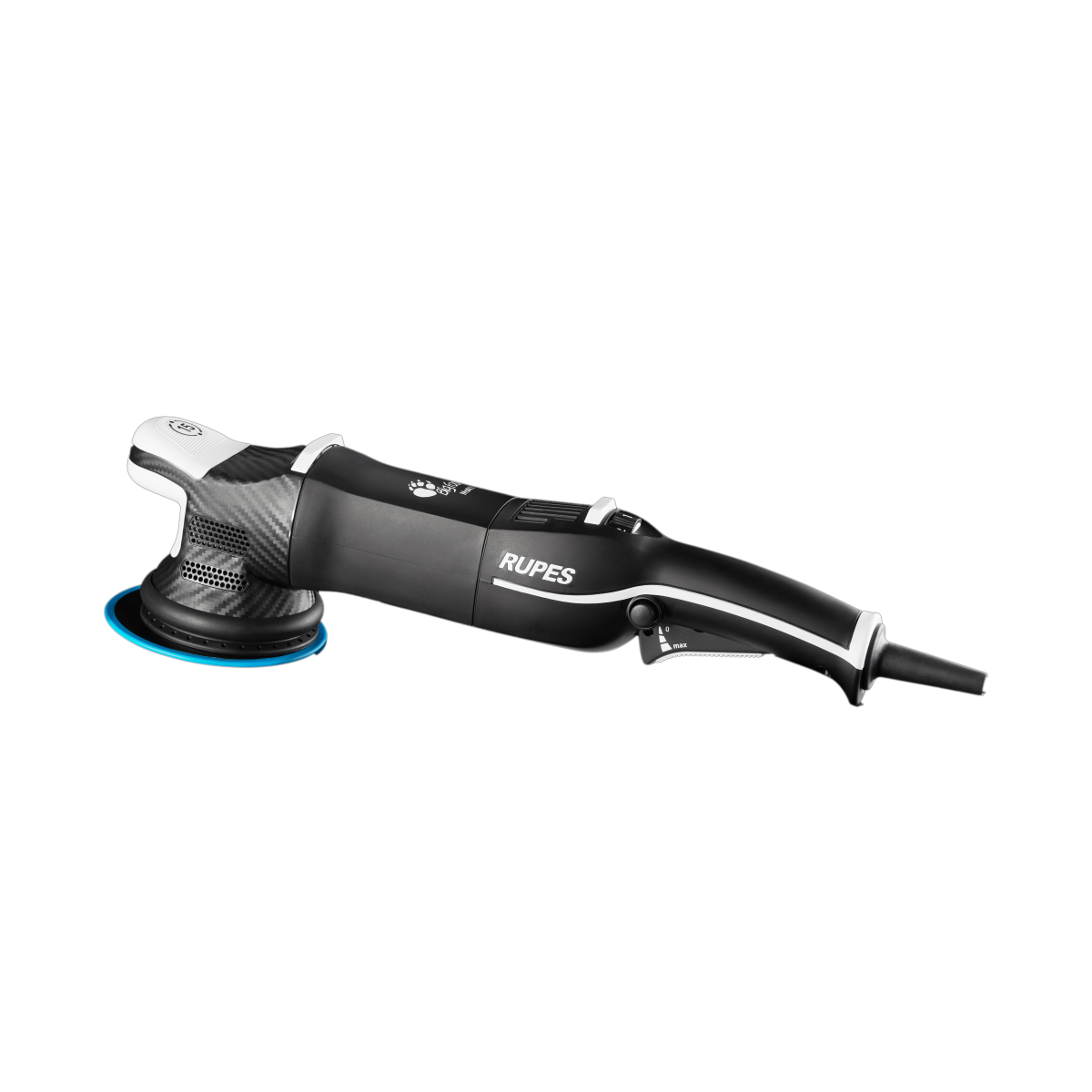
The LHR15 ES and LHR15 Mark V are corded polishers. Our RUPES comparison explains which model and kit suit your use.
Frequently asked questions
Can I simply attach a polishing sponge to the sanding plate?
Attachment alone does not prove suitability. The machine, plate and pad need appropriate approval and must operate within their permitted limits.
Is a larger orbit automatically better?
No. Orbit, drive type, surface shape and pad must work together for the task. A single figure does not determine the result.
Can sanding dust cause new scratches?
Yes. Keep sanding and polishing accessories separate and clean the tool before changing tasks.
Do I always need the highest setting for polishing?
No. Start within the specified application guidance at a setting you can control, and assess a test spot. There is no universal dial setting.

Efterlad en kommentar
Alle kommentarer er modereres, før de bliver offentliggjort.
'Denne side er beskyttet af hCaptcha, og hCaptchas Politik om beskyttelse af persondata og Servicevilkår er gældende.