
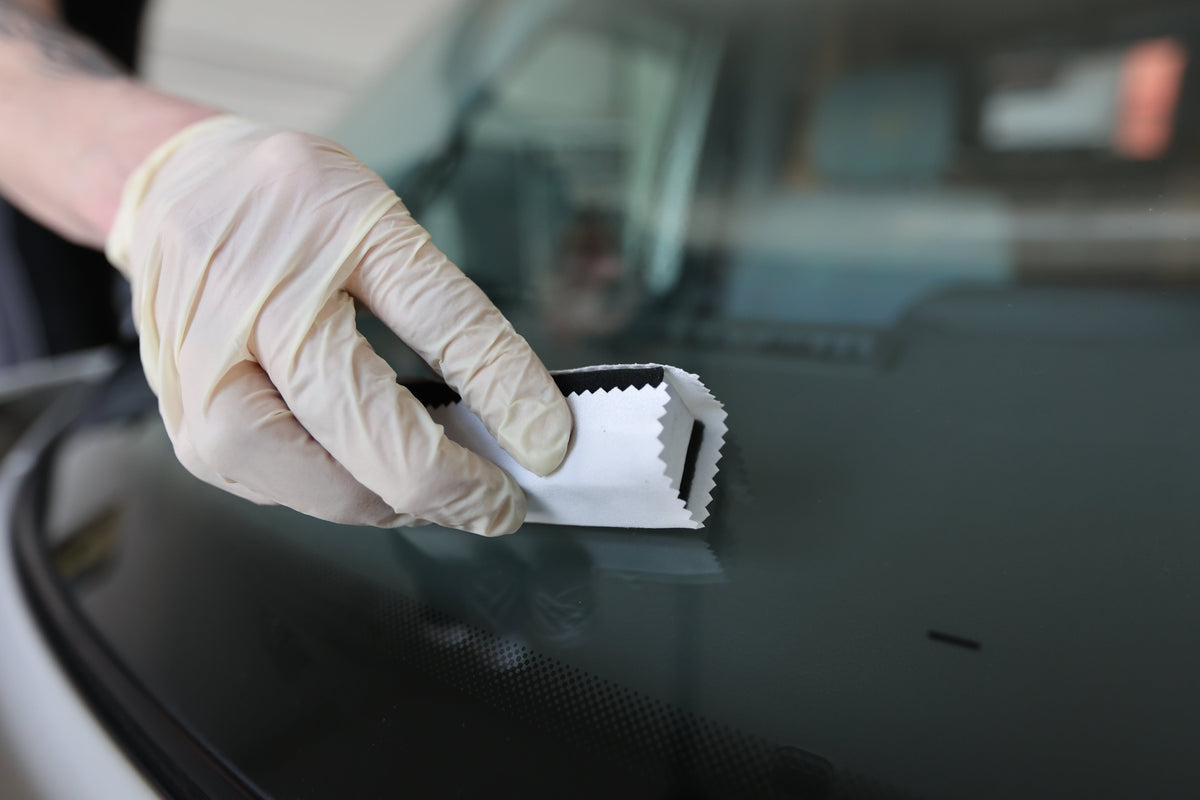
You seal car windows on thoroughly cleaned and degreased glass. Our Glass-Coat glass sealant is applied evenly, removed after about two minutes with a slightly damp microfiber towel and then you check for clear visibility. Preparation plays a major role in how well the sealant performs.
A glass coating makes the surface water-repellent and later cleaning easier. It does not repair scratches or stone chips and does not replace proper glass cleaning or functioning wiper blades.
When is a glass coating worthwhile?
On front and side windows, a suitable coating changes how water behaves: droplets bead up more strongly and can run off more easily. How noticeable this is while driving depends on factors such as screen angle, rain, airflow and surface condition. A fixed speed at which you will no longer need wipers would therefore not be a meaningful promise.
On the windshield, the interaction with the wipers also has to work. Coated side windows are usually subjected to less mechanical stress.
This guide covers the exterior surfaces of suitable real-glass windows. Glass-Coat does not have blanket approval for every acrylic glass, film, display or existing special coating. For unknown substrates, first check the material and vehicle specifications.
Preparing the glass: what needs to come off before application?
First remove coarse road grime and insect remains with a normal wash. Work with clean towels and also check the glass from the inside: (Tip) An interior film can later look like a problem with the exterior coating.
For preparing Glass-Coat we clean and degrease suitable glass with Ultra Degreaser. A pane that still has an oily film, old product residues or firmly adhering deposits is not ready for application.
If solid residues or weathering marks remain after cleaning, clean again or consider polishing the glass. More extensive glass correction by polishing is a separate step and is not automatically required on clean, suitable glass.
- Have Glass-Coat and a suitable coating applicator ready.
- Keep several clean microfiber towels separate for preparation and wipe-off.
- Lightly dampen a towel with clean water for wiping off.
- Plan for good lighting for the final inspection.
Applying Glass-Coat: step by step
1. Inspect the dry, prepped glass surface
Check that the surface is clean, degreased and free from disturbing residues. Do not work on glass that has been heated by the sun. Keep adjacent parts free from unnecessary product application.
2. Apply evenly
Apply Glass-Coat to a suitable coating applicator and spread it evenly on the glass. Avoid missed spots and thick product build-up. Choose an area you can reliably work and inspect within the specified working time.
3. Allow to flash off for about two minutes
A light grey haze will form after application. Follow the time window given in the instructions instead of letting the coating flash off for as long as possible. More waiting time does not mean better quality.
4. Wipe off with a slightly damp cloth
Lightly dampen a clean 300 GSM microfibre cloth with water. It should be mist-damp, not dripping. Wipe over the surface without heavy pressure until the haze is removed. Switch to a clean side of the cloth when you are only spreading residues around.
5. Check visibility
Inspect the glass from several angles and especially from the driver’s position. With suitable lighting, also check edges and overlaps. The glass must be clear.
Streaks or juddering wiper blades: what now?
The surface looks cloudy immediately after application
First check the wipe-off: Was the towel clean and only slightly damp? Was too much product applied or the time window exceeded? Carefully remove fresh residue as specified in the instructions. Please repeat the wipe-off process with a fresh towel.
The wipers are juddering
This is not a condition you should simply accept. Check the glass and wiper blades for buildup and inspect their condition. Worn wipers or uneven residues can also be the cause. NOTE: If the wipers chatter, wipe the wiper blade itself with Glass Coat; sealing the rubber lip usually remedies the issue.
The effect is uneven
Contamination, uneven preparation, application and stress can all play a role. First clean appropriately and reassess. Reapply coating if necessary.
How do you care for coated car windows?
Clean them regularly with a glass cleaner that is compatible with the coating. Avoid indiscriminate use of strong solvents and abrasive cleaning if you want to preserve the protective layer. Also keep the wiper blades clean and replace damaged wipers.
Rain resistance after application is different from the time another product may need to cure. For Glass-Coat, once it has been fully wiped off as described, it is immediately rain-resistant; nevertheless, always check for clear visibility and proper wiper function before driving. Do not transfer waiting times for a paint coating to this glass product.
Frequently asked questions
Do I have to polish every window before applying a coating?
No. For easy use, our instructions specify thorough cleaning and degreasing. With firmly bonded residues or weathered glass, additional professional preparation may be required.
Can I use Glass-Coat on side windows?
Yes, on suitable exterior real-glass surfaces. There too, prepare properly, apply evenly, and remove completely.
How long does a glass coating last?
Preparation, use, wiper operation and cleaning all affect durability. Assess the condition on clean glass; you cannot derive a fixed service life for every pane and every use from this.
Will I no longer need wiper blades afterwards?
No. Always use them whenever visibility requires it. Beading behavior and airflow do not replace safe visibility in all weather conditions.
Can I seal the inside to prevent fogging?
These instructions apply to the exterior. A water-repellent exterior coating is not automatically an anti-fog product for the inside.

Efterlad en kommentar
Alle kommentarer er modereres, før de bliver offentliggjort.
'Denne side er beskyttet af hCaptcha, og hCaptchas Politik om beskyttelse af persondata og Servicevilkår er gældende.