
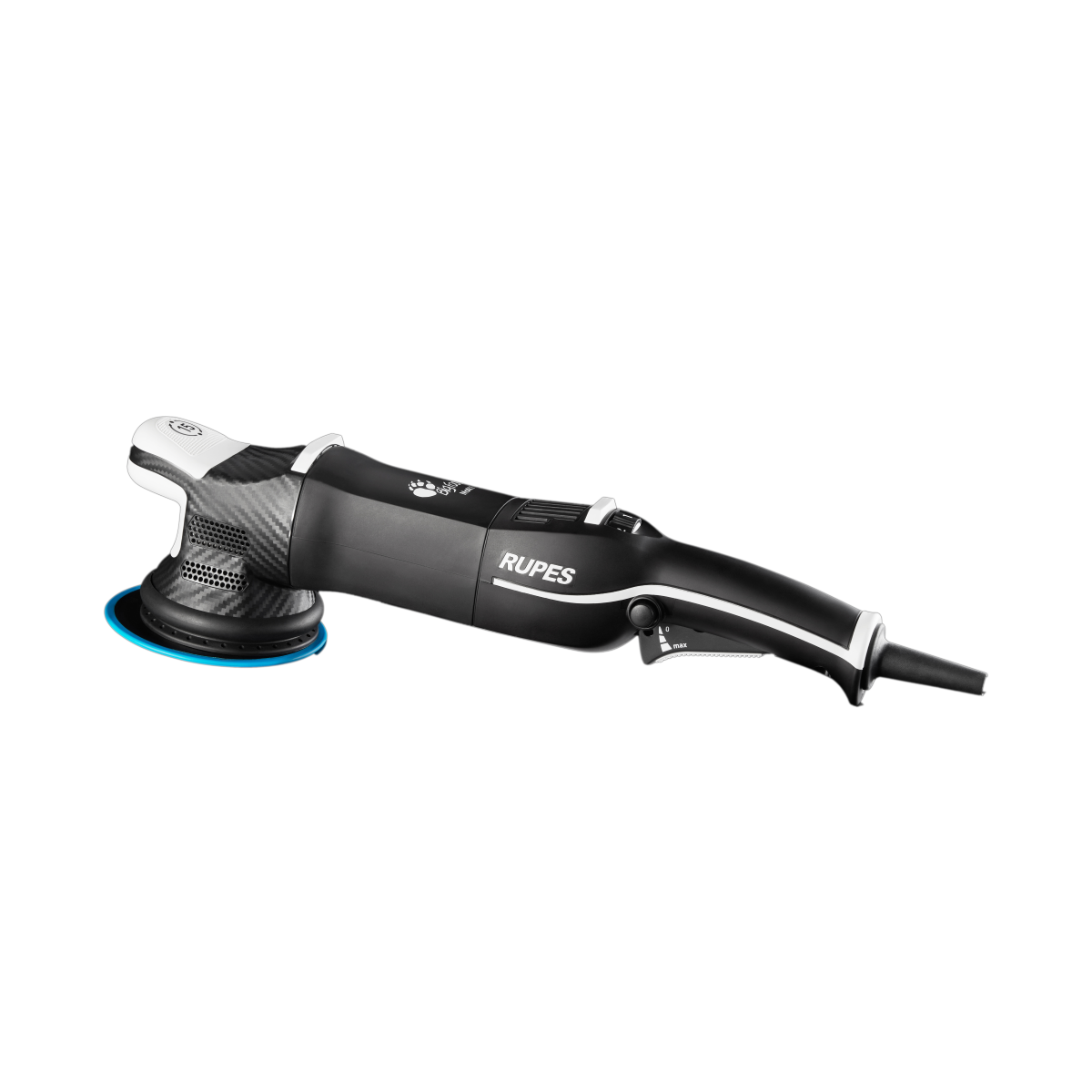
Both the RUPES LHR15 ES and LHR15 Mark V can correct scratches and bring your paint to a high gloss. Both are free-spinning dual-action polishers with a 15 mm orbit and a 125 mm backing plate. The ES is a proven choice for occasional use. The Mark V is especially worth considering if you polish regularly and value its revised construction and working comfort.
A more expensive machine does not replace choosing the right polish and pad. First consider how often you polish and which equipment you already own. This puts your budget where it will actually help during the job.
What do the LHR15 ES and Mark V have in common?
Both combine an orbital movement with free-spinning backing plate rotation. Unlike a gear-driven dual-action polisher, the plate rotation is not mechanically forced. Too much pressure or tilting the pad can slow the rotation. We explain the drive types in Dual-action or rotary: which polisher should you choose?.
- 15 mm orbit: the size of the orbital movement.
- 125 mm backing plate: the mounting surface for compatible polishing pads.
- 500 watts: the electrical input power of both models. This alone does not tell you how quickly scratches will be corrected.
- Corded operation: both models run on mains electricity.
With the right combination, both machines can deliver stronger correction or a fine finish. However, a large backing plate has limits on narrow trim and tight contours. A suitable smaller machine makes more sense there than tilting the pad onto an edge.
What is different about the LHR15 Mark V?
The RUPES LHR15 Mark V has a revised drive system with POLYSYNTHEC composite gears. It also features the PrecisionPro backing plate and a lower centre of gravity. The construction is intended to reduce vibration and noise and make the machine more comfortable to control during longer jobs.
These are primarily working benefits. They do not mean every paint finish will automatically be corrected faster or achieve more gloss with the Mark V. Paint condition, pad, polish and technique remain decisive.
The LHR15 ES therefore remains a sensible choice if you want a proven machine for occasional polishing. Extra suitable pads, good towels and an inspection light may help more than changing models.
Which machine and polishing kit suit you?
You already have polishes and enough pads
The machine on its own may be enough. Check that your pads suit the backing plate size and the machine. Different pad manufacturers do not always measure the same part of a pad. What matters is the correct hook-and-loop mounting size and working face, rather than a similar-looking size label.
You want to build a manageable polishing system
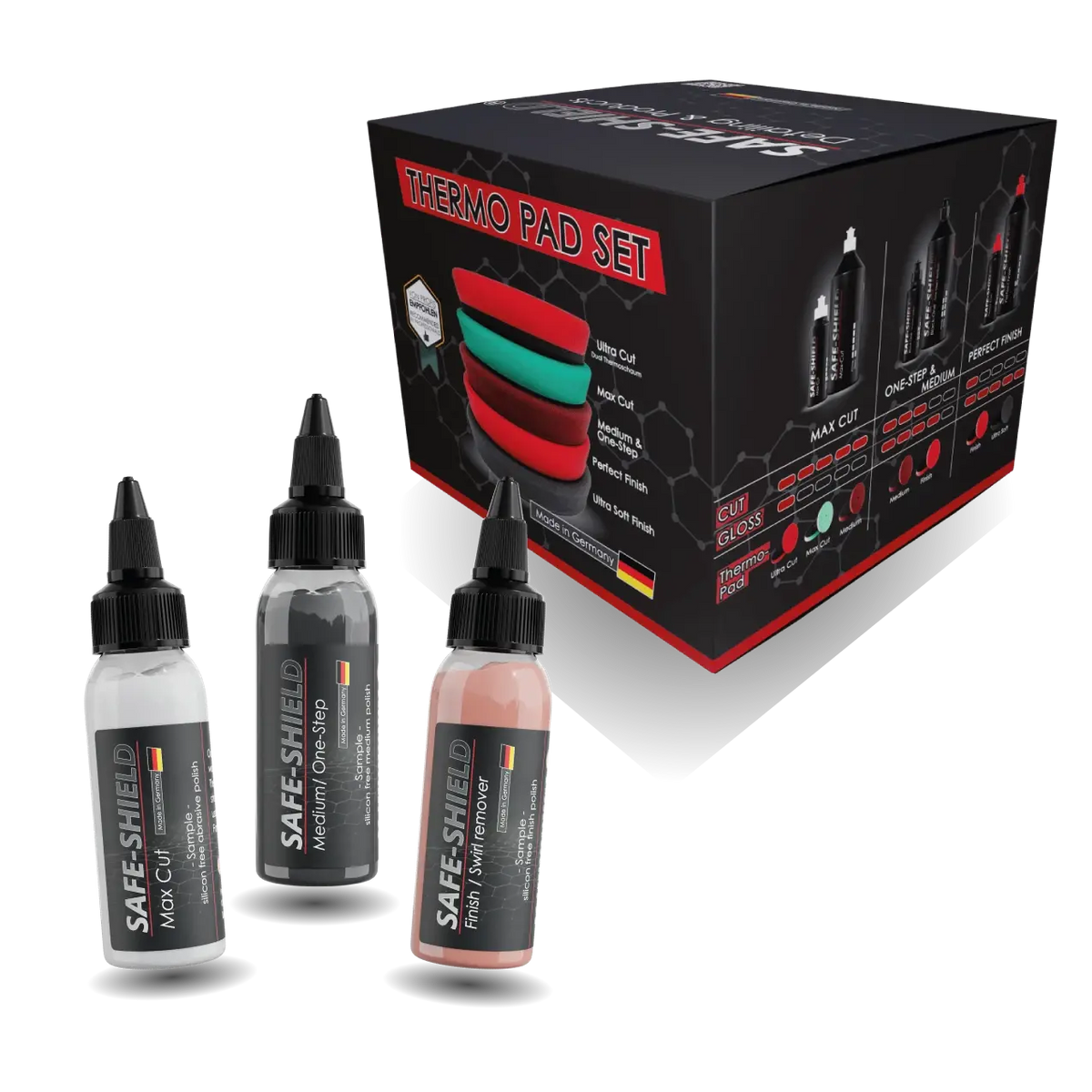
Our Pro Polishing Kit with RUPES LHR15 ES includes the machine, three Safe-Shield polishes in 250 ml bottles and five different 125 mm foam pads. This lets you cover different tasks and learn which combinations work.
Five different pads are not five spare pads for the same stage. If you want to polish the whole car with Black-One and the Medium One-Step Pad, plan additional pads of that grade.
You regularly polish several vehicles
The ULTIMATE Polishing Kit with RUPES LHR15 Mark V includes three polishes in one-litre bottles and 15 foam pads in total: three each of Ultra Cut, Max Cut, Medium One-Step, Perfect Finish and Ultra Soft, all in 125 mm. This gives you more stock for recurring jobs. Whether three pads of a particular grade are enough for your vehicle still depends on the surface area and workload.
In both kits, RUPES supplies the machines, while we supply the polishes and pads. Three polishes do not mean you have to carry out three polishing stages. Choose according to the paint condition.
What else should you plan for?
Soft wipe-off towels, enough spare pads, an inspection light and suitable masking tape make the job easier. You will also need the right products for preparation and subsequent paint protection. Check what you already have before buying.
Our examples in How many polishing pads do you need per car? help you plan pad quantities. For the full process, see our guide to polishing a car; for budgeting, see How much does car polishing cost?.
Frequently asked questions
Is the Mark V a gear-driven dual-action polisher?
No. The LHR15 ES and LHR15 Mark V are free-spinning dual-action polishers. Mark V refers to the model generation, not a different drive type.
Do I need to switch from the ES to the Mark V for a better finish?
No. Both machines can produce a clear, attractive finish. First check the polish, pad, cleanliness and technique.
Is a polishing kit enough for the whole car?
It provides the machine and different polishing combinations. Longer jobs may require additional pads of the same grade and extra towels. Washing the vehicle and applying paint protection are separate stages.
Do I need all three polishes for every detail?
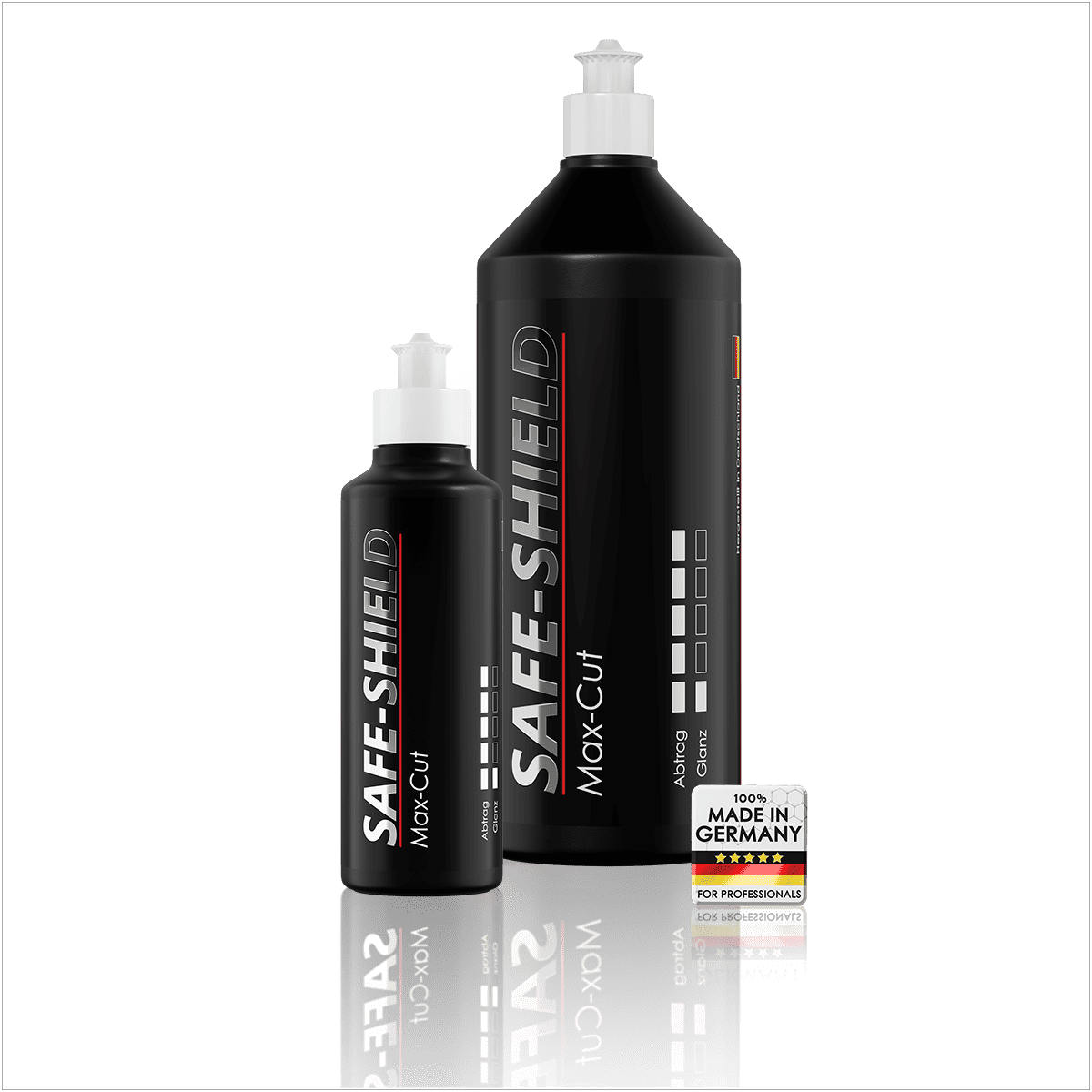
No. Perfect Finish may be enough for fine marks, or Black-One for light to moderate defects. Use Max Cut selectively for more pronounced defects that can still be corrected safely.

Efterlad en kommentar
Alle kommentarer er modereres, før de bliver offentliggjort.
'Denne side er beskyttet af hCaptcha, og hCaptchas Politik om beskyttelse af persondata og Servicevilkår er gældende.